What Makes a UK Victorian House More Desirable?
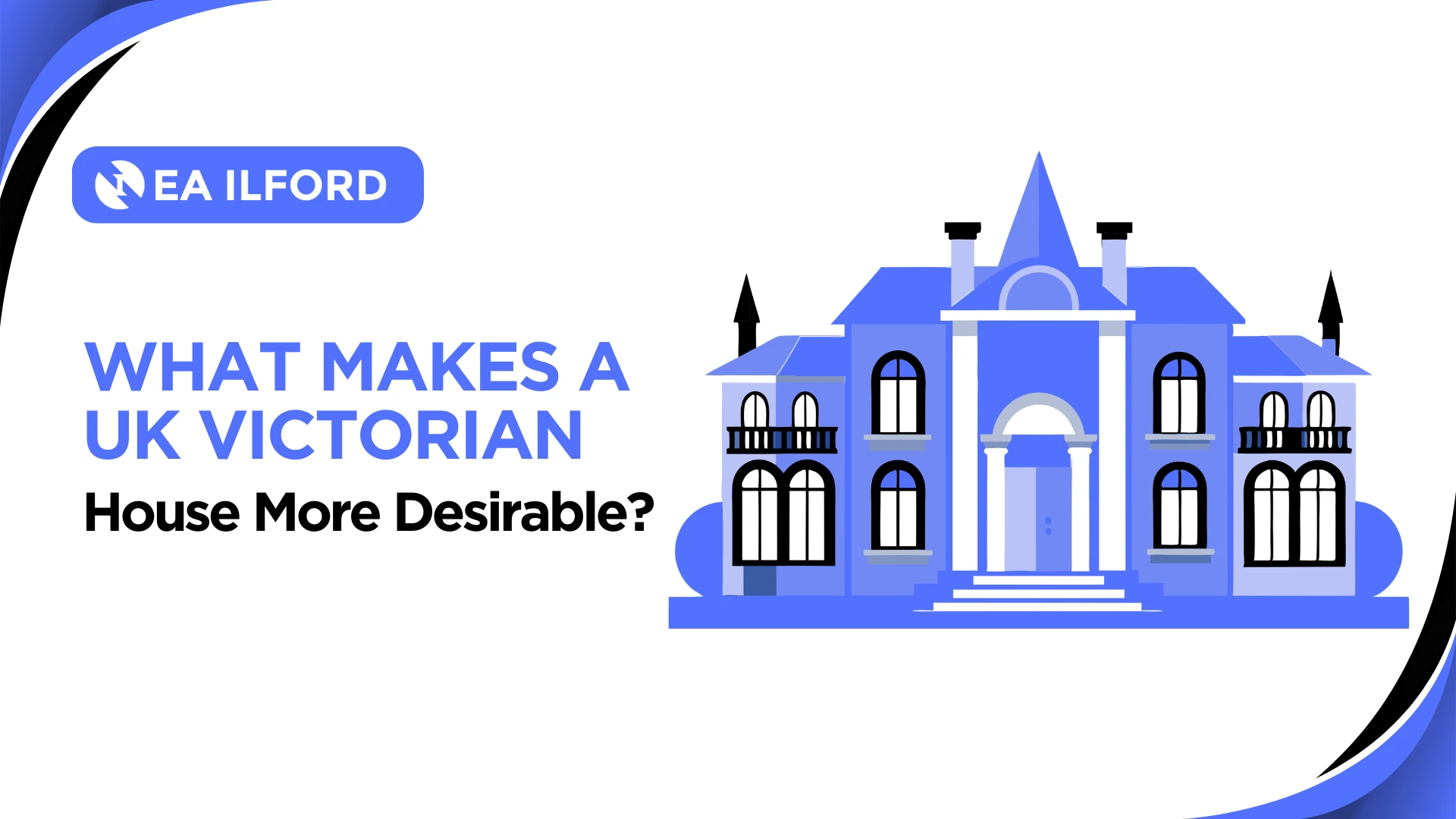
What makes the UK Victorian Houses so desirable? Built during the reign of Queen Victoria (1837 to 1901), they offer space, historic charm, and architectural details. The Estate Agents Ilford sees a very strong appeal for modern owners when marketing period homes.
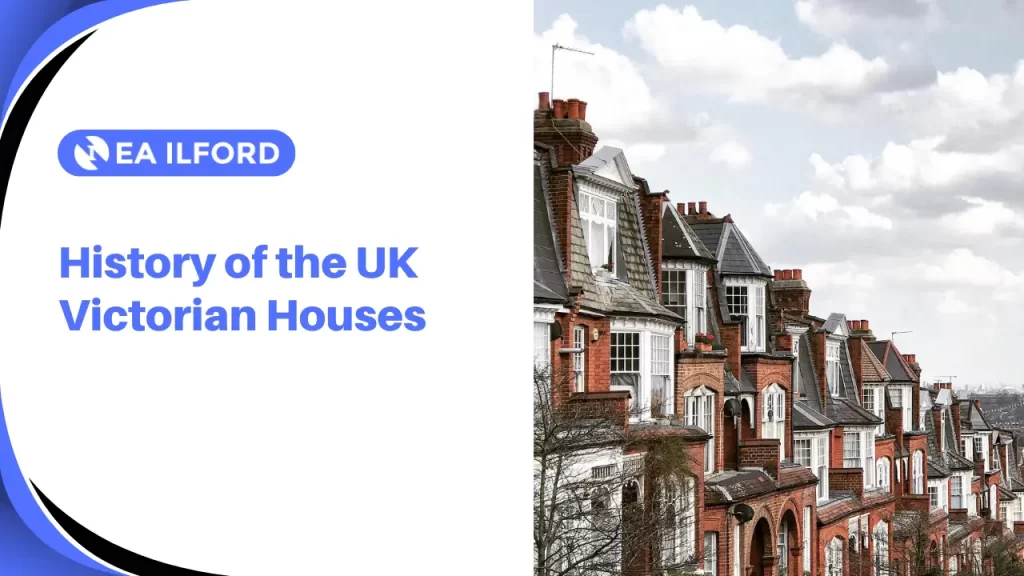
History of the UK Victorian Houses
The era of Queen Victoria dates back from 1837 to 1901, during which the United Kingdom underwent a massive transformation. It was one of the wealthiest periods of the UK, with rapid expansion, industrial growth, and architectural innovation. Between 1801 and 1911, the population of the UK quadrupled from 9 million to 36 million. For this reason, the number of UK Victorian Houses increased from 1.6 million to 7.6 million during this period.
In the United Kingdom, Victorian homes feature a wide range of architectural styles. In those times, industrial growth led to the migration of workers from rural areas to cities, which resulted in a continuous expansion of housing in the 1850s and 1870s.

How Did Victorian Housing Vary Across Classes?
Victorian homes were not only built for the wealthy class, but also catered to the middle-class and poor classes.
- Deprived areas were often very small, like back-to-back houses, which were very confined and cramped. Some of these old housing were converted into slums and rookeries and later abolished. Some smaller houses like two-up two-down houses exist to this day, for example, old British houses in Salford, Manchester.
- For middle incomers, the Victorian house, which includes accommodation for servants, follows the contemporary architecture like the Gothic Revival style and Queen Anne Style. These include clean and well-stocked houses with fireplaces.
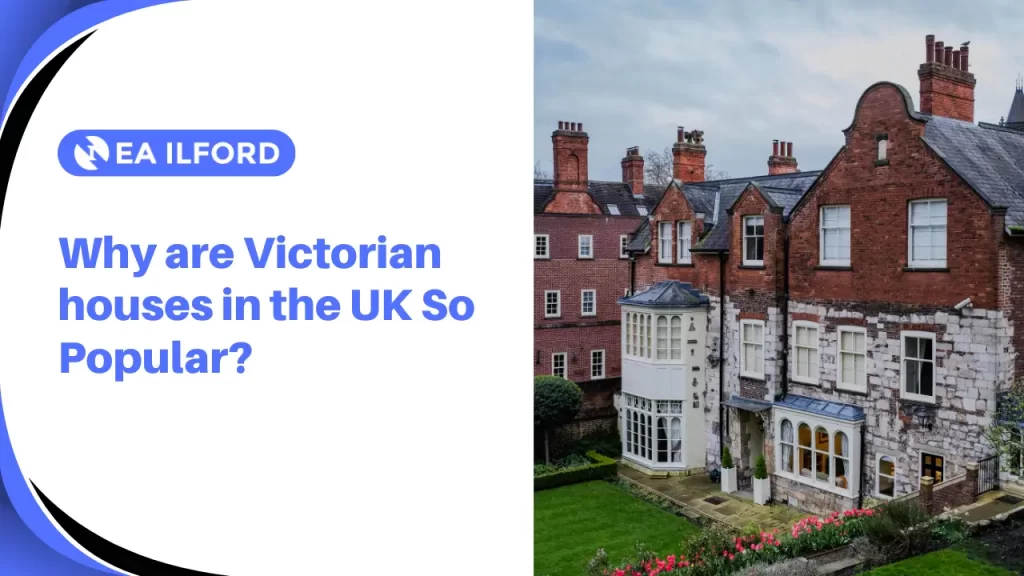
Why are Victorian houses in the UK So Popular?
Despite a century passed, Victorian buildings are still loved by the people of the UK due to the following reasons:
Built With Wealth
The wealthiest families of the era built Victorian properties, with every detail keenly crafted and no detail spared. Due to the excessive flow of wealth at that time, Victorian homes were really featured with intricate details.
Craftsmanship and Durability
The expert tradesmen and high-skilled craftsmen were used to perform the task of construction. The houses have original roofs and beams in place and need no replacement. The quality materials and refined architectural features still stand the test of time. As compared to a Tudor home, Victorian buildings are younger and have a strong structural presence.
Generous Space
One of the biggest attractions of Victorian-era houses is the spacious proportions. The rooms are spacious and ventilated, with large windows to allow natural light. They are less expansive as compared to the Georgian Homes. The interiors are bright and have an elegant room layout that has an impressive appeal to buyers.
Global Design Influences
The designs of the Victorian period properties are influenced by the architecture of the British Empire significantly. On the other hand, many vintage houses feature Indian and Asian decorative details. The different cultural influences in construction add a unique character and international charm to their design.
Prime Location and Scenic Views
Most of the UK Victorian houses sit in prime locations, from valley tops to village edges. There was no rule of planning permission in Victorian times. Thus, the homeowners selected the prime plots, which are based on scenic views and surroundings. Rectories and vicarages built were positioned beside churches in historic village centres.
Quality Worker Housing
As discussed earlier, the homes were not only built for their workers but also for the workers and servants. The wealthy industrialists built well-designed homes for their workers, which sometimes included entire model villages. Victorian homes were constructed to fairly high standards, which ultimately reflect the philanthropic values of the time.
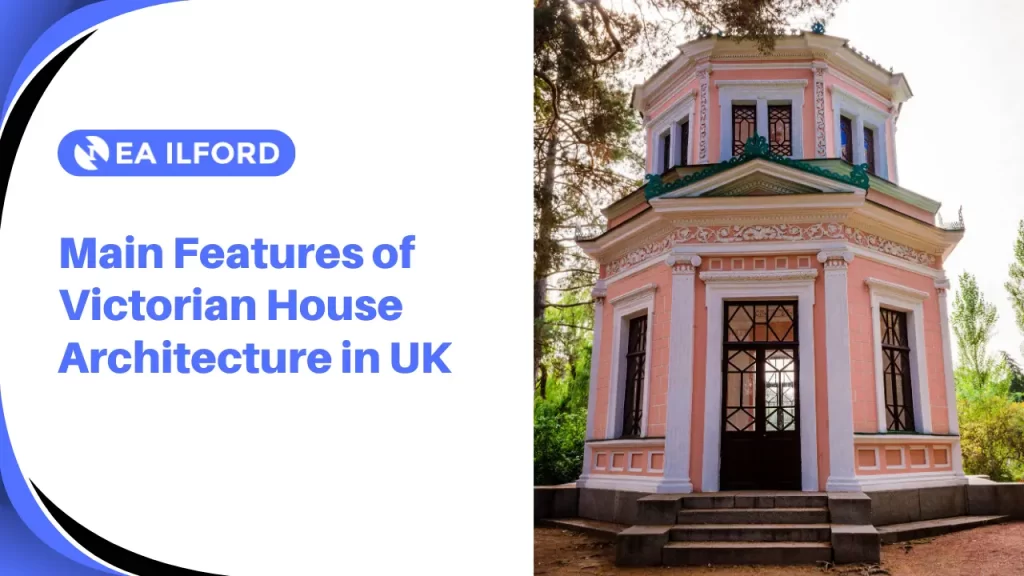
Main Features of Victorian House Architecture in the UK
The UK Victorian houses were spotted due to their historic architecture and intricate features. The following are key features of Victorian-era houses that define the craftsmanship and distinctive identity of these old houses:
Decorative and Ornate Details
Victorian homes are a decorative feast for the eyes due to their pretty tiles, stained glass, iron railings and ornate mouldings. Small gardens and vegetation are often included as part of these period homes, which provide an ideal domestic look. The most quintessential element of a Victorian house is its decorations. On the exterior, Victorian homes have ornate wood details and trim around the porch, windows and doors.
Bay Windows
Bay windows are a common part of Victorian architecture, having an asymmetrical facade. Some houses have upgraded windows to double-glazed glass or have stained glass windows. The original glass of the windows can be easily spotted, which is slightly textured. Sash windows or double bay windows extended at the front of the house add to the aesthetic appeal of houses.
Many Rooms
Homes during the Victorian era were very different from the open-concept floor plans we see nowadays. The room ranges from two back-to-back rooms to a large number, sometimes over a dozen rooms.
Traditional Victorian houses have a reception or parlour room at the front, a closed-off library, a kitchen at the back, and a dining room in the middle of the house.
Hallways
The hallway of these vintage homes is floored by geometrically arranged tiles. The small tiles are arranged in a mosaic pattern and can be mustard yellow, terracotta, and pale blue in colour. Still in the carpeted Victorian houses, you can find these hidden tiles, which can be a jackpot for vintage flooring lovers.
Floors
Most of the UK Victorian houses had parquet flooring of wood arranged in a decorative pattern. Parquet is a type of flooring common in that era, with various wood species and patterns engraved.
Ceilings and Detailings
UK Victorian houses have high ceilings with solid construction. Steep roofs are the main features of these period homes, which allow for grand high ceilings. Ornate mouldings and elegant dado or picture rails surround the living and dining areas, which mark the Victorian house era architecture. The pitched high ceilings allow pendant lighting and bring a sense of grandeur to the home.
Fireplaces
The fireplaces are the prominent features of the Victorian houses. The brick chimney consists of this fireplace, chimney stack and breast that is extended above the roof of the house to emit smoke. Basements were also built to store coal, which was required for fires and heat water.
Living Areas Now vs Then
As we know, most of them have kitchens at the back and reception rooms at the front of the house. The kitchen did not expand to the width of the house, which leaves a little terrace space. This space is now being used by the owner to make the kitchen bigger and build over the glass walls and rooflights.
Attics and Roofs
Most of the houses’ roofs were covered with slate, and the clay tiles in some houses also feature a classical look. They also feature attic spaces, which are now converted into bathrooms or bedrooms.
Towers
Many Victorian homes have a rounded corner on one side of the building that creates a tower, giving a fairytale and grandiose look to these homes. The rounded room inside the tower is called a turret.
Stories
Most Victorian architectural styles are two or three stories high. Unlike today’s homes, there were not usually bedrooms on the main floor. The bedrooms, laundry and kitchen were also sometimes on different floors. This style separated the entertaining spaces from the family’s sleeping quarters.
Bright and Dark Colours
Many Victorian homes are painted with rich and deep colours on the outside and used similar colour on the pattern inside. Common interior colours include deep chestnut brown, maroon, burgundy, forest green, teal or dark blue.
Sanitation
The sanitation features were improved after the regulations were imposed in 1850’s. It includes correct drainage systems, waste treatment (ash pit or dust bins) and toilet facilities, which may be an outside privy or inside water closet in many homes.
Water Facilities
Some houses at the start of the Victorian era had running water taps or boilers for hot water. The hot and cold water by the century became the prominent feature of the Victorian properties. Victorian homes are beautiful, but keeping them in top condition takes efforts where our Property Management service comes in really helpful.
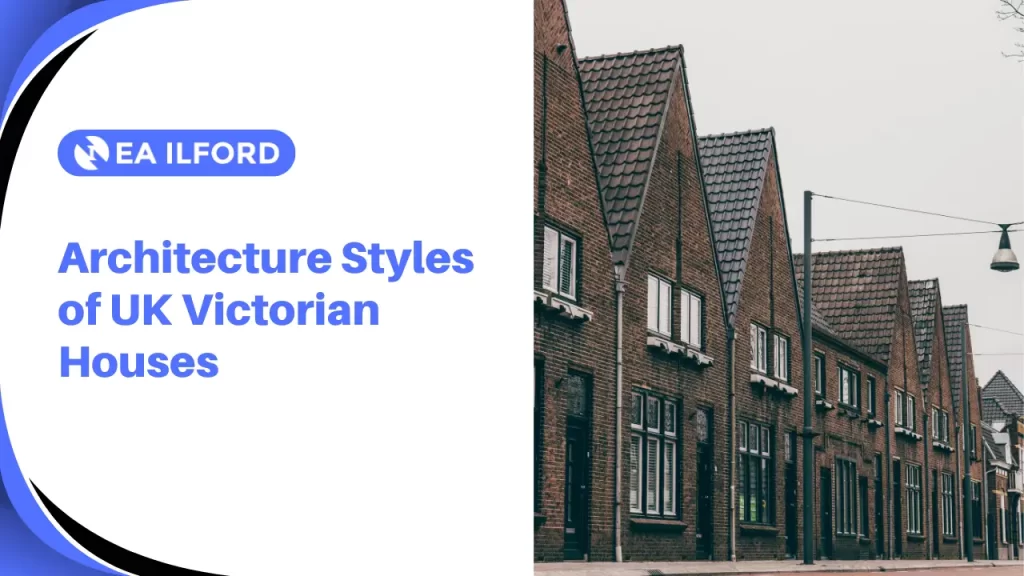
Architecture Styles of UK Victorian Houses
The architectural styles built during the reign of Queen Victoria (1837-1901) are called Victorian Architecture. There is no single type of architectural style of Victoran era, yet there are multiple styles that spot the historic buildings of that era.
Gothic Revival
This style started around 1855 and became widely popular as the first Victorian Style, influenced by medieval designs. You can identify a Gothic revival by its steeply pitched roof, windows with pointed arches, lancet windows, and vergeboard trim lining the edges of the roof.
Other features may include high-set dormers protruding from the roof and batten siding that runs vertically on the facade. Tyntesfield near Wraxall, North Somerset, England, is inspired by Gothic architecture.
Italianate Architecture
This style emerged between 1840’s and 1870’s that appear more like the ancient villas of Italy. Low-pitched or flat roofs, large corbels, wide eaves with decorative brackets, and, for example, balconies or sometimes a cupola (tower). For example, Osborne House, Isle of Wight (1845-1851) built for Queen Victoria and Prince Albert on Italianate style.
Second Empire
The style was popular around the same time period when Italianates were in fashion. This style came from France by the architect Francois Mansart, who invented the Mansart roof to conceal an extra story under a roof. This style features pierced dormer windows, and Victorians often added corner quoins, belt courses, and other decoration to this style gradually. For example, the Grosvenor Hotel, London (1860-62).
Queen Anne
This architectural style became popular between 1880 and 1910, named after either the monarch reigning from 1701 to 1714 or the English baroque architecture of the time of the Queen Anne Era. Gained popularity in the 19th century, this style features overhanging beaves, large bay windows, wrap-around porches, turrets, stained glass and unique chimneys.
The colours were earth-toned, which may have been updated with brighter or all-white facades. For example, Red House, Bayswater, London (1871-73).
Folk Victorian
It is the most common architectural style of the UK Victorian houses, created by middle-class, not professional architects. They designed their own houses, or local carpenters did it. These houses are typically smaller with less ornate details, embellishments and exhibit a wider variety of styles and finishes, like a hodgepodge of different elements. You can still find it in East London’s dense, terraced streets. For example, Belfast Workers Cottages.
Stick Style
It is a transitional style between Gothic and Queen Anne, having small planks or timber-framed, decorative gabled aesthetic on the tops of external walls. They may have an overhanging second-story porch similar to a Swiss Chalet.
Georgian vs Victorian vs Edwardian Homes
Here are the features of the Georgian, Victorian and Edwardian homes:
| Feature | Georgian | Victorian | Edwardian |
| Look | Symmetrical, classic | Often asymmetrical, narrow | Simpler, airy, straight-line |
| Roof | Flat or shallow | Steep gables, high ceilings | Gabled, sometimes with dormers |
| Storeys | 3 to 4 | 2 to 3 | 2 |
| Windows | Sash, many small panes | Bay windows, stained glass, sash | Sash and Bay, wide and large |
| Exterior | Stone/brick, white or cream colour | Ornate brick, dark, decorative trimpitched roofs | Red brick, less ornament, porch |
| Porch/Entry | Simple, classical | Decorative/veranda (in mansions) | Practical, modest |
| Interior | Elegant, balanced | Rich, ornate, embellished | Light, spacious |
| Garden/Setting | Townhouses, small/no gardens | Urban/suburban, small gardens | Suburban, larger gardens |

Top UK Victorian Houses
The Victorian and Georgian houses were the last historical architectural styles used for building great houses. For example, the following has stored the Victoria interiors:
- Ruddington Framework Knitters, Nottingham
- 33 Palmeira Mansions, Hove (dates back to 1880)
- Moorside House, Bradford Industrial Museum
- Birmingham Back to Backs Cottages (1840-1970)
- DH Lawrence Birthplace, Eastwood, Nottinghamshire (11885)
- Linley Sambourne House, Kensington, London
- Tenement House, Glasgow
Pros and Cons of Buying a UK Victorian House
Buying historic homes like those with Victorian heritage has plenty of features that may benefit or not today’s homeowners.
| Pros | Cons |
| High ceilings for better air circulation | Uncomfortable draughts, chimneys |
| Sash windows offer elegance | Back-to-back homes are small and difficult for large families |
| Ornamentation | Upkeeping and maintaining the property is expensive |
| A cellar that offers storage | Except for major Victorian mansions, there is no parking space available |
| Thick walls to avoid noise | Less precisely structured walls, if you are a wallpaper lover |
| Original floorboards for vintage beauty | Painted with lead-based paint, which can be dangerous to health |
| Good proportions for large families | Loosely-fitted windows make heating difficult |
| Grand hallways and landings provide extra space | |
| High value due to unique architecture and build quality | |
| High-quality material is used in the construction. | . |
Final Thoughts
UK Victorian houses are a combination of art and craftsmanship. Their spacious rooms, high ceilings, large hallways and intricate details deliver a character that modern homes lack nowadays. However, these period homes are difficult to maintain, but they are a source of many buyers who have a historic architectural appeal. The prime location, high-quality build and historical value make Victorian homes a worthwhile property investment in the UK for those who love unique architecture. If you’re looking to sell your vintage property, our team can guide you through every step.