Classical Edwardian Architecture Features | A Guide to Period Homes
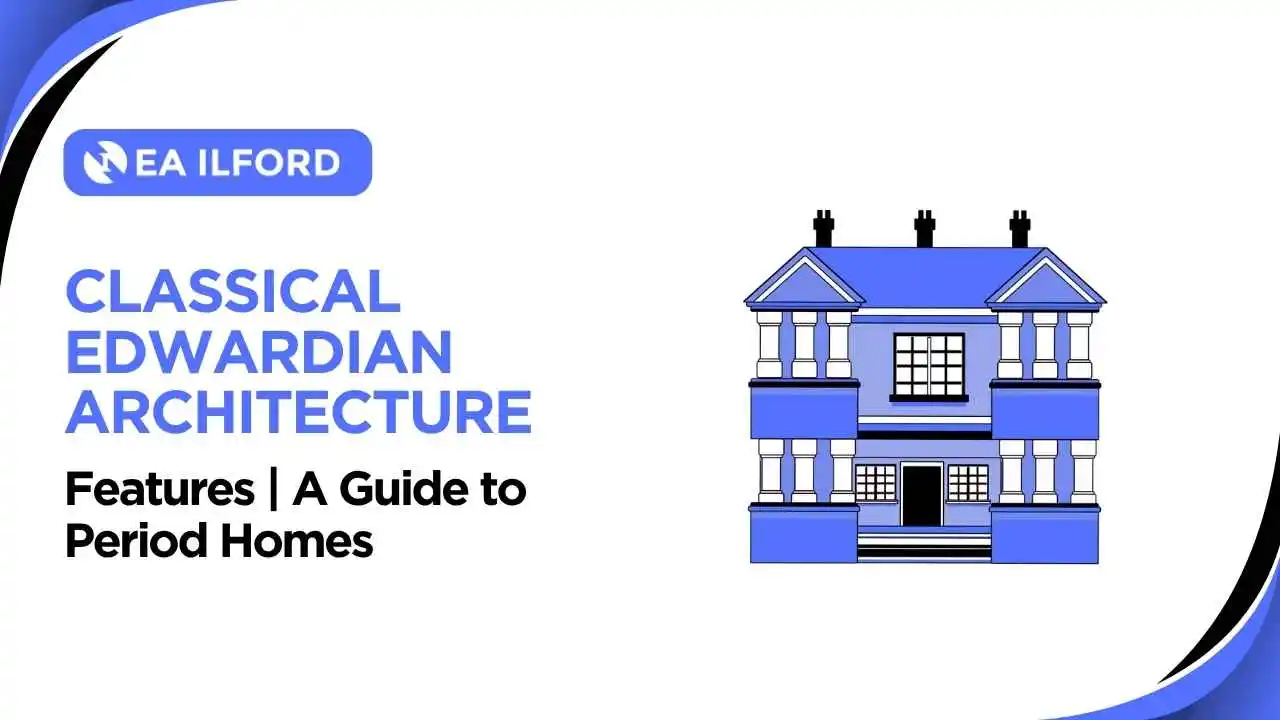
Edwardian architecture refers to buildings constructed between 1901 and 1914, named after King Edward VII. Edwardian era homes are defined by spacious layouts, red brickwork, large sash windows, Arts and Crafts detailing, and generous front gardens. Iconic public landmarks in London include the Admiralty Arch and Westminster Central Hall.
Edwardian properties sit among London’s most consistently desirable assets. For buyers, owners, and investors, knowing about Edwardian-style architecture carries real monetary value.
Let the Estate Agents Ilford help you find the finest examples across London, and understand architecture and features to check before you buy.
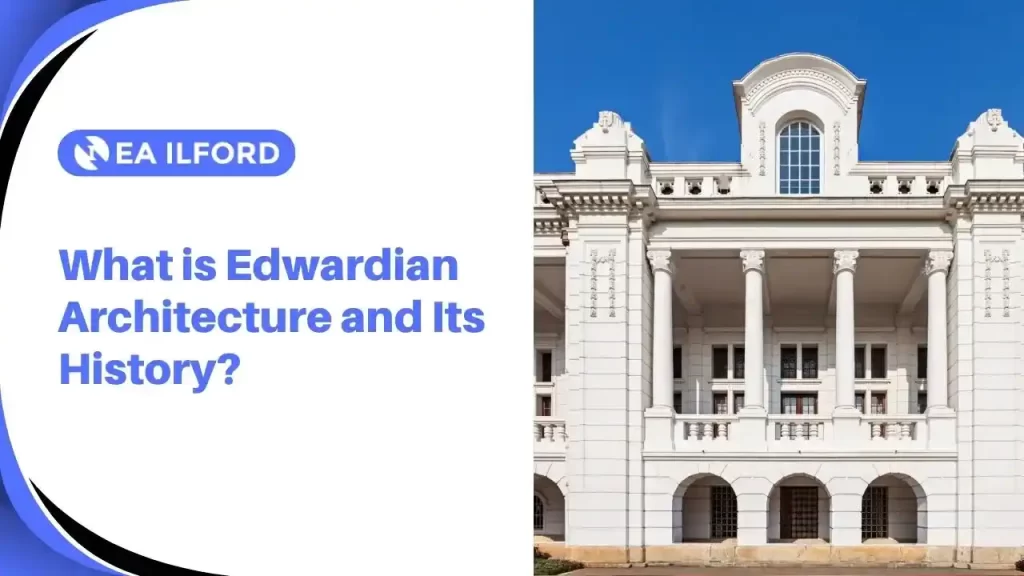
What is Edwardian Architecture and Its History?
Edwardian architecture covers buildings constructed during the reign of King Edward VII, which ran from 1901 to 1910. Architectural historians generally extend this period to around 1914, when the First World War brought residential construction to an instant halt.
In practice, the Edwardian style construction continued to be applied by developers until around 1920. This is because the unique design details were already well established, and builders saw no reason to abandon them.
The era sits squarely between two better-known architectural moments. It follows the ornate excess of the late Victorian homes’ design and the severity of interwar modernism.
Inspired by:
Edwardian architecture drew from multiple sources simultaneously, such as:
- The grandeur of Baroque civic design
- the handcrafted idealism of the Arts and Crafts movement
- the disciplined symmetry of the Georgian period
- Tudor Revival motifs, such as mock half-timbering on upper gables.
The result is a style that feels at once formal and welcoming, ambitious and practical.
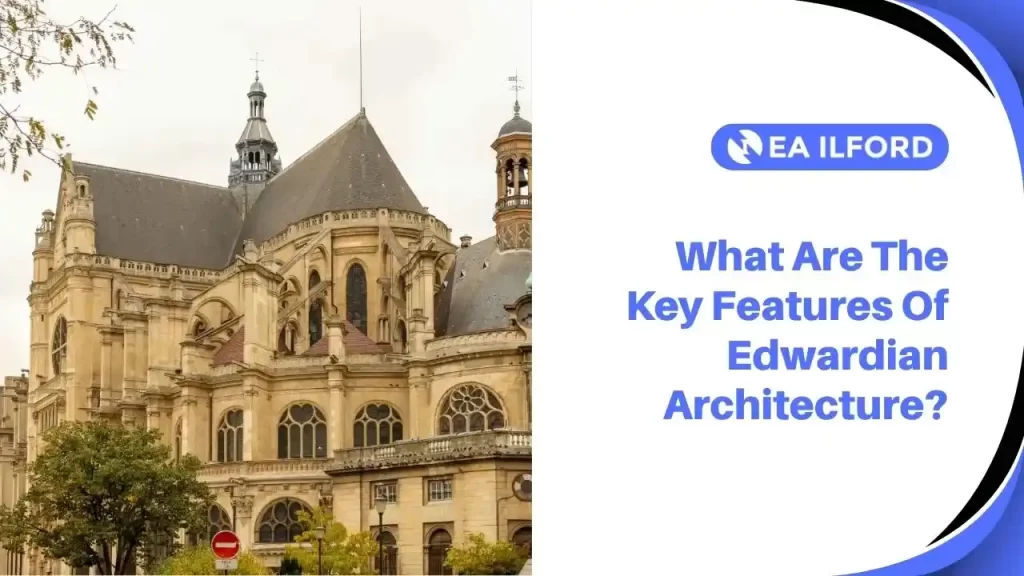
What Are The Key Features Of Edwardian Architecture?
Edwardian buildings, residential and civic alike, share a common family of characteristics. These two types may be built very differently, but the underlying values of light, space, and craftsmanship run through both.
Exterior Features of an Edwardian House
The properties are somehow wider than Victorian equivalents. Look for these external indicators when identifying an Edwardian home:
- Edwardians Houses were Built-in Straight Lines, unlike the Victorian streetscape. The streets tend toward a consistent and planned nature of the housing developments.
- Panelled Front Door of Edwardian home features stained glass set into wooden panelled doors, with matching side panels in Art Nouveau floral or geometric designs.
- Red Brickwork: The most immediate and identifiable element of an Edwardian house is red brickwork on the ground floor, combined with white-painted or mock Tudor Timber.
- Large Multi-Paned Sash Windows: In Edwardian homes, architects started to reintroduce painted sash windows of the Georgian era. These windows flood interiors with natural light and make homes more visible than the darker Victorian Homes.
- Steeply Pitched Gabled Roofs made these properties naturally suitable for loft conversions, and many homes have been converted exactly in this way. The Architecture of London has recently converted an Edwardian property in Queen’s Park project with an upward extension of a loft conversion.
- Wooden-Framed Porches (signature feature) in these period homes are decorated with joinery and tiled steps.
- Dutch Gables and Decorative Brick Work are influenced by Norman Shaw’s work and revive the period homes’ architecture.
- Square Bay Windows in both ground and first floors create a double-aspect living space that retains the strongest value in selling these homes today.
- Ornate Ironwork is used on gates, fences and railings.
- Pliaster is another Georgian revival detail used on Edwardian grander examples to frame doorways and bay windows openings.
- Prominent chimneys are a structural feature that also contributed to the characteristic Edwardian roofline.
- The front garden setback from the pavement is a deliberate privacy measure. They are deliberately set back from the pavement with a front garden, which continues to provide a degree of privacy and separation from the streets.
Interior Features Of Edwardian Architecture
From the inside, the Edwardian house represents a great break from a Victorian domestic display. As the servant class declined, the architectural need for service quarters disappeared with it. They are replaced with larger, ventilated, and principal rooms across the footprint of the building.
Key interior characteristics include:
- Wide hallways are one of the most reliable internal identifiers. The Entrance hall was now a social and architectural statement rather than a service corridor. Georgian and Victorian hallways are narrower by comparison.
- The homes have Parquet and polished wooden floors with a dark polished look. Persian rugs are typically laid in halls and living rooms to soften the look.
- Decorative fireplaces with Art Nouveau remained a focal point in every room.
- High Ceilings in Edwardian Homes
- French Doors to the rear garden: Ground floor living rooms and dining rooms opened onto the back garden through French doors, unlike Victorian homes. Michael Parinchy notes:
“The impressive high ceilings of Edwardian ground floors make them strong candidates for vaulted open-plan extensions ”
- Floral wallpaper in muted tones: Victorian interiors were dark and heavily patterned. Edwardian interiors reversed that completely. Walls were painted with white or hung with soft or muted wallpaper.
- Double-Aspect Reception Rooms: The main rooms are wider than those in old period homes. They are designed to receive light from both ends. Double-aspect reception room with windows at the front and back was the norm, not the exception.
- Ornate electric light fittings. Edwardian era homes were among the first to have electricity. This development made light lamps a signature feature of Edwardian homes. Tiffany-style shades, fringed lampshades, and decorative sculptural lamp bases are all period-appropriate and can still be found in Edwardian interiors.
- Wicker and bamboo furniture became fashionable in Edwardian sitting rooms and conservatories.
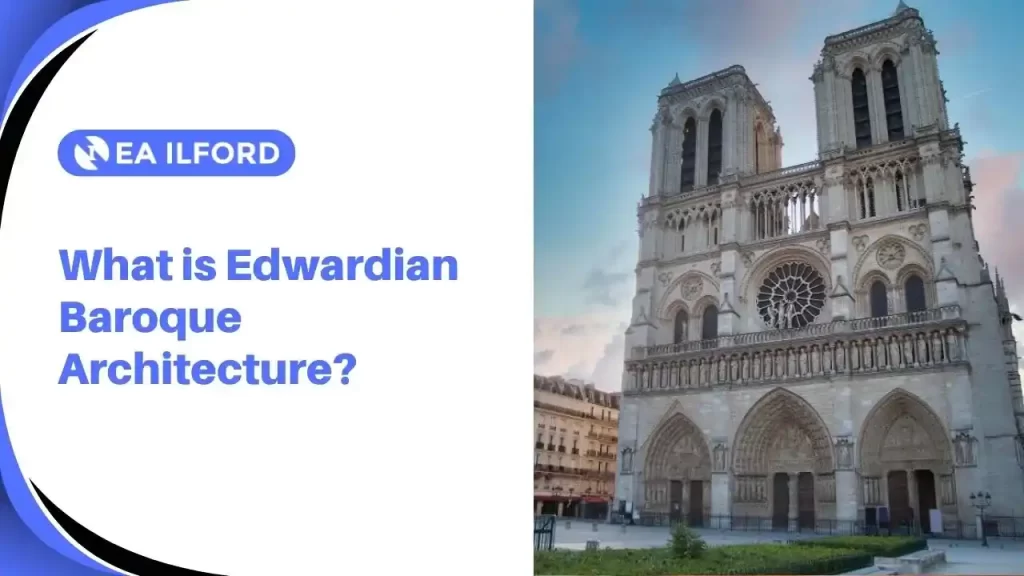
What is Edwardian Baroque Architecture?
The Edwardian period produced some of London’s most recognisable civic landmarks under a specific sub-style known as Edwardian Baroque. Edwardian Baroque, sometimes called “Wrenaissance ”, was the dominant style for civic, institutional and commercial buildings across the British Empire between 1901 and World War I.
The style drew from two primary sources:
- The French classical tradition of the 18th century and the English Baroque of Sir Christopher Wren. His work at the Royal Naval College in Greenwich is an example of Edwardian Baroque domed towers.
- Sir Edwin Lutyens was among its most significant exponents, who designed commercial buildings in what he described as “the Grand Style” through the later 1910s and 1920s.
Details of Edwardian Baroque
A typical Edwardian baroque architecture details include extensive rustication at ground level and exaggerated arched openings above. The domed corner rooftop pavilions and taller central tower elements create a layered roofline. Many designs include Ionic columns, sometimes arranged in pairs. Exaggerated keystones and curved pediments are also common details.
| Famous Edwardian Baroque Landmarks in London Admiralty Arch (1912), near Trafalgar Square. Westminster Central Hall (1911), Westminster, designed by Henry Vaughan Lanchester, Edwin Alfred Rickards, and James.County Hall (completed 1922), South Bank, with its river-facing facade, detailed stonework, and commanding clock tower.Victoria and Albert Museum, which gained a significant Edwardian wing during this period. |
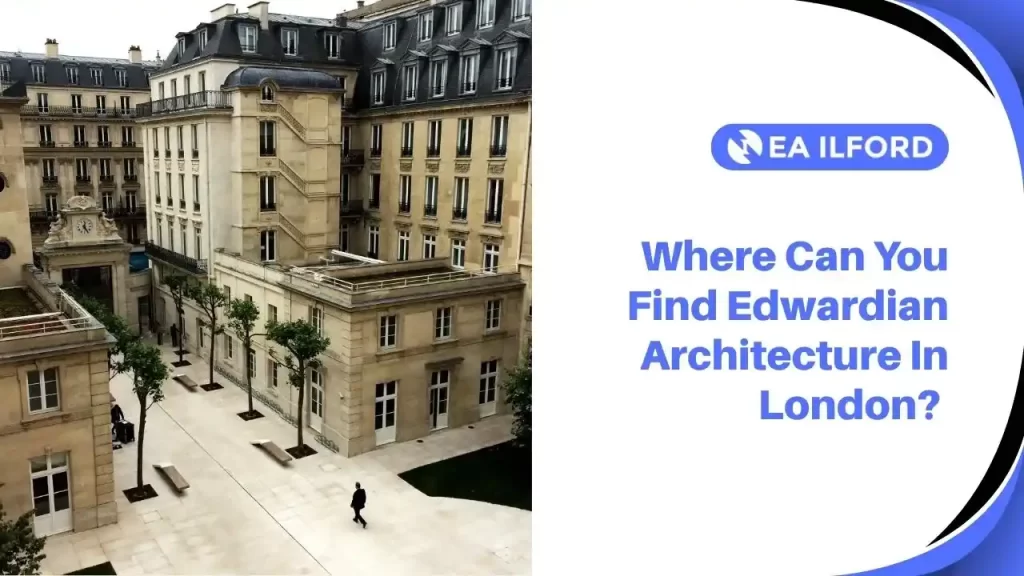
Where Can You Find Edwardian Architecture In London?
The suburban housing of London defines the residential face of the Edwardian era.
Hampstead and Hampstead Garden Suburb (North London)
This suburb is one of the finest single Edwardian residential designs in the country. The Garden Suburb was purpose-built for professional families who wanted gardens, quiet streets, and a fast train into the City. Edwain Lutyens designed several of the houses and public buildings here.
Duliwch (South East London)
Dulwich has been a family favourite for over a century, and the Edwardian streets are most intact here in London. With lined streets, large semis, great schools, easy City commute, the area looks much as it did in 1905.
Richmond (South West London)
Towards Richmond Hill along Richmond Park, you will find some of the most generous Edwardian Architectures in Greater London. The area is best for professionals who want easy access to central London with large plots and a semi-rural feel.
Finchley (North London)
When the Northern Line pushed north in the early 1900s, Finchley was filled in quickly with Edwardian housing. This area has a strong property value due to a good range of Edwardian Stock from modest terraces to larger family semis.
Which Area Suits Your Lifestyle?
| Area | Best For | Avg. Price (2026) | Lifestyle |
| Hampstead & Garden Suburb | Prestige buyers or established families | £1,598,322 | Village feel, Heath, top schools |
| Dulwich | Families, school-focused buyers | £828,143 | Leafy, quiet, 15 min to London Bridge |
| Blackheath | Period character at a lower cost | Mid-range | Relaxed community |
| Richmond | Space seekers and upsizers | £797,000 | Semi-rural, borders Richmond Park |
| Balham | First-time buyers or investors | Accessible | Lively, well-connected, strong rental demand |
| Finchley | Value buyers and growing families | £703,035 | Settled streets, affordable vs the rest of London |
Sources: Rightmove · ONS Housing Data · Foxtons Area Guides
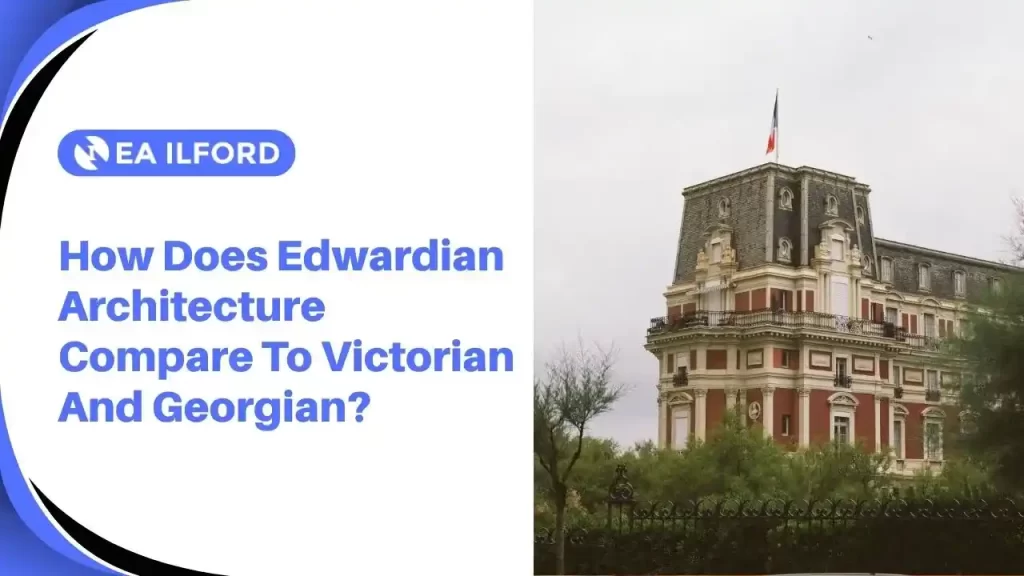
How Does Edwardian Architecture Compare To Victorian And Georgian?
Understanding the differences between London’s three dominant period styles (Georgian, Victorian and Edwardian) is practically useful for buyers, sellers, and renovators. Let’s see their contrast in this comparison table.
| Feature | Georgian Homes | Victorian Homes | Edwardian Homes |
| Main London areas | Belgravia, Mayfair, Bloomsbury, Fitzrovia | Chelsea, Knightsbridge, Primrose Hill, Hampstead | Richmond, Dulwich, Blackheath, Balham, Finchley |
| Overall appearance | Elegant and symmetrical | Decorative and detailed | Bright, spacious and less formal |
| Brickwork & exterior | Stucco fronts with minimal decoration | Colourful brickwork and Gothic details | Red brick with timber-style detailing |
| Windows | Tall sash windows | Bay windows with stained glass | Large sash and bay windows |
| Ceiling heights | Very tall | Tall with ornate plasterwork | Slightly lower |
| Outdoor space | Limited private gardens | Small rear gardens | Front and rear gardens |
| Interior style | Classical and balanced | Rich, dark and decorative | Light, airy and practical |
| Staff/service areas | Basement kitchens and servant rooms | Attic and basement service areas | Designed more for family living |
| Typical layout | Tall terraced houses | Terraces and semi-detached homes | Wider semi-detached and detached homes |
| Build quality today | Can Vary | Solid Construction | Very well-built |
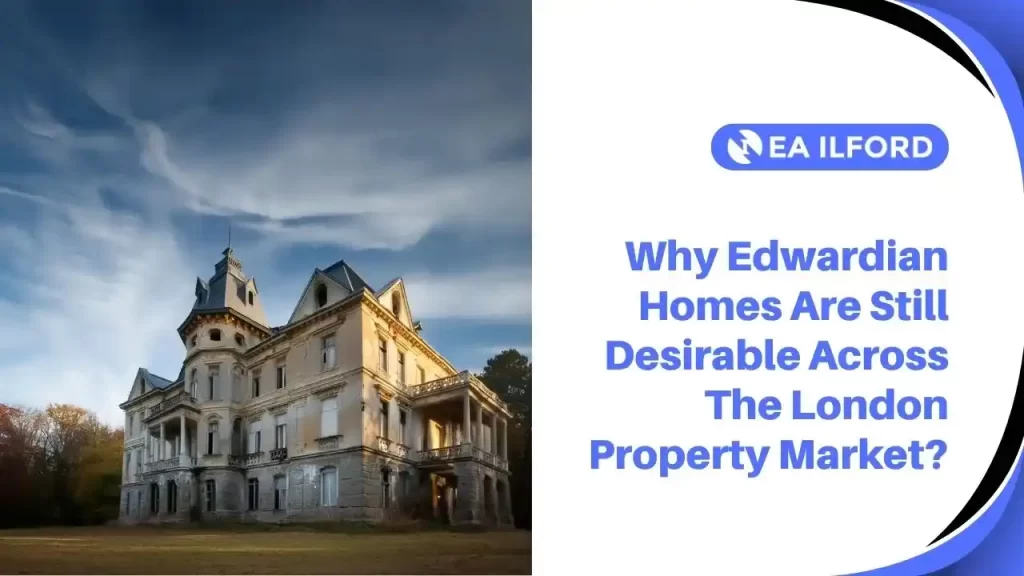
Why Edwardian Homes Are Still Desirable Across The London Property Market?
The sustained demand for Edwardian homes in London is not a matter of nostalgia – it’s due to structure. These homes were built at what many architectural historians describe as the peak of British domestic building standards. Our property selling service connects you with specialists who know the property market inside out.
Spaciousness
Edwardian architecture features construction on wide suburban plots. Edwardian homes are considerably larger than the average UK home size. The double aspect reception rooms, generous hallways and large garden at the front or back are impossible to replicate in modern construction. Large families want a good layout like this because it suits contemporary living well.
Build Quality
Edwardian homes are built with sophisticated techniques to address the damp which had plagued previous Victorian constructions. Damp is far less common in Edwardian homes than in Victorian properties of equivalent age, and maintenance requirements are generally lower due to stronger build quality.
Loft Conversion Ability
The steeply pitched roofs are a signature feature of Edwardian Architecture, and have great potential for a loft conversion. Many Edwardian properties have already been extended in this way, and planning permission for conversion is generally possible within Conservation Area guidelines.
Location
The railway-led development that created Edwardian suburbs also created the neighbourhood infrastructure that makes these areas desirable today. High streets, well-maintained parks, strong schools, community institutions, and frequent rail and tube connections to central London are primary reasons that people in London still prefer Edwardian homes.
Thats why, Edwardian neighbourhoods consistently rank among the best places to live in London for families and professionals alike.
Final Thoughts
Edwardian Architecture is not just a historical landmark. It is London’s most livable and continuously in-demand properties. The wide layouts, gardens, strong structure and prime locations make these properties equally important for investors and families.
Are you looking for Property management support for your period Edwardian homes? Estate Agents Ilford has local knowledge to help you in East London.