PRS Database: A New Landlord Requirement Under the Renters’ Rights Act
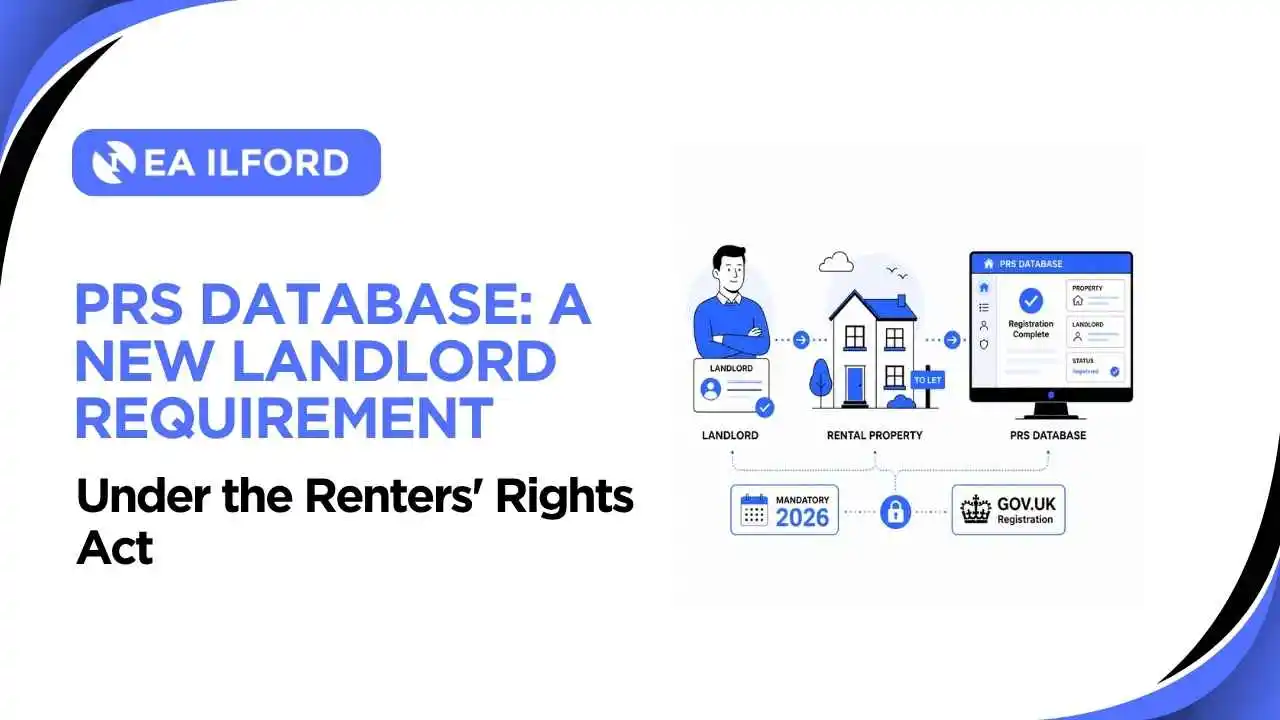
In England, the government has introduced a mandatory national PRS database for private landlords and rental properties. From 15 December 2026, the rollout begins region by region, with London landlords required to register by 15 July 2027. No landlord in England will be able to legally rent out a property without first registering on the Private Rented Sector Database. The government is rolling this out through a new GOV.UK service called “Register your rental property.”
And it’s no longer far away. Beta testing is now complete, and the government has confirmed the live rollout begins 15 December 2026, ahead of Phase 2 of the Renters’ Rights Act 2025. Letting a property in Ilford or East London? At Estate Agents Ilford, we help local landlords understand the Database and what registration entails.

What is the PRS Database for Landlords?
The PRS Database is a national landlord register for England, introduced under the Renters’ Rights Act 2025. Every landlord must sign up, provide key details about themselves and their properties, upload safety compliance documents, and pay an annual fee of £65 per property
Each property gets linked to its Unique Property Reference Number, giving it a permanent digital identity on the system. For tenants, it means being able to see exactly who owns and manages the home they rent. For councils, it means a clear picture of who is operating in their area and a direct route to pursue those who are not playing by the rules.
The government has also named this “Register your rental property.” The government renamed it to make it clearer for landlords searching online.
Who Needs to Register
Registration is mandatory for every private landlord in England. It includes:
- Existing landlords
- New landlords
- Accidental landlords
- Portfolio landlords
- HMO Landlords
There are no exemptions based on property size or how long landlords have been renting.

Why the Government is Introducing PRS Database?
England never had a national landlord register. Scotland introduced one in 2006 under the Antisocial Behaviour Act, and Wales and Northern Ireland have their own versions. Previously, there was no national digital source of information on landlords and rental properties. It was challenging for local councils to identify non-compliant landlords, and it was also difficult for tenants to verify landlords’ information or property before renting.
Therefore, the government has introduced a central record that brings together key information for landlords, tenants and councils. It helps landlords understand their compliance obligations.
When will the PRS Database Launch
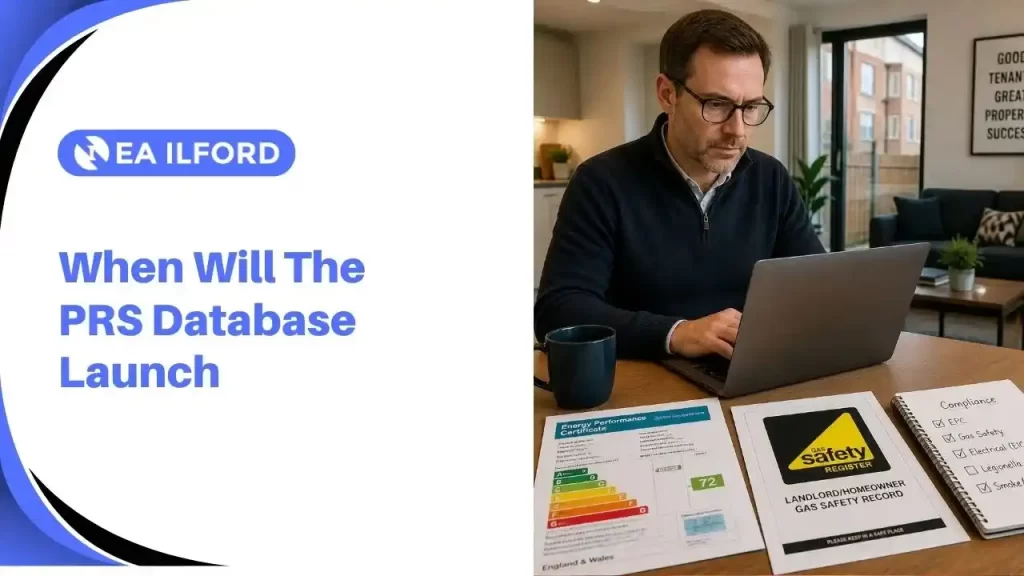
London landlords have until 15 July 2027 to register. The government has confirmed a phased regional rollout beginning 15 December 2026 in the West Midlands. London is the second-to-last region, with registration opening on 15 July 2027. Once that date passes, landlords have a three-month window before local councils, including Redbridge and Newham, can begin enforcement action.
Region | Registration Opens |
West Midlands | 15 December 2026 |
East of England | 15 January 2027 |
East Midlands | 15 February 2027 |
South East | 15 March 2027 |
Yorkshire & Humber | 15 April 2027 |
North West | 15 May 2027 |
North East | 15 June 2027 |
London | 15 July 2027 |
South West | 15 August 2027 |
Important for Ilford Landlords: Deadlines are based on where the property is located, not where the landlord lives. If you own a rental property in Ilford, Seven Kings, or anywhere in the London boundary, your registration deadline is 15 July 2027.
Current Status of PRS Database
The “Register your rental property” team invited landlords to take part in a private beta phase to help shape the service. Testing started on 20 May 2026 and continued in stages over the coming months. Landlords who took part were registered and assigned a Landlord Registration Number and a Property Registration Number to shape the system visibly. It was a testing phase, and any data entered during beta testing has been deleted and will not carry over to the live system.
September 2026 update: The government has confirmed registration opens 15 December 2026, starting in the West Midlands. London’s start date is 15 July 2027, giving Ilford and East London landlords time to prepare, but not to delay. The landlords who will struggle are those who will wait for commencement. Start pulling your compliance documents together now, including your Gas Safety Certificate, EICR, and EPC. If anything is missing or out of date, deal with it before registration opens in your area.
Get in touch with our team, and we will make sure your properties are compliant, documented, and register-ready before Phase 2 goes live in your area.

How to Register on the PRS Database: Step by Step
The GOV.UK service will be called “Register your rental property.” Based on the current roadmap, the process follows the following steps:
Step 1: Go to GOV.UK It
When registration opens in your area, visit www.gov.uk and search “Register your rental property.” There is currently no live registration portal.
Step 2: Create Your Landlord Record
Register yourself as a landlord with your full name, contact details, and any relevant business information. You will receive a Landlord Registration Number on completion.
Step 3: Register Each Property Separately
Each rental property needs its own entry covering the address, property type, number of bedrooms and current occupancy status. As a result, each property will receive its own Registration Number.
Step 4: Upload Your Compliance Documents
You will need to provide your Gas Safety Certificate, Electrical Installation Condition Report and Energy Performance Certificate for each property. HMO landlords will also need to upload their licence details.
Step 5: Pay the Registration Fee
A fee per property applies for registration, and renewal is required every year. The confirmed annual fee is £65 per property. For a London landlord with five properties, that’s £325 per year.
Step 6: Keep Your Records Up to Date
Once registered, you are legally required to keep your entries up to date. An expired certificate or outdated information is treated as a breach.

What Information Landlords Need to Upload?
Landlords need to register the following information on the digital portal:
Landlord Information
- Full name and contact details
- Business name if applicable
- Portfolio size
Property Information
- Full address and Unique Property Reference Number (UPRN)
- Property type and number of bedrooms
- Current tenancy status
- Gas Safety Certificate
- Electrical Installation Condition Report (EICR)
- Energy Performance Certificate (EPC)
Are There Any Registration Fees
The annual fee is now confirmed at £65 per property per year. London landlords with multiple properties across Ilford, Barking, or Wanstead will pay £65 for each one annually. Missing the renewal is treated as a breach and carries a fine. The good news is that the fee is likely to be treated as an allowable expense against rental income, which reduces the real cost for most landlords.

What does PRS Database UK Mean for Landlords?
This Database is separate from selective licensing, an HMO license, and the new Landlord Ombudsman. The database will effectively create a digital compliance footprint, making it easier for authorities and tenants to identify gaps or failures. Clear documentation, timely communication, and fair treatment of tenants will become essential.
The database creates new compliance obligations and costs for landlords already dealing with an increased regulatory burden. A landlord with four rental properties might not find the new PRS registration challenging. The difficulty is with old certificates, an EPC in an agent portal, and missing EICR remedial evidence.
Here, a professional property management service adds value. A managed service keeps your compliance records in order, tracks renewal dates, and ensures your properties are register-ready before the deadline arrives in your area.
Contact for Landlord Consultation→

What Happens When Landlords Don’t Join?
Penalties for non-compliance and non-registration follow the Renters Rights Act’s two-tier structure:
- Up to £7,000 for a first or less serious breach
- Up to £40,000 for serious, repeated or fraudulent breaches, plus rent repayment orders of up to 24 months.
In addition to fines, an unregistered landlord cannot obtain a Section 8 possession order except on anti-social anti- social behaviour grounds. They also cannot advertise their property by an agent or portal and cannot review an HMO licence. Unregistration makes the property unlawful for letting.
Who Will Have Access to the Database?
Councils and prospective tenants may have access. This means your compliance record becomes publicly visible. An out-of-date certificate or missing document will not just create a legal risk. It will be visible to anyone searching your property.

What does Private Rented Sector Database mean for Letting Agents?
Once the database goes live, every property listing must carry a valid Landlord Registration number and a Property Registration Number. No numbers mean no listing. It applies to landlords advertising privately and to letting agents marketing on their behalf.
Your letting agent needs your registration details before they can legally list or manage your property. An unprepared agent will leave you exposed. A professional one will guide you through the process before registration opens in your area.
At Estate Agents Ilford, we are already preparing our landlords for Database registration. From organising compliance documents to tracking certificate renewal dates, we make sure your properties are ready before the deadline reaches your area.
Conclusion
The PRS database is not far away and is already in testing and going to roll out region by region. For London landlords, the deadline is 15 July 2027. Every private landlord in England will need to register. There is no minimum portfolio size, no exemption for long-standing landlords and no grace period for those who leave it too late.
The landlords who will not struggle are those who wait until registration opens in their area. The landlords who will not notice the change are those already working with a professional property management service that keeps everything in order. The Private Rented Sector Database is coming. The question is whether your properties are ready when it arrives in your area.
Speak to our team today, and we will make sure they are.