Council Tax Rises (CTR) UK | What Homeowners And Tenants Need To Know
Are council tax rises in London increasing your household costs? Yes, most councils are raising charges to cover funding gaps and rising service costs. Understanding how the 2026 to 27 council tax rises apply to your area helps you to plan your budget. A Real Estate Agent in Ilford can also help you evaluate these ongoing costs when choosing the right property.
QUICK FACTS
- Average Band D council tax rises to £2,392 up to £111 or 4.9% from 2025-2026.
- 274 out of 384 councils are using the maximum increase level of 5%.
- 7 councils get special permission to push the rises somewhere between 6.75% and 9.0%.
- Adult social care elements come in at £35 per Band D bill with the 2% cap.
What are the Council Tax Rises?
Council Tax increases happen when local councils increase the amount residents have to pay. Those extra funds go into the daily services like rubbish removal, housing help, schools, and social care support. The rises are decided once a year, though they can differ from one council to another.
The whole idea is to make sure councils have enough money so they can keep public services running. Some small increments are usual, but when the amounts go up, it really hits the household budget, especially for families with lower incomes. Knowing how these adjustments help you to prepare better in advance.
Council Tax Rises for 2026 to 2027
Standard Increases:
Most English councils are going up their rates by the maximum that is allowed, 5%. It is made from a 3% core increase and an extra 2% adult social care precept. Out of 384 authorities that fall under referendum rules, 274 used full flexibility, while 50 were near the top limit.
Exceptional Rises Permitted:
7 councils got special permission from the government to apply higher increases because of exceptional financial circumstances.
Council with Special permission for Higher Increases
| Council | Maximum Increase Permitted |
| Bournemouth, Christchurch & Poole | 6.75% |
| North Somerset | 9% |
| Shropshire | 9% |
| Trafford | 7.5% |
| Warrington | 7.5% |
| Windsor & Maidenhead | 7.5% |
| Worcestershire | 9% |
Council Tax Rises | New Rates for 2026/27
On 12 February 2026, the County Council voted for a 3.986% Council Tax rise to help. It still stays under the 5% referendum ceiling, so a public referendum wasn’t needed. For a usual Band D property, it comes out to roughly an extra £5.62 each month.
| Council Tax Band | 2025/26 Charge | 3.986% Increase | 2026/27 Charge |
| A | £1,127.46 | £44.94 | £1,172.40 |
| B | £1,315.37 | £52.43 | £1,367.80 |
| C | £1,503.28 | £59.92 | £1,563.20 |
| D | £1,691.19 | £67.41 | £1,758.60 |
| E | £2,067.01 | £82.39 | £2,149.40 |
| F | £2,442.83 | £97.37 | £2,540.20 |
| G | £2,818.65 | £112.35 | £2,931.00 |
| H | £3,382.38 | £134.82 | £3,517.20 |
How Council Tax Bills Are Calculated?
Your council tax bill is complex and made up of few different elements. What you actually pay depends on your council tax band linked to the property value and which service applies.
Bill Components
- Local council element: Maximum 3% increase for council services.
- Adult Social Care Precept: Maximum 2% increase ( 35 added to the average Band D)
- Police and Fire Services: Set by local police units and fire authorities.
- Parish Precept: Average rise of 8.2%
- Parish Council Percept up to 8.2%
Not every area has a parish council. If yours is one of the ones, you can expect an average increase of about £8 per Band D ( Rising from £92 to £100).
Impact of Council Tax Rises on Low-Income Households
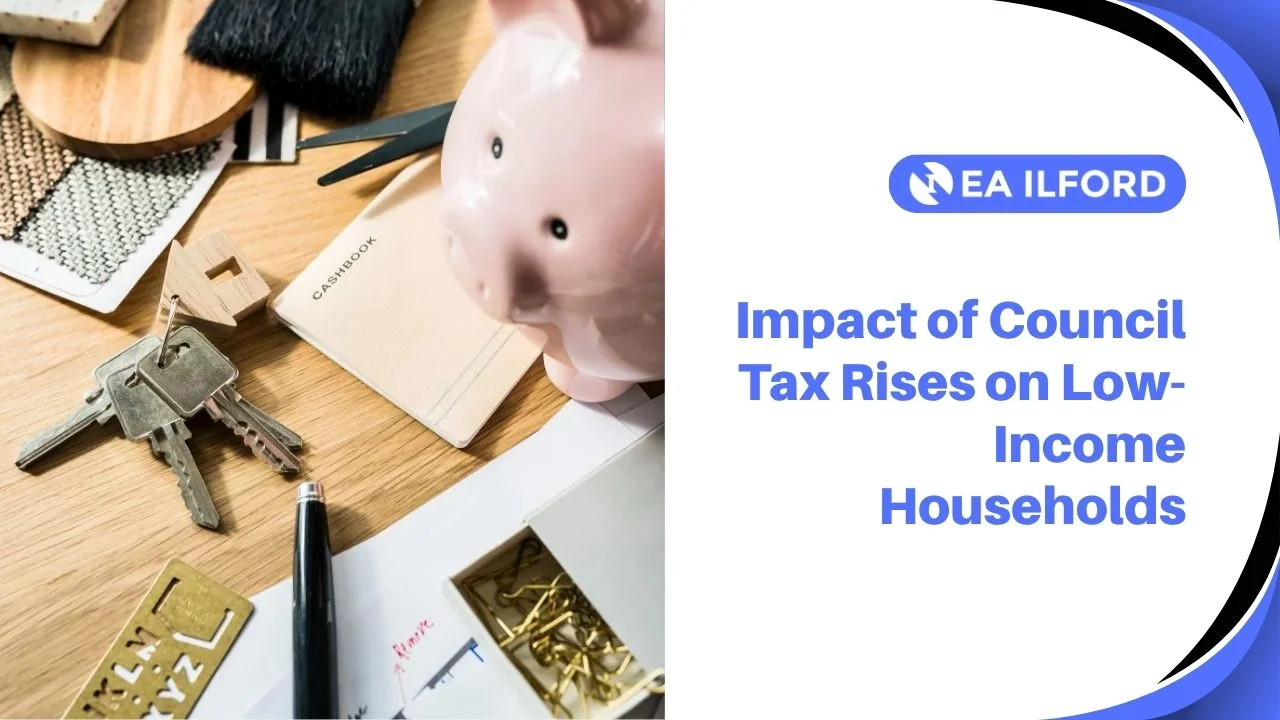
Rising Council tax is putting extra pressure on households that are already struggling to cover basic living costs. For families on a low income, any small increases make the choice feel impossible between food, heating and rent.
Financial Burden
Council tax rises are putting a heavy financial burden on low-income households. Residents who depend on full discounts may now be paying something back. It affects your monthly budgets and the things they need most day to day.
Pressure on Local Services
Local services are under pressure as councils weigh up rising costs with limited funding. A few councils end up with real budget shortfalls, which can mean cuts to youth clubs, housing support, and community programs.
Major Reforms To How Funding Is Allocated?
The government is introducing changes to make council funding feel more balanced and needs extra support. These reforms should help councils deal with rising costs while protecting the essential services.
- It gives the council more core spending power to invest in housing, education and social care.
- The updated funding system prioritises deprived neighbourhoods, and the lowest 10% of councils get the largest per capita boost.
- £ 600 million recovery grant continues for underfunded areas.
- Council tax increases are capped overall at 5% ( 3% core and 2% specifically for adult social care).
- For the Upper-tier councils, they get above-inflation increases to help stabilise their budgets during the transition period.

How to Manage Higher Council Tax Bills?
You can follow these steps to reduce the council tax rise:
Check Council Tax Discount
A lot of households can actually qualify for discounts between the 25% up to 100%. That can cover full-time students, as well as folks on lower incomes or benefits. It may also apply to adults who live on their own and those dealing with severe mental impairment.
Challenge Your Council Tax Band
Houses across England are in the wrong council tax band, usually back to about 1991. But if you ask for a reassessment, the classification might shift up or down, and that could mean your bills go up. A professional property survey often reveals valuation details worth checking before formally challenging your council tax band.
Final Thought
In 2026 to 27, council tax rises across London will impact both residents and the day-to-day local services. For low-income households, it can mean extra financial pressure, even when budgets are already tight. Councils are working through funding gaps while they also try to keep essential services protected. If you stay up to date on what your local council is changing, you can better plan your budget and see which options for support might apply.