21 HHSRS Hazards: What Landlords Need to Know in 2026
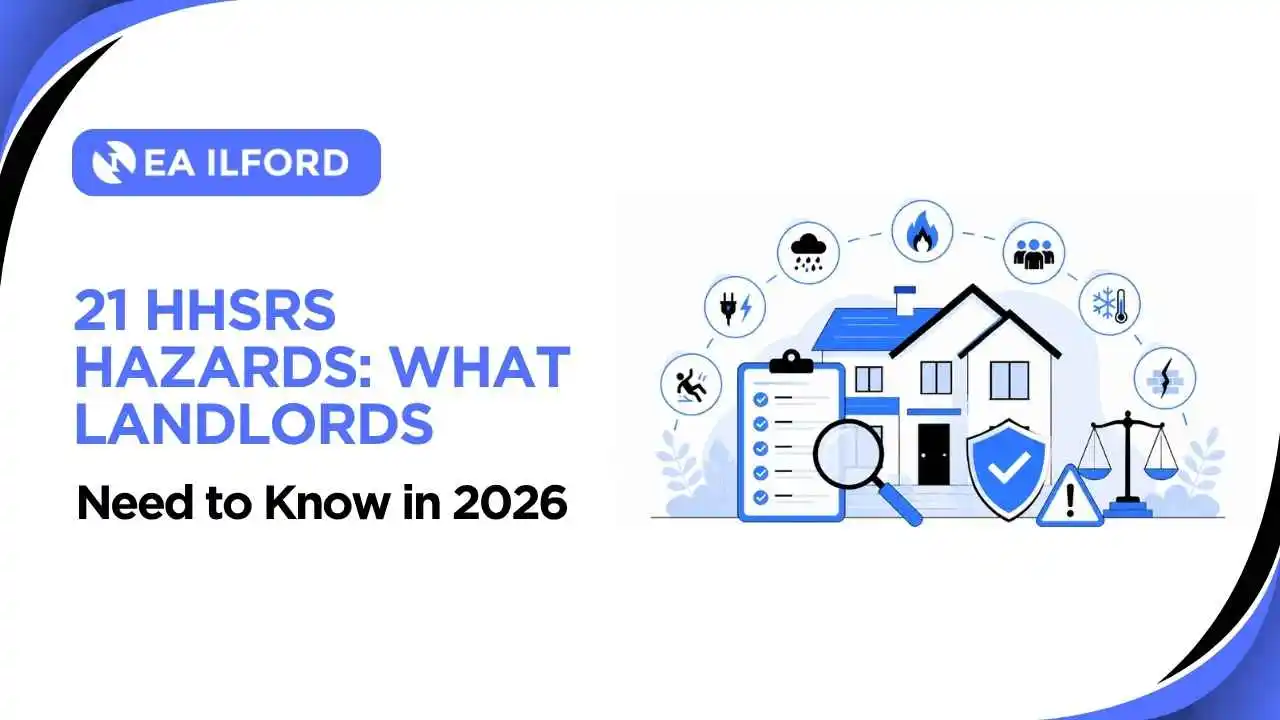
The Housing Health and Safety Rating System was updated in June 2026. Now, there are 21 HHSRS hazards instead of 29, and it uses High, Medium, and Low bands instead of A to J. It also introduces baseline indicators that landlords and property agents can use to identify common housing deficiencies.
HHSRS hazards apply to all residential properties in England, including rented homes, and a single tenant complaint may lead to enforcement action. If they find a Category 1 hazard, it can result in a fine of up to £7,000.
This guide breaks down all 21 HHSRS hazards, the new scoring bands, what councils can do, and what landlords need to do for compliance.
What is the Housing Health and Safety Rating System (HHSRS)?
The Housing Health and Safety Rating System (HHSRS) is a risk-based assessment tool used by local councils in England to identify and score health and safety hazards in residential properties. It was introduced under the Housing Act 2004. HHSRS has been the standard framework for assessing housing conditions in the private rented sector since 2006.
In June 2026, the system was significantly updated. The number of hazards was reduced from 29 to 21, and the scoring bands were simplified, introducing baseline indicators. The Renters’ Rights Act is being implemented across the rented sector. Its strict compliance requirements demand that landlords must understand HHSRS hazards and their responsibilities for identifying and addressing them.
What is an HHSRS Hazard?
According to Section 2 of the Housing Act 2004, a hazard is any risk of harm to the health or safety of an actual or potential occupier of a dwelling that arises from a deficiency in the property; that deficiency might be due to poor construction, lack of maintenance, or other issues.
Every hazard is assessed according to the most vulnerable age group at risk from the specific hazard.
What is a Deficiency in terms of HHSRS?
GOV.UK describes deficiency as anything that the property falls short of because things were not built or designed quite right, or have not been properly maintained over time. For example, a broken boiler, a damp wall, a loose banister. They are the starting point for any HHSRS assessment. Where a deficiency puts a tenant’s health or safety at risk, it becomes an HHSRS hazard.
HHSRS Category 1 vs Category 2 Hazards
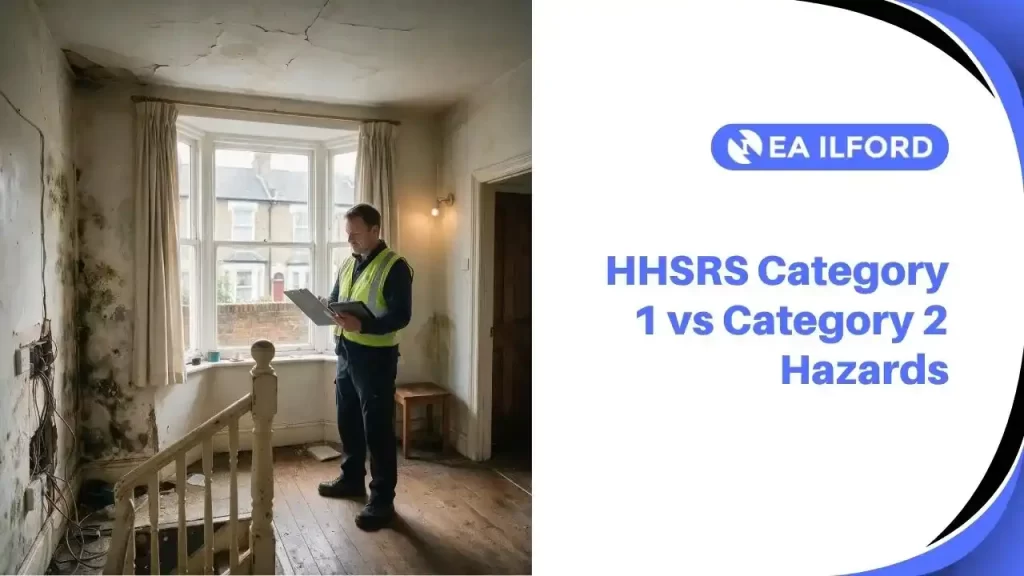
The category assigned to a hazard determines whether your council must act or simply has the power to, and that distinction matters for landlords to understand their legal obligations.
| Category 1 | Category 2 | |
| Definition | Serious hazard posing an immediate risk to health or safety. The assessed hazard has a sufficiently high score | Lower-risk hazard. It’s significant but not urgent |
| Council obligation | Must take action | May take action |
| Enforcement powers | Improvement notice, prohibition order, emergency action | Improvement notice or prohibition order (discretionary) |
| Landlord risk | Rent repayment orders, fines, prosecution | Advisory notice or discretionary enforcement |
| Examples | Severe damp and mould, dangerous electrics, fall hazards | Minor condensation, poor lighting, worn flooring |
HHSRS Hazards 2026 Reforms
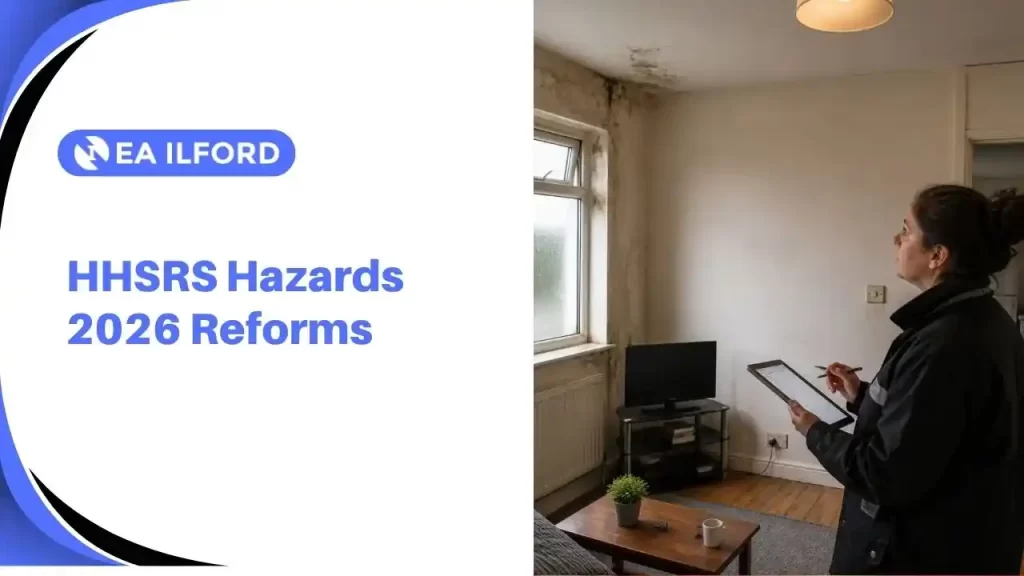
The June 2026 reforms were the most significant update to HHSRS since it was introduced in 2006. These changes followed an extensive review led by RH Environmental. The goal was to make the system easier to understand, bring it in line with other housing legislation, including the Building Safety Act.
Five things changed:
1. Hazards Reduced to 21
From June 2026, the total number of HHSRS hazards assessed dropped from 29 to 21 that may threaten the health or safety of occupiers in an individual residential dwelling.
2. Scoring Bands: High, Medium and Low
Before June 2026, HHSRS hazard scores were classified under ten bands labelled A to J. Most landlords and tenants found the system difficult to follow. The 2026 reforms replaced it with three plain bands that are easier to understand and apply.
The Category 1 and Category 2 hazards threshold will be the same. High means the Category 1 hazard, while the medium and low bands have replaced the old D to J bands. Here is the new system as compared to the previous band system:
| New HHSRS Band | Hazard Category | Score | Previous Bands |
| High | Category 1 hazards | Over 1,000 | A to C |
| Medium | Category 2 hazards | 100-999 | D to F |
| Low | Category 2 hazards | Up to 99 | G to J |
3. New Names For The Four Classes Of Harm
The four classes of harm were previously labelled Classes I to IV. They are now called Extreme, Severe, Serious and Moderate.
- Extreme class refers to the most life-threatening outcomes or fatal conditions such as lung cancer or burn injuries covering 80% of the body.
- Severe means serious but survivable. Heart attacks, strokes, Legionnaires’ disease, loss of a limb, and major fractures are examples.
- Serious class includes significant health impacts requiring medical attention. For example, skull fractures, neurological impairment, chronic stress, and loss of a finger.
- Moderate is the least harmful category, such as minor fractures, cuts, bruising, persistent coughs or colds.
For the full list of harm examples under each class, refer to the HHSRS Operating Guidance Part 1 on GOV.UK.
4. Broader fire hazard definition
The fire hazard now covers more than fire and smoke. Under the 2026 definition, prescribed fire hazard formally includes uncontrolled fire, smoke fumes, explosions and any building collapse caused by fire or explosion. These risks were not explicitly covered before.
3. Baseline indicators introduced
HHSRS first time introduced baseline indicators. It is a practical list of building measures that councils use as reference points when assessing a property. If you fall short of a baseline indicator count, it will be a deficiency and adds to the hazard score.
The 21 HHSRS Hazards: HHSRS
| Hazards | |
| Protection Against Accidents (8 hazards) | Falls on the level |
| Falling on stairs | |
| Falling between levels | |
| Fire and explosions | |
| Flames, hot surfaces | |
| Collisions, entrapment and ergonomics | |
| Structural collapse and falling elements | |
| Electrical hazards | |
| Physiological Requirements (7 hazards) | Damp and mould growth |
| Excess cold | |
| Excess heat | |
| Radiation | |
| Lead | |
| Indoor air pollutants | |
| Asbestos and manufactured mineral fibres | |
| Protection Against Infection (2 hazards) | Domestic hygiene |
| Water supply | |
| Psychological Requirements (4 hazards) | Crowding and space |
| Entry by intruders | |
| Noise | |
| Lighting | |
Importance of Recognizing HHSRS Hazards
The core purpose of the HHSRS is to maintain the safety of the occupants. If Category 1 and 2 hazards are correctly identified, the residents can be protected before being exposed to the risk:
- Mandatory Enforcement: A council inspector who finds a hazard either Category 1 or Category 2 can issue an improvement notice, prohibition order, or emergency works without the landlord’s consent. If you ignore it ca risk heavy fines, rent repayment orders, or criminal prosecution by law.
- Category 2 hazards escalate if ignored. Minor damp becomes mould, and under Awaab’s Law, social landlords are now legally required to investigate damp and mould within a required timeline. Delays are now compliance risks.
- Compliance protects your property value. Unresolved HHSRS hazards can affect tenants and reduce what a property can command on the market. It also impacts the selling price of the property.
- Landlord Reputation: Tenants talk, reviews are public, and councils share enforcement records. A clean compliance history makes your property easier to let and your business easier to grow.
Landlord Repair Responsibilities Under HHSRS
Under the Housing Act 2004, landlords are legally required to take action to minimise or eliminate hazards identified through HHSRS.
| Law | Landlord’s responsibility |
| Section 11, Landlord and Tenant Act 1985 | Keep the property’s structure, exterior and key installations in good repair. |
| Section 9A, Landlord and Tenant Act 1985 | Keep the property fit for human habitation throughout the tenancy. |
| HHSRS | Identify and address health and safety hazards that could harm tenants. |
- Structure and Exterior: Roofs, walls, foundations, windows, and doors are part of your property. If they deteriorate and create a hazard, the council will take action.
- Heating and Insulation: Inadequate heating is one of the most common Category 1 hazards inspectors find. Your property must be warm enough to live in, which directly ties to the Decent Homes Standard, which sets minimum heating requirements for rental properties.
- Damp and Mould Risk Management: You cannot wait for a tenant to complain about damp or mould issues. Take action when the issue is identified.
- Electrical and gas safety. Faulty wiring and unsafe gas appliances score high under HHSRS. Having valid Gas safety and EICR certificates is not enough if the property itself is in poor condition.
- Letting agents do not take on your liability. If repairs are not done properly or on time, enforcement action lands with you, not the agent.
Enforcement action follows the landlord, not the agent.
Our property management service handles repairs, tenant communication, and compliance on your behalf.
Other Legal Requirements That Support HHSRS
HHSRS identifies hazards. Other laws set specific safety and property standards that landlords must follow to keep the HHSRS hazards risk low:
| Requirement | What landlords must do |
| Gas safety | Landlords must arrange an annual gas safety check by a Gas Safe registered engineer. |
| Electrical safety (EICR) | They must have the electrical installation inspected at least every 5 years. |
| Smoke & CO alarms | Landlords must install and maintain the required smoke and carbon monoxide alarms. |
| EPC | They must have a valid EPC and meet minimum energy efficiency requirements unless exempt. |
| Property licensing | Landlords are required to obtain the correct HMO, additional or selective licence where required. |
| Awaab’s Law | Follow the required repair timescales where the law applies to the tenancy. |
How HHSRS Hazard Assessment Works?
An HHSRS assessment is not a simple checklist. It is a risk-based process carried out by a qualified council officer. He inspects the property, identifies deficiencies and scores the risk each one poses to the health and safety of the occupier.
Step 1: Inspect the whole property
The assessor inspects every part of the property, including interior, exterior, gardens, driveways, outbuildings and any shared areas such as staircases and corridors.
Step 2: Identify deficiencies
He then records anything that falls short of the ideal condition. Poor construction, lack of maintenance and inadequate design all count. One deficiency can feed into more than one hazard. A leaking roof, for example, contributes to both damp and mould growth and excess cold.
Step 3: Allocate deficiencies to hazards
Each deficiency is linked to one or more of the 21 HHSRS hazards. The assessor then decides which hazards are significant enough to score.
Step 4: Score the likelihood of harm
The assessor judges how likely it is that a harmful hazard will happen over the next 12 months. This is scored against the age group most vulnerable to that specific hazard.
Step 5: Score the spread of harm outcomes
The assessor considers how severe the harm would be if it occurred. He then allocates percentages across the four classes: Extreme, Severe, Serious and Moderate. These must add up to 100%.
Step 6: Generate the final hazard score
The likelihood score and harm outcome percentages go into a formula that produces the final hazard score. The higher the score, the greater the risk.
Step 7: Assign a band and category
The final score falls into one of three bands. High (1,000 and above), Medium (100 to 999) or Low (under 100). A High score automatically becomes a Category 1 hazard, triggering a legal duty for the council to act.
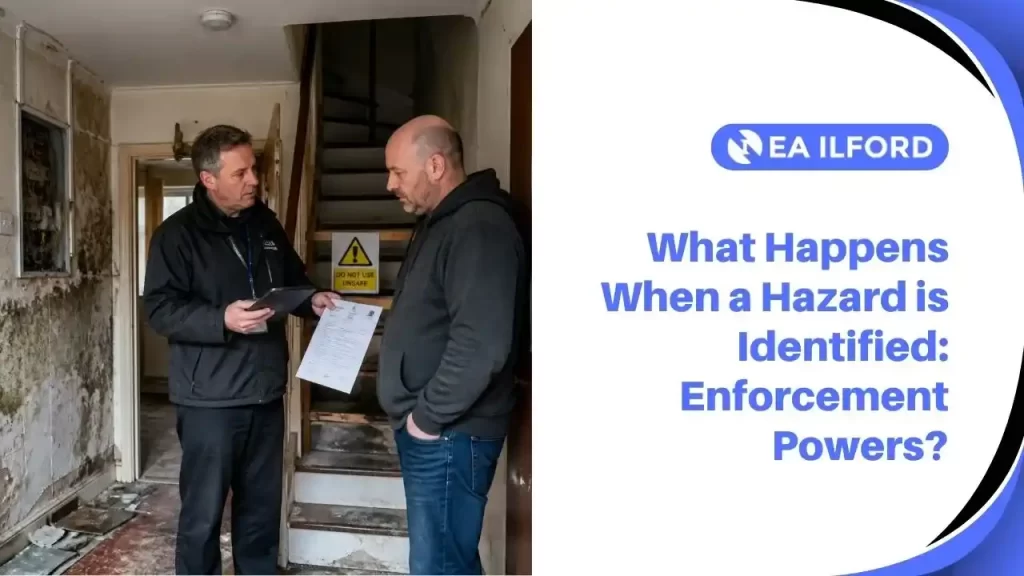
What Happens When a Hazard is Identified: Enforcement Powers?
If any hazard is identified or it turns out to be a Category 1/2 hazard, the council will take appropriate enforcement action. It may issue:
1. Awareness Notice
A hazard awareness notice is basically a warning from the council that a hazard has been found in a property. You are not compelled to start improvement work when this notice is served. There are no specific timeframes; it’s an advisory notice so it doesn’t lead to any enforcement action. It is used in
2. Improvement Notice
An improvement notice is served to carry out repair work on the property to reduce hazard risks. The notice is usually issued to the first person controlling the property. Copies are sent to the tenants and landlords (when letting agents are managing the property). The notice will contain the following things.
- Categorize the hazard as 1 or 2.
- Nature of hazard
- Deficiencies contributing to the hazards.
- The corrective action required
- Timeframes in which the remedial work will be carried out.
- The right to appeal
- Period during which appeal is made
Appeals can be made against the First Tier Tribunal within 21 days of the notice being served. The improvement will be suspended when the appeal is in progress.
| Penalty Caution If the awareness is ignored, it will lead to serious enforcement actions such as completing the required work and charging the property controller. The council can issue:A civil penalty of £30,000.Rent Repayment OrderA banning order and place the property controller or landlord on the Rogue Landlord Database. |
3. A Prohibition Order
Prohibition orders are served when Category 1 and Category 2 hazards are identified. It restricts the use of the property or part of the property where hazards are recognised. It may apply to all residents or a special age group depending on the nature of the hazard. The effective notice period of a prohibition order is 28 days.
The order must set out:
- The hazard identified and the residential premises where it exists.
- The deficiency causing the hazard
- The part of property affected by the hazard
- The remedial work required to remove the hazard.
- Right to appeal determination.
A prohibition order is used where there is a serious risk to health but correcting the risk is impractical. The order may be needed to prevent overcrowding or restrict the use of specific rooms in an HMO. It may also apply where a property is safe for some groups but poses a risk to others.
4. Emergency Remedial Action or Emergency Prohibition Order
Local councils may take emergency action or issue a prohibition order when:
- A Category 1 hazard is identified
- The hazard is an imminent risk to the health and safety of occupants.
- Other management orders are not enforced.
When the local authority takes responsibility for remedial action, they’ll perform any works required to fix the problem. The notice is served within 7 days. The order must state:
- The nature of the hazard and the part of property where it exists
- Deficiency causing hazard
- The premises where the remedial action has been or will take place in relation to the hazard.
- Date when the action is started.
Emergency prohibition order works the same as ordinary prohibition order. The difference is that an emergency order works on the same day,
5. Demolition Order (Worst case scenario)
Demolition orders are rare. A local authority may use it where a property has a very serious Category 1 hazard and isn’t suitable to occupy. The order requires the homeowner to demolish the property. Tenants may be given compensation or helped find another home. In some cases, the order can also help the council take possession of the property.
If landlords get a demolition order, get legal advice as soon as possible.
HHSRS Civil Penalties: Can Landlords Be Fined?
The new HHSRS enforcement rules have been in force since 22 June 2026. Councils can issue £7,000 fines for each Category 1 hazard, without giving landlords time to fix it. If the problem is not dealt with or the landlord continues to breach the rules, the fine can reach £40,000. (NRLA)
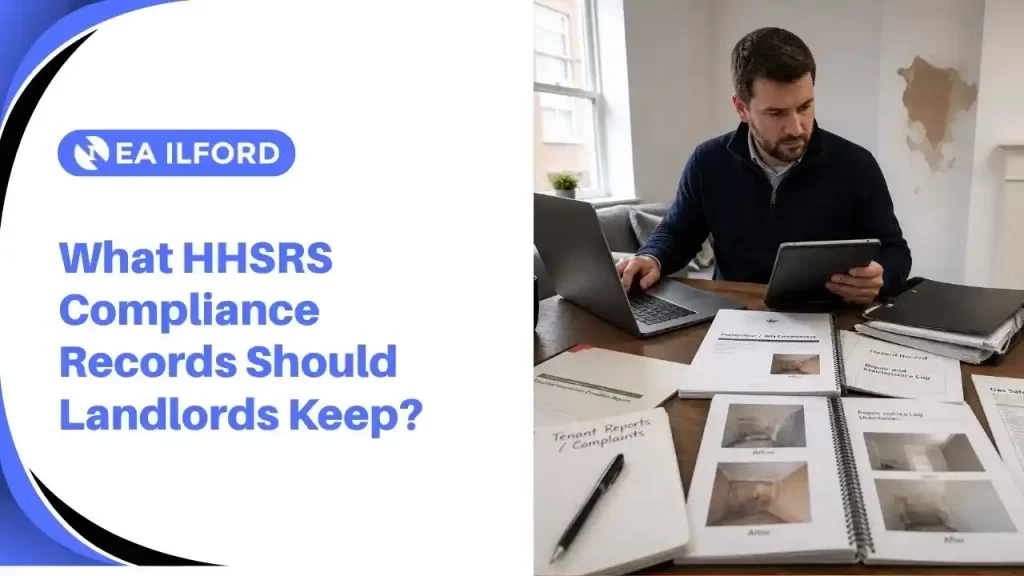
What HHSRS Compliance Records Should Landlords Keep?
When managing hazards adequately, landlords must keep clear records. It includes:
- HHSRS inspection/risk assessment reports
- Records of hazards identified
- Repair and maintenance records
- Photos and evidence of remedial work
- Tenant reports and complaints
- Relevant safety certificates
The council can legally ask landlords to provide documents when required.
Conclusion
HHSRS gives landlords a legal and clear way to manage and deal with the risks in their properties. The 2026 changes make the system easier to follow, but landlords still need to stay on top of repairs. Don’t wait for a tenant complaint to find a problem. They must carry out inspections and safety checks in the property regularly to avoid any costly enforcement action.