Right to Rent Check: What Landlords Must Do Before & During Tenancy

Right to Rent checks are changing from 1 October 2026. A new Right to Rent Code of Practice will replace the January 2024 Code and update the guidance for landlords and agents, including digital checks. The Right to Rent scheme is not new. It began in 2014 and was extended across England in 2016. The Code of Practice has been updated several times since then.
For landlords in England, the important thing is knowing what the current rules require. This guide explains who needs a Right to Rent check, how landlords should carry it out, when follow-up checks are required, and what changes from 1 October 2026.

What Is a Right to Rent Check?
A Right to Rent check is a check that England landlords carry out to confirm that an adult tenant has the legal right to rent residential property. The check is a legal requirement and must be completed before the tenancy begins. Some tenants may need a follow-up check later, so the initial check should not be considered the end of the process. GOV.UK- Landlords’ Guide to Right to Rent Checks
The check applies to every adult tenant aged 18 or over who will use the property as their main residence. It can include a tenant who is not named on the tenancy agreement. A landlord may check the original physical documents, use the Home Office online service, or use a registered Digital Verification Service.

Who Has the Right to Rent in England?
Right to Rent falls into three categories, depending on a person’s immigration or citizenship status: unlimited, time-limited, or no right to rent. The category matters for landlords because tenants with a time-limited right to rent may need a follow-up check. Each category has different implications:
Unlimited Right To Rent
An Unlimited Right to Rent means the tenant can rent in England without an expiry date on their right to rent. It includes British and Irish citizens, and people with indefinite permission to stay in the UK. For these tenants, landlords and letting agents don’t need to schedule a follow-up check based on an expiry date.
Time-Limited Right To Rent
A time-limited right allows someone to rent in England for a specific period. This commonly applies to tenants with temporary immigration permission. The initial check is only part of the process. What landlords need to do is to keep track of when the tenant’s right to rent expires and carry out a follow-up check when required.
No Right To Rent
If a person does not have the right to rent in England, a landlord cannot normally rent the property to them. The landlord should complete the required checks before deciding whether the tenant can be granted the tenancy. Home Office Right to Rent Guide

Who Is Responsible for Carrying Out Right-to-Rent Checks in the UK?
The landlord is normally responsible for completing right-to-rent checks. A landlord can also appoint a letting agent or management agent to carry out checks on their behalf. It is confirmed in writing that the agent handles the initial and follow-up checks.
If the agent accepts responsibility in writing, liability for civil penalties can transfer to the agent. The landlord remains responsible unless these duties have been formally passed to an agent.
Estate Agents Ilford can help landlords manage these responsibilities through our property management service.
| Important Note! If a landlord takes over a property with existing tenants, they should obtain evidence that the previous Right to Rent checks were completed and note any follow-up checks if due. |

What Are the New Right to Rent Check Rules from October 2026?
From 1 October 2026, the updated Right to Rent Code of Practice applies to new residential tenancies. It also applies to follow-up checks for existing tenants when those checks are due on or after 1 October 2026.
This updated Code replaces the version that came into force in February 2024. The main updates include:
- Digital checks: The Code now reflects digital Right to Rent checks, including eVisas and registered Right to Rent Digital Verification Service Providers (RtR DVSPs).
- Three checking routes: Landlords and agents can use a Home Office online check, a manual document check, or an approved RtR DVSP where permitted.
- Equal treatment: Landlords must not treat prospective tenants differently because of the way they prove their right to rent.
- Home Office Checking Service: The updated guidance also clarifies when the Landlord Checking Service should be used.
- Digital access: The Code provides clearer guidance for situations where someone cannot access digital checking services.
Landlords should also be aware that under the Renters’ Rights Act, all tenancies are now rolling tenancies, which means a change in occupiers during an ongoing tenancy may still trigger a fresh Right to Rent check.
Source: Right to Rent Code of Practice-2026

When Must A Right To Rent Check Be Carried Out?
A right to rent check must be completed before a tenancy begins. The exact timing depends on the right to rent category the prospective tenant holds.
- For tenants with an unlimited right to rent, the check can be carried out at any point before the tenancy agreement begins. There is no minimum notice period.
- For time-limited right to rent, the checks can be carried out not earlier than 28 calendar days before the tenancy start date. Checks done outside this window do not count legally for statutory excuse.
- A check is also required when a tenancy is varied, assigned, or surrendered and brings in one or more new adult occupiers. All adults must be checked, not just the new tenants.
Where a written agreement exists, the tenancy begins on the date it is signed, not the move-in date. For oral or implied agreements, the check must be completed before the tenant occupies the property.

How to Carry Out a Right to Rent Check: Step-by-Step
There are three different ways to carry out a Right to Rent check. The method used depends on the tenant’s nationality and immigration status.
Step 1: Identify Which Check Applies
Before carrying out the check, confirm which method is appropriate for the tenant:
- Manual document check for tenants who can provide original physical documents from the Home Office acceptable documents list. The landlord must check the documents in the presence of the tenant, either in person or by live video call.
- Home Office online check is required for tenants with an eVisa, digital immigration status, or a right to rent share code. The online check is now the default method for most non-British and non-Irish tenants, including those with an eVisa, settled or pre-settled status under the EU Settlement Scheme, or a former Biometric Residence Permit.
- Registered Digital Verification Service (RtR DVSP) is now available for British and Irish citizens with a valid passport; from 1 October 2026, the provider must be registered with the Office for Digital Identities and Attributes (OfDIA).
Step 2: Obtain the Documents or Share Code
For a manual check, ask the tenant to provide original documents. Documents are split into two lists: List A covers documents that establish an unlimited right to rent, and List B covers documents that establish a time-limited right to rent which requires a follow-up check.
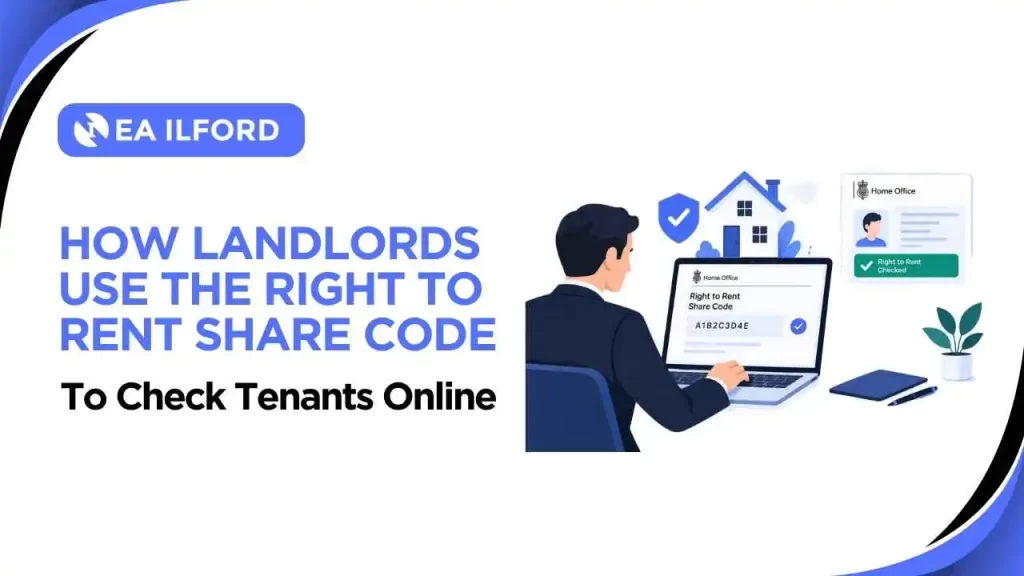
For an online check, ask the tenant to generate a right to rent share code through the Home Office ‘Prove right to rent in England’ service. Share codes begin with the letter R and are valid for 90 days.
Step 3: Check the Documents or Online Result
For a manual check, inspect the documents in the presence of the tenant either in person or by live video call. Check that:
- The documents are genuine, not fake.
- The person presenting them is the rightful holder.
- Photographs and dates of birth are original and consistent.
- Any immigration permission has not expired.
For an online check, enter the right to rent share code and the tenant’s date of birth at the GOV.UK right to rent checker. The service confirms their right to rent status instantly. Confirm the photograph matches the person in front of you, in person or by video call.
| Quick FAQ: What Is A Right To Rent Share Code? A right to rent share code is a unique nine-character code generated by the tenant through the Home Office online service. It begins with the letter R, is valid for 90 days, and allows a landlord to confirm a tenant’s right to rent status online without needing a physical document. |
Step 4: Copy and Retain the Evidence
For a manual check, make a clear copy of each document in a format that cannot be altered, such as a JPEG or PDF. Record the date the check was carried out.
For online rental checks, save or print the profile page showing the tenant’s photograph and the date the check was completed.
If the tenant has an unlimited right to rent, no further check is needed. If the tenant has a time-limited right to rent, record when the follow-up check is due. The online service will confirm this date where applicable.

Acceptable Documents for Right to Rent Checks
The Home Office sets out two lists of acceptable documents for landlord right to rent checks: List A and List B. The documents a tenant can use to prove their right to rent depend on whether they have an unlimited or time-limited right to rent. Accepting the wrong document, or failing to check correctly, means you will not have a statutory excuse if a tenant is later found to have no right to rent.
List A: Unlimited Right to Rent
You need either one document from Group 1 or two documents from Group 2.
Group 1: One document from this list is enough:
- Valid British passport.
- Valid Irish passport or Irish passport card.
- Passport or travel document showing indefinite leave to enter or remain.
- Home Office document confirming indefinite leave to enter or remain.
- Certificate of entitlement to the right of abode in the UK.
Group 2: two documents required together:
- UK birth or adoption certificate with proof of a National Insurance number.
- Full UK driving licence plus an official HMRC or government letter confirming name and National Insurance number.
- A letter from a British passport authority confirming name and date of birth.
List B: Time-Limited Right to Rent
If your tenant can only provide a List B document, you can still let the property, but you must schedule a follow-up check before the eligibility period ends. List B documents include:
- A passport or travel document showing a time-limited visa or entry stamp.
- A current Biometric Residence Permit showing limited leave to enter or remain, verified online via share code.
- A Home Office document confirming a time-limited right to enter or remain.
- A Positive Right to Rent Notice issued by the Home Office Landlord Checking Service.
Note: If your tenant has an eVisa or digital immigration status, you cannot accept a physical document. You must use the Home Office online checking service with their right to rent share code instead.
Where Right to Rent Doesn’t Apply: Exemptions
The Right to Rent scheme does not apply to every type of letting. If your property or arrangement falls into one of the categories below, you are not required to carry out checks.
- Social housing
- Local authority arranged accommodation
- Care homes, hospitals and hospices
- Hostels and refuges
- Student halls of residence
- Tied accommodation
- Mobile homes on protected sites
- Long leases of seven years or more
- Tenancies pre-dating the scheme
- Renewals between the same parties
Note: Social housing tenants are also protected under the Decent Homes Standard, which sets minimum property condition requirements.

Right to Rent Fines and Penalties in 2026
If landlords get the right to rent checks wrong, they may face civil and criminal consequences. Also, the Home Office does not have to prove you knew your tenant had no right to rent to issue a civil penalty.
According to the Right to Rent Code of Practice 2026, rental checks are part of landlord compliance to avoid the following penalties:
- Civil Penalties: Civil penalties were increased in February 2024 and remain at the following levels:
Breach Type | First Breach | Repeat Breach |
Per occupier (tenant) | £10,000 | £20,000 |
Per lodger | £5,000 | £10,000 |
- Early Payment Discount: If you receive a civil penalty notice and pay within 21 days, the Home Office applies a 30 per cent reduction under the Faster Payment Option.
- Criminal Liability: A civil penalty applies where a landlord failed to carry out checks correctly. Criminal liability applies where a landlord knowingly rents to a person who does not have the right to rent, or continues to let a property after becoming aware that a tenant has no right to rent. The criminal offence under section 33A of the Immigration Act 2014 carries up to five years’ imprisonment and an unlimited fine.
Avoiding Discrimination When Carrying Out Checks
The Right to Rent scheme does not give you reason to treat some applicants differently from others. You must apply the same checking process to every adult prospective tenant, regardless of nationality, background, or how they prove their right to rent.
From 1 October 2026, the updated Code of Practice on Avoiding Unlawful Discrimination applies to all new tenancies. What you must not do:
- Check only tenants who appear to be non-UK nationals.
- Refuse a tenancy because a tenant uses a share code rather than a physical document.
- Apply extra scrutiny to tenants with a time-limited right to rent.
- Decline to accept a permitted checking method because you prefer another.

Right to Rent Checks: How Estate Agents Ilford Can Help
Right to Rent compliance is straightforward when you have the right process in place, but the consequences of getting it wrong are significant. As a landlord, you are responsible for checks being completed correctly and on time, even if you use a letting agent.
At Estate Agents Ilford, we handle Right to Rent checks on your behalf, from the initial check through to any follow-up checks required during the tenancy.
Get in touch today to find out how we can help.