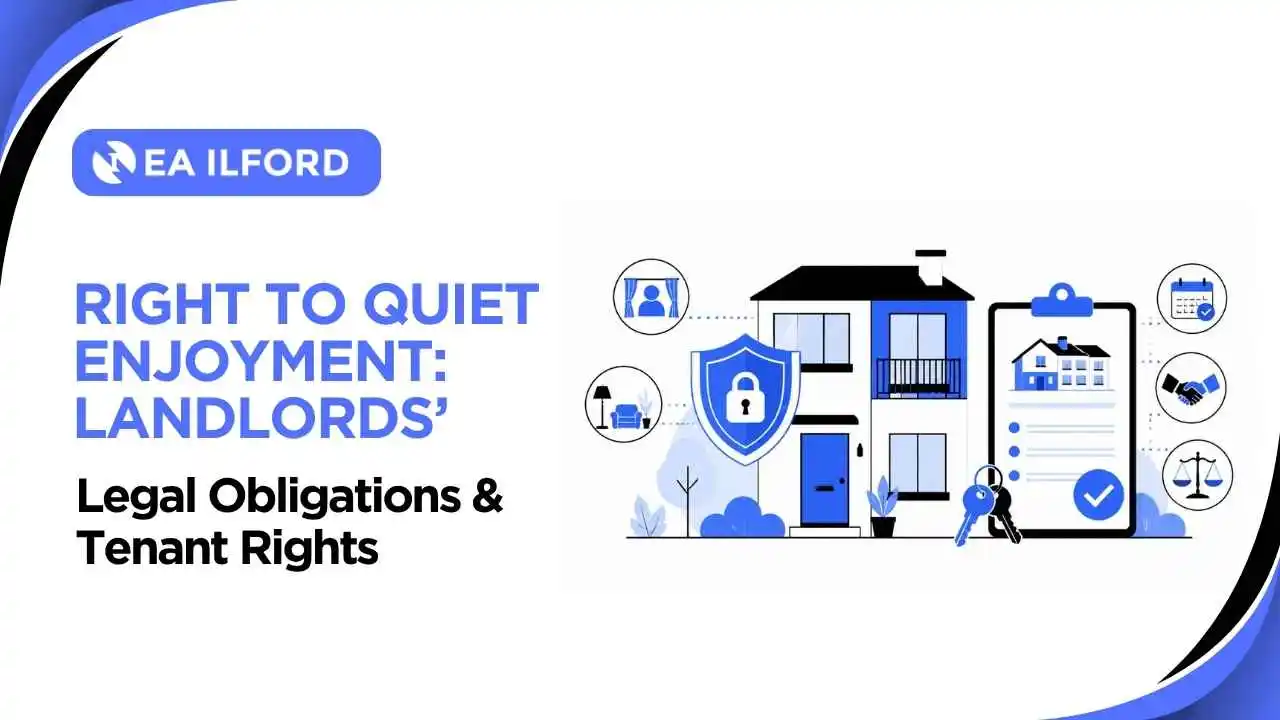
Right to Quiet Enjoyment: Landlords’ Legal Obligations & Tenant Rights
According to Shelter, nearly 1 in 5 private renters in England report experiencing harassment or illegal eviction attempts from their landlord. The right to Quiet enjoyment is a legal obligation in common law and reinforced by the Landlord and Tenant Act 1985, and most recently the Renters’ Rights Act 2025.
Many landlords breach this right during routine visits, unannounced inspections, or pressure tactics that cross legal boundaries. At Estate Agents Ilford, we work closely with landlords to help them stay compliant and manage their properties professionally.
This guide explains what the right to quiet enjoyment means, what counts as a breach, and how landlords can protect themselves legally.
What is the Right to Quiet Enjoyment?
When a tenancy begins, tenants or leaseholders have the right to uninterrupted use, peaceful accommodation and enjoyment in their residence. The Right to Quiet Enjoyment protects tenants from unreasonable entry or excessive interference from landlords or freeholders. It is implied, even if it is not openly stated in the tenancy agreements.
Landlords or freeholders are obligated to give proper notice before entering the property for repairs or maintenance.
What is the Common Misconception About Quiet Enjoyment?
There is a common misconception about the right to quiet enjoyment that tenants have the right to a quiet or silent property. But it refers to an undisturbed and interference-free residential property.
According to the judgment of the 1888 case, Jenkins v Jackson, in the covenant of quiet enjoyment, the word ” quiet ” in the tenancy agreement does not refer to noise or being free from sound. It refers to the tenant’s right to uninterrupted possession and peaceful occupation of the property.
What Landlords Need to Know About Tenant Rights?
Landlords need to understand what tenants are legally entitled to under the right to quiet enjoyment. Landlords who ignore this risk serious legal consequences. When they are aware of these, they can:
- Manage property access correctly and avoid accidental breaches.
- Handle tenant complaints about repairs or inspections professionally and lawfully.
- Avoid costly legal disputes, rent repayment orders, or criminal liability.
- Build long-term, stable tenancies based on trust and legal compliance.
The tenants have rights even when not mentioned in the agreement, and they have rights even if they have given notice or have rent arrears. These rights remain intact until the tenancy ends or is ended by bailiffs.

What Counts as Breach Under Right to Quiet Enjoyment?
The right to quiet enjoyment constitutes a breach if:
- Landlords or freeholders enter the property without notice or invitation
- They send agents (letting agents) or workmen for repair without informing.
- Physically obstructing or preventing tenants from accessing their home. For example, changing locks without legal authority or removing their belongings without consent.
- Physically or verbally abusing and harassing the tenants
Landlord’s Rights Under the Right to Quiet Enjoyment
Under the Housing Act 1988 and the Landlord and Tenant Act 1985 landlord have some legal rights. The right to quiet enjoyment gives landlords the following rights:
- Landlords are allowed to access the property reasonably for repairs and inspections. This term must be mentioned in the tenancy agreement to avoid disputes.
- In addition to maintenance and repairs, the landlord has the right to visit the property occasionally to check the condition of the property.
- For a reasonable purpose, landlords or their letting agents can only enter the property after giving notice at least 24 hours before the visit.
- They can visit the property at a reasonable time of the day, not whenever they want.
- There must not be any assumptions about the particular rights of the landlord on the property. It means the conditions to access the property should be mentioned in the tenancy agreement.
- The landlord is responsible for the safety and protection of the tenants. Tenants should allow them to do repairs and perform fire and gas safety checks in the property.
- For a tenant, it will be their private residence, and for the landlord, the property is an asset that should be assessed and monitored. A straightforward access to a rental is illegal and makes tenants uncomfortable.
Important Note:
When landlords serve a prior 24 hours’ notice to visit the property and tenants refuse access, this may constitute a breach of the tenancy agreement by the tenant. Landlords have the right to carry out legal checks such as gas safety checks, but they cannot force their entry without a court order.
Landlords should document each refusal in writing and seek legal advice promptly, or they can serve a Section 8 eviction notice using the correct possession grounds.
Tenants’ Rights Under Quiet Enjoyment Law
As a landlord, the covenant of quiet enjoyment places the following legal duties on you:
- You must allow tenants to live in the property without any disturbance, harassment, undue interference, or fear of unlawful eviction.
- Under the Landlord and Tenant Act 1985, you must provide at least 24 hours’ written notice before entering the property for inspections or repairs.
- Landlords or letting agents must not send contractors or workmen to the property without prior arrangement with the tenant. And visits must take place at a reasonable time of day.
- You must not take any action that disrupts the tenant’s peaceful use and enjoyment of the property.
Failing to meet these obligations, even unintentionally, can lead to legal claims, financial penalties and reputational damage as a landlord.
Noise Nuisance and Quiet Enjoyment
Noise nuisance is a separate concept from quiet enjoyment, but both apply at the same time. If tenants are facing noisy neighbours causing persistent, excessive noise, this may constitute a statutory nuisance under the Environmental Protection Act 1990.
Where a tenant reports persistent excessive noise from a neighbouring property, landlords in leasehold buildings have a legal obligation to act. Landlords should advise tenants to keep a noise diary and report the issue to the local council, who have powers to issue noise abatement notices.
For full guidance see our dedicated guide on noisy neighbours.
2026 Updates: How The Renters’ Rights Act Protects Right to Quiet Enjoyment?
The Renters’ Rights Act 2025 has come into effect on 1st May 2026. The Act brings major changes to tenant protections and landlord compliance obligations in England.
Here’s how it will directly affect:
Section 21 “No-Fault” Evictions Are Now Abolished
Previously, landlords could evict tenants anytime without giving any valid reason by Section 21 Notice. It was used as a retaliatory measure, particularly when tenants raised concerns about their rights or repairs in the property.
From 1 May 2026, this is no longer legal. Landlords must issue notice using Section 8 possession grounds to evict tenants. The notice will be issued two months before the eviction.
Hence, tenants can raise repair concerns, complaints, or quiet enjoyment breaches without fear of retaliatory eviction. The right to quiet enjoyment is now protected even when tenants challenge their landlord.
New Private Landlord Ombudsman
Before the Renters Reforms Act, tenants facing quiet enjoyment breaches had limited options. Court proceedings are costly, slow and stressful for most tenants. It introduces a Private Landlord Ombudsman, which is an independent body that resolves complaints against landlords quickly and fairly, without the need for legal proceedings.
The service is free and accessible, which omits the need for expensive legal proceedings. And now tenants can formally report uninvited entry, harassment and unlawful interference from landlords.
Rent Repayment Orders Now Cover Harassment
A rent repayment order allows tenants to reclaim their rent paid to landlords who have committed a criminal offence. Under the Renters’ Rights Act, the scope of RROs has been expanded.
Tenants can apply for RROs if their landlord has harassed them or used threatening behaviour to force them out. Landlords found guilty of harassment now face direct financial consequences through RROs, in addition to any criminal liability.
Stronger Council Enforcement Powers
If tenants report a strong quiet enjoyment breach to local council, they now have significantly more powers to act. Since 27 December 2025, local authorities can inspect properties where breaches are suspected and demand documentation records from landlords.
What Constitutes Harassment in Right To Quiet Enjoyment?
Harassment is defined legally by the Protection from Eviction Act 1977. Landlords should avoid tactics to pressure their tenants to leave the property before the tenancy ends. It’s a criminal offence by law.
The behaviours from the landlord can include
- Changing or attempting to change the locks without legal authority
- Tampering with or withholding the tenants’ mail and posts.
- Moving tenants’ possessions and refusing to carry out repairs and safety steps
- Accessing the property without notice and permission
- Moving tenants’ possessions and refusing to carry out repairs and safety steps
- Threatening or intimidating behaviour.
- Threatening to evict or having evicted tenants.
- Pressure for eviction before the contract ends.
- Cutting off the supply of gas and electricity frequently.
- Demanding unlawful payments that tenants don’t owe.
- Harassment due to race, ethnicity, disability, nationality, sex, gender reveal, or sexual orientation; pregnancy is also considered a crime.
Harassment Due to Rent
If tenants owe rent, the landlord can’t harass them for it. They can contact tenants for the delayed or missed payment and rent arrears, but they cannot put pressure on or threaten them. Also, they cannot appear at the tenant’s home for payments if they have already informed them about issues and made it clear that they cannot pay right now.
The Legal Eviction Process
A landlord can only evict tenants by following three steps:
- Issue a prior notice to vacate the property using correct Section 8 grounds.
- Obtain a court order if tenants don’t leave after notice.
- Ask the bailiffs to evict tenants after the date on the court order.
They cannot use a Section 21 no-fault eviction notice to regain possession of the property. The only way to evict tenants is a Section 8 notice. For a full breakdown, see our guide on the legal eviction process.
How to Handle Complaints of Breach of Quiet Enjoyment in Your Rental?
The covenant of quiet enjoyment promises that individuals can reside in a property peacefully without undue disturbance from others. It not only implies quiet enjoyment, but there are also rights to exclude individuals, have clean premises, and the right to essential services.
When a breach of the right to quiet enjoyment happens, the following steps are followed to resolve issues:
- First, the tenants submit a breach of quiet enjoyment complaint in writing to the property owner or housing association, and to court or a tribunal if required.
- It is mandatory to keep records of interaction, harassment, or breaches. It helps to mitigate the threat of landlord-tenant disputes and misunderstandings in the future. The complaint letter should provide as many details as possible about how the breach affected their living situation.
- When the complaint is received, the landlord must promptly investigate and try to resolve the issue before it escalates.
- The landlord needs to respond to the complaint once the notice has been issued. It is their duty to take any action that creates an essential communication trail.
- The response includes informing the tenants about the steps the landlord is taking to resolve the complaint and notifying them about the estimated timeline for these steps to take place.
- If there is a significant issue that is not resolved, the tenants can withhold rent. However, it is in the landlord’s best interest to address the issue as soon as possible.
- Also, the tenants have the option of constructive eviction when all else fails for the most severe issues, like damp or mould in the home. Landlords should be aware this can also trigger enforcement under Awaab’s Law and the Decent Homes Standard.
If the landlord does not solve the issues promptly, the court will decide on the basis of evidence and legal documents provided by both tenants and landlords. The reasons to choose a legal course may include withholding the deposit after constructive eviction, a landlord seeking unpaid rent, or a tenant directly claiming a broken Right of quiet enjoyment.

Balancing the Tenants’ Rights and Landlords’ Obligations
There are two types of tenants that landlords typically face:
- First are those who allow easy access to the property and cooperate with the responsible landlords who are maintaining the property.
- The second type includes those tenants who demand their own presence when the landlord visits for repairs and inspection.
To balance the rights of tenants and landlord obligations under the right to quiet enjoyment, they need to have a cordial relationship with their tenants. They must assess the nature of their tenants and ensure how to treat them accordingly to avoid any disputes and legal issues.
Always serve written notice well in advance and offer tenants a choice of times where possible. This simple step removes most access disputes before they arise. If access is repeatedly refused despite proper notice for legitimate purposes such as gas safety checks, document every refusal in writing and seek legal advice promptly.
Landlords who experience the fewest disputes are those who trust professional property management to handle access, inspections and compliance checks on their behalf.
If you are a landlord looking to stay legally compliant without the stress, find out how we can help.
Final Thoughts
Right to Quiet Enjoyment is the fundamental right of tenants in the UK to live in their properties peacefully. They are protected from unlawful interference and entry of landlords into their homes without permission. On the other hand, landlords are allowed to access the property for legitimate reasons such as repairs or inspections.
It’s the responsibility of tenants to communicate with landlords about breaches in writing and maintain all the records. Most of the issues can be solved by the landlords through dialogue or notice. Some major issues of repeated breaches may lead to court decisions. The balance between tenants’ rights and landlords’ obligations must be maintained for peaceful living and lawful tenancy.