What Are UK Landlords’ Responsibilities? The Complete Legal Guide
Do you know exactly what the law now expects from you as a UK landlord? The rules have changed, and the Renters’ Rights Act 2026 came into force on 1 May 2026. Section 21 “no-fault” evictions are abolished, and fixed-term tenancies no longer exist. New deadlines and fines now apply. This guide covers every responsibility a UK landlord must meet, from safety certificates to the new Renters’ Rights Act.
If you need help staying compliant after the new law changes, Estate agents in Ilford manage safety checks, tenant referencing and deposit protection.
UK Landlords’ Responsibilities: The Full Legal Checklist 2026
Here are all the UK landlords’ responsibilities that are given below:
1. Gas Safety
Every rental property that has gas appliances needs an annual Gas Safety Check by a Gas Safe registered engineer. This person then provides a Gas Safety Certificate, also called a CP12. You should give a copy to new tenants before they move in, and you also have to send it to existing tenants within 28 days after each yearly check.
| Fine: Up to £6,000 per breach plus potential criminal prosecution. |
2. Electrical Safety (EICR)
Every landlord has to make sure they get an Electrical Installation Condition Report, also known as an EICR, done every 5 years. This should be carried out by a properly qualified electrician, not just anyone. They also need to give tenants a copy, either before the tenancy begins or right at the start. Any appliances you supply, fridges, washing machines, ovens, should be safe too, and they must be in good working order.
3. Energy Performance Certificate (EPC)
As part of your UK landlords’ responsibilities, you have to give tenants an EPC before they move in, and it can’t be delayed. All rental properties must hold a minimum EPC rating. The Government has proposed bumping that minimum up to C by 2030. Now is the time to invest in efficiency improvements and make things more effective, not just okay.
| EPCs are valid for 10 years. |
4. Fire Safety
As part of your UK landlords’ responsibilities, you must:
- Fit and test smoke alarms on every floor of the property, and yeah, keep it consistent
- Install carbon monoxide alarms in every room that has a solid fuel appliance.
- Follow fire safety regulations for flats and converted properties.
- Test all alarms right at the start of every new tenancy.
5. Housing Health and Safety Rating System (HHSRS)
Local councils use the HHSRS to look over rental properties for hazards and that kind of thing. These inspections can get set off by a tenant complaint, which is kind of routine in practice. Common hazards include:
- Damp and mould
- Unsafe staircases
- Faulty wiring
- Poor heating
- Pest infestations
If the council spots a serious hazard, it can issue an improvement notice. If you ignore it, then prosecution can follow.
6. Protecting the Tenant’s Deposit
You have to drop the deposit into a government-approved TDP scheme within 30 days after you get it. The three approved ones are:
- Deposit Protection Service (DPS)
- My Deposits
- Tenancy Deposit Scheme (TDS)
You must also give tenants the Prescribed Information details of the scheme, how to reclaim the deposit, and the dispute process.
7. Written Statement of Tenancy Terms
For all new tenancies starting on 1 May 2026, you’ll need to give tenants a written statement of the key terms. This swaps out the older How to Rent guide requirement that applied to new tenancies.
8. Right to Rent Checks
Make sure that every adult, age 18 or older , who lives in the property actually has the legal right to live. Ask for original paperwork, like a passport, a biometric residence permit, or a share code , and then keep a copy of it.
| Fine: Up to £3,000 per occupant for a first offence; up to £20,000 for repeat breaches. |
9. Repairs and Maintenance
Under Section 11 of the UK landlords’ responsibilities and the Tenant Act 1985, you have to maintain
- Roof, walls, windows, and external doors
- Plumbing, drainage, and water supply
- Heating and hot water systems
- You must also keep in good repair the gas and electrical installations
| Repair Type | Expected Timeframe |
| Emergency (gas leak, flooding, no heating in winter) | Within 24 hours |
| Urgent repairs | Within 3 to 7 days |
| Non-urgent repairs | Within 28 days |
10. Legionnaires’ Disease Risk Assessment
You have to assess the risk from Legionella bacteria in the water system. Most homes, it is usually enough to have a basic written risk assessment, nothing too fancy. If the risk is low, meaning you use the tap regularly and there is no stored cold water, then no further action is needed. Still keep the assessment on file, as a record.
11. Furniture and Furnishings Safety
All the furniture and soft furnishings you provide have to line up with the Furniture and Furnishings (Fire Safety) Regulations 1988. Check for the permanent fire safety label on each sofa, bed, mattress, and cushion, before it goes anywhere else.
12. HMO Licensing
If you rent to five or more people, forming two or more separate households, you need a mandatory HMO licence from your local council. Some councils go further and insist on licences even for smaller HMOs, sort of. HMO landlords then end up under tighter expectations around fire safety, minimum room sizes, and those shared, communal areas.
13. Selective Licensing
Some local councils operate selective licensing schemes. Basically, every landlord in that designated area must have a licence. If someone lets it out without one , it can lead to unlimited fines and also a Rent Repayment Order (RRO). So do a quick check with your local authority, because the rules can vary.

Total Landlord Insurance Checklist
Standard home insurance doesn’t properly cover rental properties, not really, so if you’re aware of UK landlords’ responsibilities
| Insurance Type | What It Covers |
| Buildings Insurance | Property structure walls, roof, floors, and fixtures |
| Contents Insurance | Landlord-provided furniture and appliances |
| Liability Insurance | Claims from tenants or visitors for injury or damage |
| Loss of Rent Cover | Income lost if the property becomes uninhabitable |
| Legal Expenses Cover | Evictions, disputes, and unpaid rent recovery |
| Emergency Cover | Boiler breakdowns, leaks, and electrical faults |
| Rent Guarantee Insurance | Missed rent payments by tenants |
| Unoccupied Property Cover | Protection when the property sits empty |

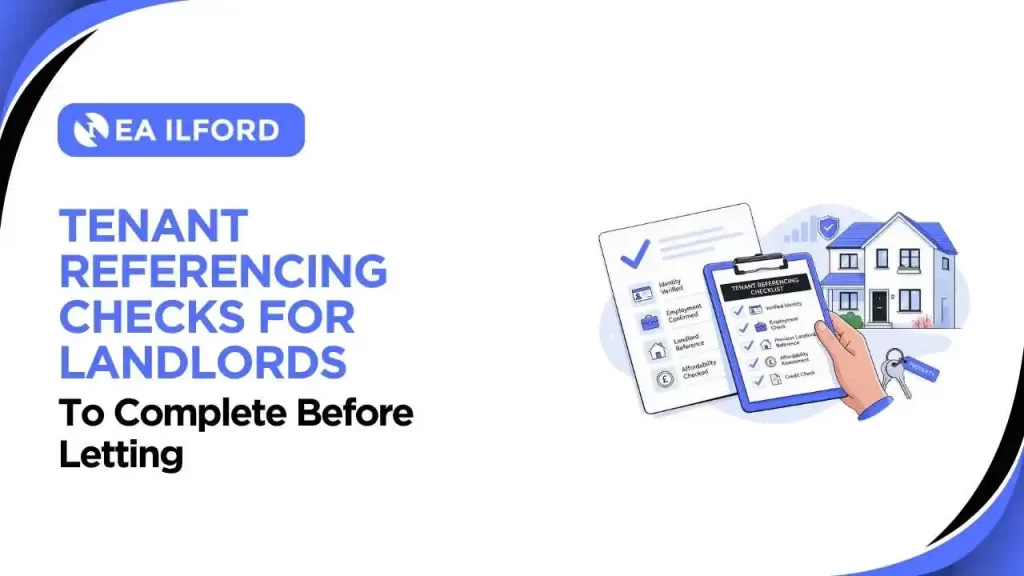
How to Carry Out Tenant Referencing?
Strong tenant referencing protects you from arrears and property damage. It also helps you meet key UK landlords’ responsibilities.
- Proof of Identity: Ask for two forms of ID. One must have a photo ID passport or driving licence.
- Proof of Address: A utility bill, council tax bill, or bank statement dated within the last three months.
- Credit Check: Run a check through Experian, Equifax, or a specialist agency. Look for CCJs, missed payments, or bankruptcy.
- Employment Reference: Ask for a written reference confirming the tenant’s salary. As a general rule, gross annual income should be at least 2.5 times the annual rent.
- Previous Landlord Reference: Contact the previous landlord directly. Confirm the tenant paid on time and left the property in good condition.
- Right to Rent Check: This is a legal requirement. Keep copies of all documents checked and date them.

Financial Responsibilities of a Landlord
As a landlord, you must meet several important UK landlords’ responsibilities, including:
- Declare rental income to HMRC and pay Income Tax on profits
- Pay for all structural repairs and maintenance
- Hold buildings insurance (contents insurance recommended but optional)
- Pay service charges if the property is a leasehold flat
- Keep accurate financial records for tax purposes
If you use a letting agent to collect rent, confirm they belong to a client money protection scheme and a property redress scheme. Both are legal requirements for letting agents in England.

What Are Tenants’ Responsibilities in 2026?
Tenants are not responsible for structural repairs, but they do have legal duties that support wider UK landlords’ responsibilities.
| Tenant Duty | What It Means |
| Pay rent on time | As per the written tenancy terms |
| Report repairs promptly | Allow the landlord reasonable time to fix issues |
| Keep the property clean | General cleaning and minor upkeep |
| Replace light bulbs and batteries | Small day-to-day maintenance tasks |
| Not sublet without permission | Subletting without consent can end the tenancy |
| Respect neighbours | Avoid noise, nuisance, and antisocial behaviour |
| Give two months’ written notice to leave | Can be given via text or email under the new Act |
| Return keys on the agreed date | Confirms the tenancy has officially ended |
| Remove all belongings | Avoids disputes and extra removal charges |

Preparing and Marketing Your Property in 2026
Before you advertise the property, confirm you have met all essential UK landlords’ responsibilities and have:
- Gas Safety Certificate, EICR, and EPC (minimum rating E) all in place
- Property meets the Homes (Fitness for Human Habitation) Act 2018
- Written statement of tenancy terms ready for new tenants
- Checked whether your area requires selective licensing
- Set a fixed asking rent advertising to invite higher bids is now banned

Manage and Vacate the property
When the time comes to leave, tenants have some clear duties to follow. You must give proper notice, return the property in good condition, and settle any outstanding bills or rent. This helps avoid disputes and makes the moving process smooth for both you and the landlord.
| Tenant’s Duty | What It Means | Why It Matters |
| Give Notice | Inform your landlord in writing before leaving (as per tenancy agreement) | Ensures a smooth end to the tenancy and avoids extra rent charges |
| Clear Bills | Pay all pending utility bills, council tax, and rent | Prevents legal or financial issues later |
| Return Keys | Hand back all keys on the agreed date | Confirms the tenancy has officially ended |
| Leave Property Clean | Make sure the home is tidy and in good condition | Helps protect your deposit from deductions |
| Remove Belongings | Take all personal items before moving out | Avoids disputes and extra removal charges |
Conclusion
Understanding what UK landlords’ responsibilities are is crucial if you want a fair rental process for both the landlord and the tenant. Being a landlord is not only about getting the rent in, it is also about making sure the home is safe. There are a lot of things to keep track of, from gas inspections, electrical safety checks, to deposit protection. So if you need more information or kind of tailored advice, head over to estate agent Ilford