Can a landlord refuse pets in England? The 28-Day Rule Explained
A pet request can put landlords and tenants at a crossroads. Tenants may see a dog or cat as part of their family, while landlords may have concerns about damage to their property. In England, the rules for pet refusal have also changed now. Tenants can now ask to keep a pet, and “because I don’t want to” is no longer a good enough reason to say no.
After the Renters’ Rights Act reformed tenancy rules, the question is: can a landlord refuse pets within the law? So, the old habit of stamping “no pets” on every tenancy is over. Since 1 May 2026, the Act lets tenants ask in writing, and the clock starts the moment that request lands. Let Estate Agents Ilford explain when a landlord can refuse a pet or how to do it properly.

Can Landlord Refuse Pets: A Quick Answer
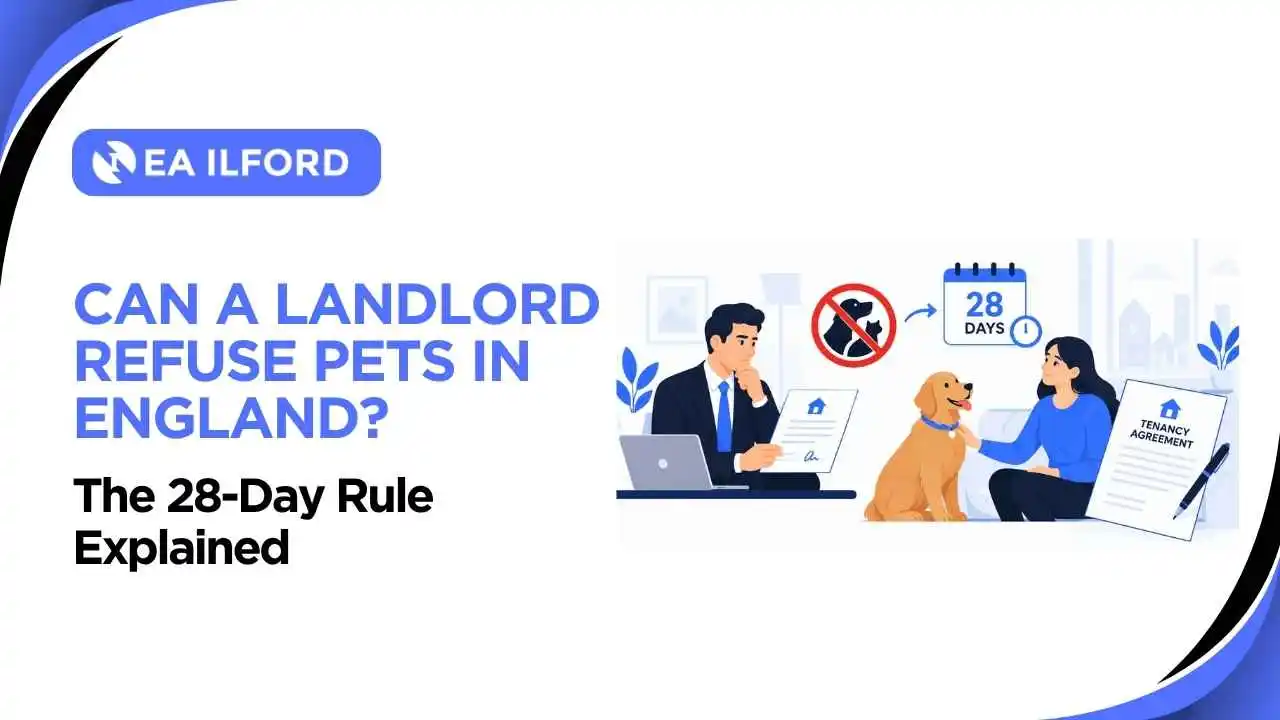
Landlords can’t refuse pets without a good reason. Under the new tenancy rules for landlords, the blanket no-pet rule no longer applies in England. Since the Renters’ Rights Act took effect, a tenant can ask in writing to keep a pet, and the landlord must reply in writing within 28 days. They can’t refuse without giving any reason.
A refusal has to come with written reasons that fit the property or the animal, that it is illegal to keep or needs a special licence, or a freeholder who has banned pets in the building. A blanket “no pets” policy is no longer allowed.

What the Renters’ Rights Act changes for Pet Permissions?
Before May 2026, a landlord in England could refuse a pet for any reason, or no reason. The Renters’ Rights Act 2025 ended that. The new rule in simple words is that a tenant may keep a pet with your consent, and you cannot unreasonably withhold it.
What the law now says
- It applies to England only, and Wales, Scotland and Northern Ireland have their own rules for keeping pets in a rental property.
- Blanket bans are out, so “No pets” in the tenancy agreement no longer answers the question of a tenant.
- The tenant must ask in writing. For example, an email or letter counts as a permission request.
- A refusal needs written reasons, and they must suit your property and the animal, not just your preference.
- Approval is final when you serve it, and you cannot take consent back later. But a second pet needs a new request, and you’ll follow the same process for approval or refusal.
| Quick Answer: What counts as a “pet” under the Renters Right Act? Under the Renters Right Act 2025, a pet is an animal kept mainly for personal interests, companionship, ornamental purposes, or a combination of these. This broad explanation covers cats, dogs, rabbits, birds, fish and other animals kept for these reasons. The definition depends on why the animal is kept, not just its species. Assistance animals are subject to separate equality law protections, while emotional support animals follow the usual pet rules. |
How Pets Request Works: 28 Day Clock
The steps are simple, but the deadline is firm. The tenant sends a request permission of pet to the landlord through an email or letter.
Landlords have 28 days to reply in writing, and the clock starts when the request reaches them. They need to reply within this fixed period in which they either give permission to keep a pet or refuse it. A “no” must include your reasons. They should relate to the property and the animal.
Asking for more information
Landlords can ask for more details, such as breed, size, and number of pets are fair questions. Send your questions early and in writing, well inside the 28 days. After the tenant replies, you get 7 days, or whatever remains of the original 28 if that is longer. This stops the deadline catching you out mid-conversation.
Landlords with a Superior Landlord
If you let the home under a head lease, your own landlord or the freeholder may have a say over pets.
- Read the head lease first; if there is a ban on animals, there is a reasonable ground to refuse.
- Where consent is required, ask within your 28 days. Write to the superior landlord before the deadline and keep proof of sending.
- If they stay silent, refusing is likely reasonable once you can show you made a genuine effort. Keep copies of every message in case of any disputes or disagreement in future.

When Landlords Can Refuse Pets and When They Can’t?
The Renters’ Rights Act does not give landlords a fixed list of approved reasons. Each request is judged on its own facts, which means the same pet can be fine in one property and a fair refusal in another.
Reasons that usually stand up are
- The pet is illegal to own. A type of dog banned under the Dangerous Dogs Act is the clearest case to refuse.
- A head lease or freeholder prohibits pets. Where a superior landlord bans animals, and the landlord is bound by that clause, refusal is always reasonable.
- The home is too small. A large dog or several animals in a studio flat can be a fair concern.
- The animal needs conditions the property cannot offer. Some exotic species need a licence or specialist housing.
The grounds that make it unreasonable are:
- You just don’t like pets.
- You worry the pet might put off future tenants.
- The advert said “no pets”. The tenant can still ask after moving in.
- A blanket rule for the whole property type. Therefore, it is clear that every request needs its own decision.
Assistance Animals and Emotional Support Animals
Assistance animals, such as guide dogs, are not treated as ordinary pets. They fall under the Equality Act 2010, which means landlords are expected to make a reasonable decision. An unjustified refusal may amount to disability discrimination. In this case, a written request from tenants is advisable for record-keeping, but the landlord must not present it as a legal requirement for assistance animals.
Emotional support animals are different. They don’t have the same automatic legal status as assistance dogs. If a tenant says they need an animal because of any disability or medical issues, don’t use standard pet procedure. Consider the circumstances carefully before refusing and get advice before you say no.

Setting a Right Pet Policy
Landlords can’t ban pets outright, but they can have a clear process which helps them assess each request carefully while protecting the property. A pet policy is fine after you’ve agreed to a pet or set out how you handle requests.
The pet policy becomes a problem if it includes a ban on all pets or whole types of pets or a separate pet deposit, which is a prohibited payment on top of the capped deposit. Moreover, they must not force their tenant to have pet insurance in place.
How to Set a Balanced Pet Policy for Tenants?
Landlords can put a short clause in the tenancy agreement about pets they’ve agreed on.
1. Assess Pros and Cons
As a landlord, it’s crucial to thoughtfully consider whether to allow pets, as they may impact the value of your rental property. Pets can increase wear and tear; specifically for furnished properties, pets may sometimes cause serious damage to furniture or belongings of the landlord.
On the other hand, if you openly allow pets with terms and conditions within the law, it can make your property appealing for tenants with pets. There’s more number of tenants who used to have to pets with them. Carefully consider the pros and cons of keeping tenants along with their pets when letting a property.
2. Create a Pet-Friendly Policy
If you, as a landlord, allow pets in your property, you must specify:
- The type, breed and name of the pet you’ve agreed to.
- That any extra pet needs a new written request.
- That the tenant pays for pet damage beyond fair wear and tear.
- That the tenant is liable for the cost of treating a flea infestation caused by the pet.
- That the property is returned in the same condition as at check-in, apart from fair wear and tear.
- Rules on noise, waste and keeping dogs on a lead in shared areas.
- That tenants must keep the pet vaccinated and treated for fleas and worms.
3. Pet Interview
Before replying to tenants within 28-day windows, it’s advisable to visit tenants’ pets and check their behaviour. In this way, you can assess the tenant and how well they manage their pets and how well-trained the pets are to live with tenants.
4. Include a Pet Clause in Your Lease
In the tenancy agreement, add a clear pet clause covering pet care, noise and property damage. Keep the terms reasonable and assess each pet request individually, in line with the Renters’ Rights Act. You must mention the lawful process of asking about pets on the tenancy agreement so that tenants can use that proces instead of informal processes.
5. Regular Inspections
For rental properties with pets, the landlord can ask tenants for regular property inspections other than check-in or check-out inspections. They may arrange an inspection and document the property condition to compare it with the condition of the property at the time of check-in. This gives you evidence if you need to establish whether damage due to pets occurred during the tenancy.
6. Handle Damage and Cleaning Fairly
Tenants can be responsible for pet-related damages beyond fair wear and tear. However, you can’t ask them for professional cleaning or deduct their money from the deposit simply because they kept a pet during the tenancy. Any claim you made for damage must be justified and supported by evidence.
7. Keep Your Policy Within the Law
If you make your own pet policy, keep it aligned with legal requirements. For example, assistance animals are not treated as pets; mention it clearly. Mention the legal period of reply as 28 days for deciding whether to allow a pet or not. If you need further information, like a license, or you need a superior landlord’s permission, it may extend that period within the law.
Note: Avoid requiring an additional pet deposit or making pet insurance a condition of approval.
Can you Evict a Tenant for Having Pets?
No, if you agreed on the pets, you can’t evict a tenant. If you have already given permission, you cannot assume you can withdraw it whenever you wish. If a tenant keeps a pet without asking, the first step is to discuss the issues and invite a written request. There may be two cases that decide for you:
- A fair refusal helps you. If you refused for a good reason and the tenant keeps the pet anyway, you have a stronger case.
- An unfair refusal can be challenged. Keep your written reasons, and get advice before starting any possession claim.
You cannot automatically evict them for keeping a pet. You can’t just serve notice, because Section 21 has gone. You would need a Section 8 ground for breach of the tenancy agreement, and the court decides whether to grant possession. If your situation escalates, read our guide on how to evict tenants to understand the legal process of gaining possession.

How We Handle Pet Requests As Your Managing Agent?
As part of our property management in Ilford, we sometimes deal with tenant requests to keep pets. We take the deadline and the paperwork off your hands.
- We log the request the day it arrives and start the 28-day count.
- We check your lease and contact any superior landlord at that time.
- We ask the tenant for the pet’s details within the first few days.
- We make sure that a refusal must be reasonable and state it clearly.
- We deal with second-pet requests the same way, so nothing slips.
Final Thoughts
So, can a landlord refuse pets in England? Yes, but only when they have a reasonable basis for doing so. A blanket pet ban is prohibited under the Renters Rights Act 2025. Landlords must consider each request individually and respond in writing within 28 days, subject to certain exceptions. Understanding the right rules helps landlords make fair decisions for their tenants while protecting their property and avoiding unnecessary disputes.