Landlord Gas Safety Certificate: Who Needs One and How to Get One

A landlord gas safety certificate is not paperwork; it proves your tenants are not breathing carbon monoxide. The law requires a Gas Safe engineer to check every gas appliance and flue you supply each year. Then give your tenant a copy within 28 days and keep your own for two years. Skip a check, and you face prosecution, an unlimited fine, and tenants exposed to real danger.
This guide covers who needs one, the cost, renewal dates, and what to do when a tenant refuses access.
What Is a Landlord Gas Safety Certificate (CP12)?
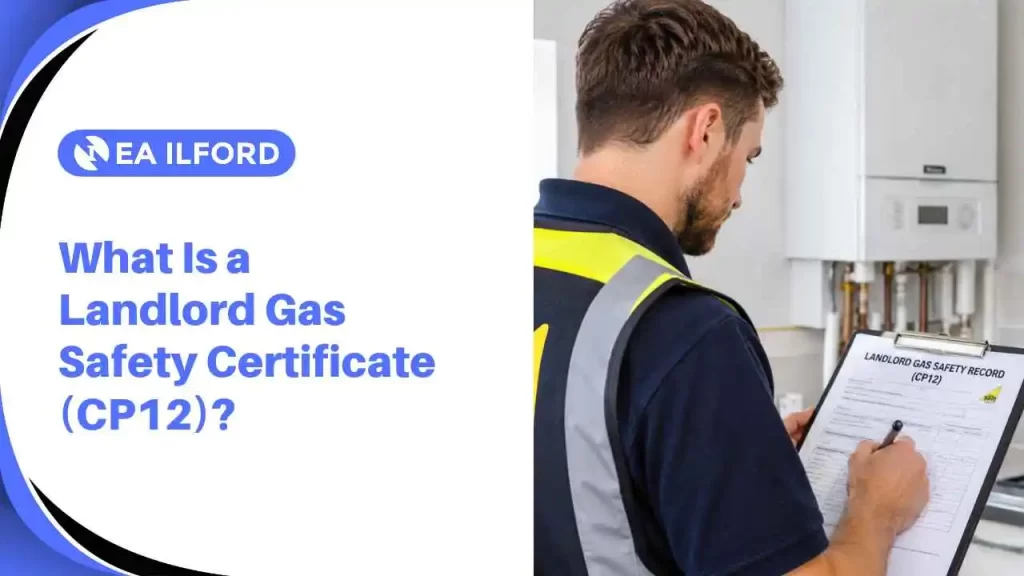
A landlord gas safety certificate, also called a CP12 or Landlord Gas Safety record, is a legal document that is issued by a Gas Safe Registered engineer after they inspect every gas appliance and flue in a rental property. Landlords are asked to renew it after every 12 months and provide a copy to their tenants.
What does CP12 stand for?
CP12 is the name of the original form, and this term is still used by most landlords. The official name is Landlord Gas Safety Record (LGSR). You may also see it called a gas safety certificate, landlord gas certificate or gas safety check. They all mean the same document.
What a Landlord Gas Safety Check Covers?
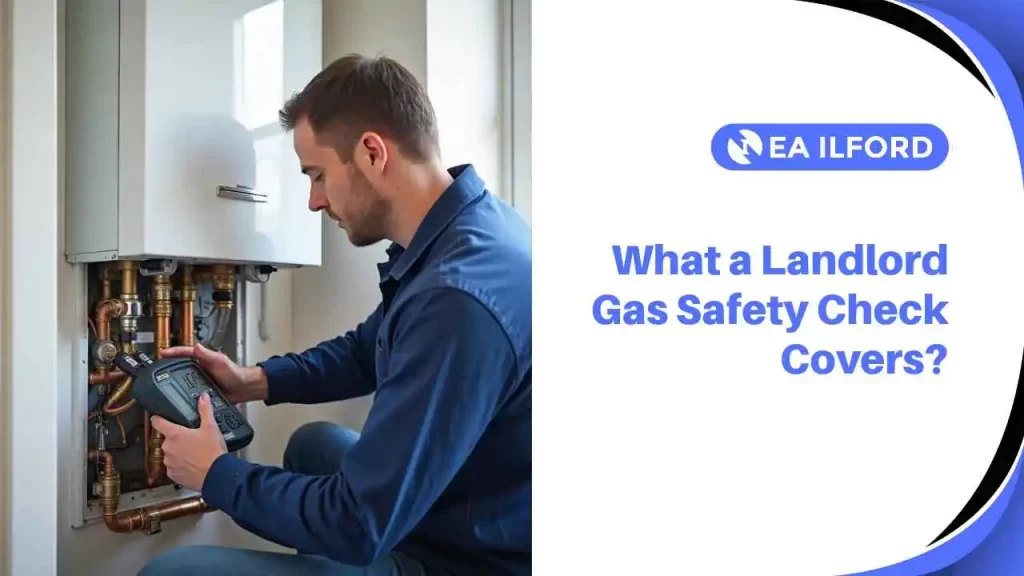
A Gas Safety engineer tests that each appliance is working safely. They also check whether the flue and air supply are adequate, that gas pressures and heat input are correct and that there is no carbon monoxide risk in the property. The engineer then records the results on your gas safety record (CP12).
For each landlord-supplied gas appliance, such as a boiler, gas hob, oven or gas fire, the engineer will:
- Confirm the appliance is working correctly and operating safely.
- Check the flue, which carries fumes from the property. They look at its condition and that it is working as it should be. This includes checking the combustion gases are safe to leave the building.
- Check the air supply and ventilation, because gas appliances need enough oxygen to burn safely.
- Test gas pressure and heat input to confirm the appliance is running as designed.
- Look for signs of leaks, wear and carbon monoxide risk.
- At the end, they identify all the defects and tell you about their severity and maintenance.
Faulty gas appliances can also create carbon monoxide and fuel combustion risks, which councils assess under the Housing Health and Safety Rating System. See our guide to HHSRS hazards for landlords.
What is Not Covered Under Gas Safety Checks?
A landlord gas safety check covers the gas appliances you supply and their flues, but it doesn’t cover installation pipework, tenant-owned appliances, boiler services or carbon monoxide alarm testing.
The table below shows what is and isn’t covered, and what to do about each gap.
Item | Covered by the annual check? | What to do |
Landlord-supplied appliances and their flues | Yes | Included |
Installation pipework | No | Ask the engineer for a tightness test and visual pipework inspection at the same visit |
Tenant-owned appliances | No | Not your responsibility, but you still maintain the pipework and any flue shared with other appliances |
Boiler service | No, a safety check is not a service | Follow the manufacturer’s guidance, or have an annual service |
Carbon monoxide alarm testing | Not part of the check | You must test alarms at the start of each tenancy (England) |
How Long is a CP12 Valid, and When Should Landlords Renew it?
A CP12 gas certificate is valid for 12 months from the date of the inspection. Landlords can renew it up to two months before expiry without losing any time. There is no grace period for the renewal of a gas safety certificate, so an expired certificate means you are not compliant.
The date of the inspection is the start of that cycle, and the record shows when the next check is due. Landlords should treat the next-due date as a hard deadline. It is recommended that landlords book the next check in the 10- to 12-month window after your last one, which means within two months of expiry.
| Do You Know? A CP12 expires on its due date. Even a short gap means you are non-compliant with the Gas Safety (Installation and Use) Regulations 1998 until a new check is done. |
What Happens If You Renew Gas Safety Register Too Early?
If you book the check less than 10 months after your last one, the new certificate runs for 12 months from the new inspection date. You lose the unused months, and your annual cycle moves earlier.
When you book the check | Effect on your cycle |
Less than 10 months after the last check | New 12-month cycle starts from the early check date |
10 to 12 months after the last check | Original anniversary date is kept |
After the certificate has expired | You are non-compliant until the new check is done |
Worked Example:
Your last check was on 14 June, so the certificate expires on 13 June the following year. The check that will occur between 14 April and 13 June keeps your anniversary, and the new records will say the next check is due by 13 June the year after.
But a gas safety check, which will be done on 10 March, will be earlier than the window, so your next due date moves to March of the following year.
How to Get a Landlord Gas Safety Certificate, Step by Step?
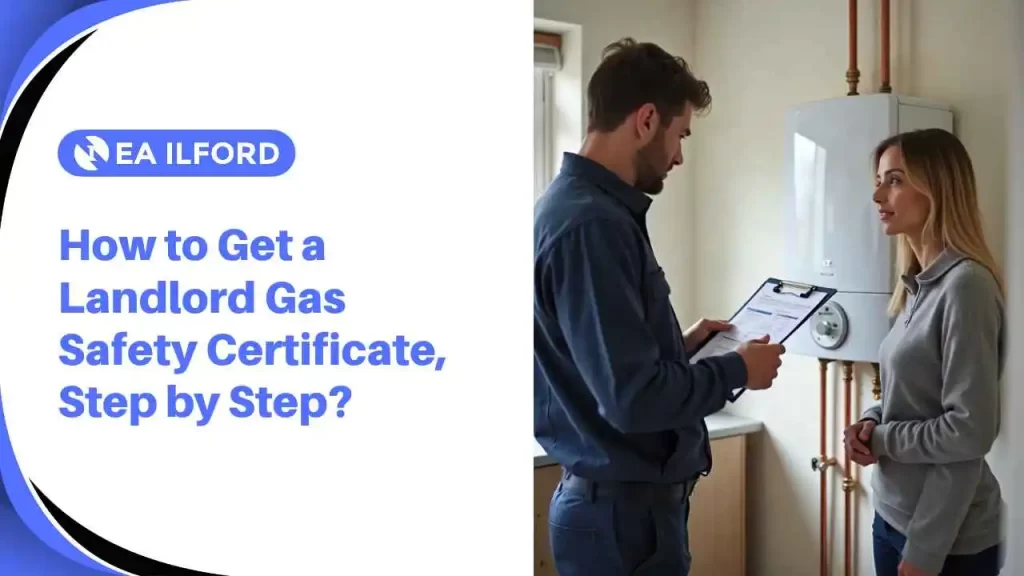
To get a landlord gas safety certificate, book a Gas Safe registered engineer. Then agree access with your tenant and have every landlord-supplied gas appliance and flue checked by the engineer. Then you’ll receive the signed record (CP12). Give your tenant a copy within 28 days, or before a new tenant moves in, and keep your copy.
Step 1: Check when your current certificate expires
Look at the due date on your last record of the gas certificate. You can book a new check up to two months before expiry (10 to 12 months after the last check) to keep your original anniversary date of the checks. If you’re letting a property for the first time, the check must be done before the tenant moves in.
Step 2: Find a Gas Safe registered engineer
Only a Gas Safe registered engineer can legally carry out the check. You can verify an engineer or business directly through the Gas Safe Register Check the Register tool.
Step 3: Agree access with your tenant
Give your tenant written notice and agree a date and time. To make this easy, your tenancy agreement should include an access clause. You can’t force your tenant to access the property. In this case, keep a written record of every attempt and notice you issue for inspections.
Step 4: Prepare for the Engineer’s Visit
- Check there is enough gas credit for the engineer to test the appliances.
- Make sure that concealed flues have correctly sized inspection hatches.
- Clear items blocking access to appliances, where you can.
Step 5: The engineer carries out the check
For each landlord-supplied appliance, the engineer checks the appliance, the flue, the air supply, the pressure of gas, and the heat input and looks for any safety defects or carbon monoxide risks. Any unsafe appliance can be turned off and labelled “Danger, do not use”.
Step 6: Review the certificate you receive
The landlord gas safety certificate must record:
- the date of the check
- the property address
- your name and address, or your agent’s
- each appliance and flue checked, and where it is
- any safety defects found and any action taken
- the engineer’s name, signature and Gas Safe registration number.
Step 6: Fix any defects
If the engineer finds faults, arrange repairs promptly. If an appliance has been disconnected, you must provide emergency heating while the work is done. Forbid tenants to use any appliance or switch on a labelled as dangerous.
Step 7: Give your tenant a copy
You’ll provide the copy of the gas safety certificate to tenants depending on their situation:
Tenant situation | When to provide the record |
Existing tenant | Within 28 days of the check |
New tenant | Before or at the start of the tenancy |
Let of less than 28 days | Display a clear copy in the property |
Want us to handle gas safety checks, repairs and renewals? Speak to our property management team.
Do Landlords Need a Gas Safety Certificate?
Yes. If you rent out a property that has gas appliances, flues or gas pipework, you need a valid gas safety certificate (CP12 or LGSR). The CP12 is one of several landlord compliance requirements you need to keep up to date. That certificate must be renewed every 12 months and is provided to your tenants. It covers anyone renting out:
Landlord type | Gas safety certificate needed? |
Private Landlord Letting A House Or Flat | Yes |
Landlord Of A Room In A Shared House | Yes |
Landlord Of A House In Multiple Occupation (Hmo) | Yes. You must also give the current certificate to the local authority on request, and licensed HMOs must send a new copy every year |
Holiday Let Owner Renting Under A Lease Or Licence | Yes |
Landlord Using A Letting Agent | Yes. The agent can arrange it, but the legal duty stays with the landlord |
Landlord Whose Tenant Has Installed Their Own Gas Supply | Yes, for the pipework. Tenant-owned appliances are excluded. |
If you’re a short-term landlord, long-term landlord, or a letting and management agent, depending on the type of rental, the duty of a gas safety certificate still applies.
Who Does Not Need a Gas Safety Certificate?
A landlord gas safety certificate is not needed in these situations:
- Homeowners living in their own property are not required to have a gas safety certificate. However, regular servicing is still strongly recommended for safety.
- Sellers: A CP12 isn’t legally required to sell a home. Buyers sometimes ask for one as reassurance, so it can help the sale go smoothly.
- Properties with no Gas are also not required to have a gas safety certificate. If there are no gas appliances, flues or pipework, there is nothing for a CP12 to cover.
- Tenant-owned appliances. You don’t need a CP12 for appliances that belong to the tenant.
How Much Does a Landlord Gas Safety Certificate Cost?
A landlord gas safety certificate (CP12) typically costs £60 to £90 including VAT for a property with a boiler and one other gas appliance. Extra appliances usually add £10 to £20 each. However, the prices vary by region, number of appliances and the provider, and repairs or pipework tests cost extra.
Property setup | Typical cost |
Boiler only | Around £60 to £75 |
Boiler plus one other appliance (such as a gas hob) | £60 to £90 |
Each additional appliance (second boiler, gas fire, oven) | Add £10 to £20 |
Larger or multi-appliance properties, such as HMOs | Quote individually |
Landlord takeaway: budget £60 to £100 for a standard property, and treat anything far outside that range as a reason to ask questions or get another quote.
Does the cost vary by location?
Yes, the cost of a landlord gas safety certificate varies by region. London and the South East cost more than the North and Scotland.
Location | Example price (excl. VAT) |
London | £89 |
Reading | £92 |
Slough | £90 |
Birmingham, Manchester, Bristol | £73 |
Cardiff | £70 |
Leeds | £69 |
Belfast | £64 |
What Happens If an Appliance Fails the Safety Check?
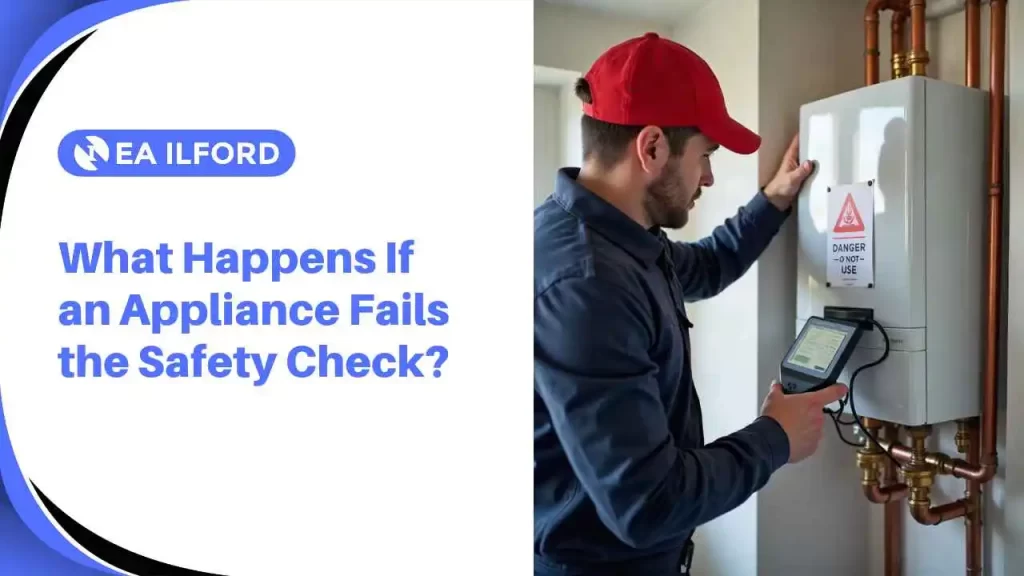
If an appliance fails a landlord gas safety certificate check, the Gas Safe registered engineer records the defect on the safety record and tells you and the occupier. If it is unsafe, they can switch it off or disconnect it and attach a “Danger, do not use” label. You must keep it out of use until a Gas Safe engineer has repaired or replaced it, and provide emergency heating if heating is lost.
The engineer must inform both the landlord and the occupier when an appliance is found to be unsafe, and may disconnect a heating appliance such as a boiler. The safety record notes the defect and any remedial action taken. For new assured periodic tenancies from 1 May 2026, the written statement of terms must include your gas safety obligations. Read our Renters’ Rights Act landlord guide.
Conclusion
A landlord gas safety certificate is one of the most important compliance requirements for landlords for the well-being of their tenants and property. Landlords must renew their CP12 certificate within 12 months of the last inspection date, and missing a renewal puts you in breach straight away, because there is no grace period. A Gas Safe registered engineer must check every appliance and flue each year, and you must give your tenants a copy of the record.
Need help staying compliant? Estate Agents Ilford can arrange your gas safety checks, track your renewal dates and coordinate repairs, so your certificates never lapse.