Landlords Electrical Safety Certificate: Rules, Costs & Legal Duties
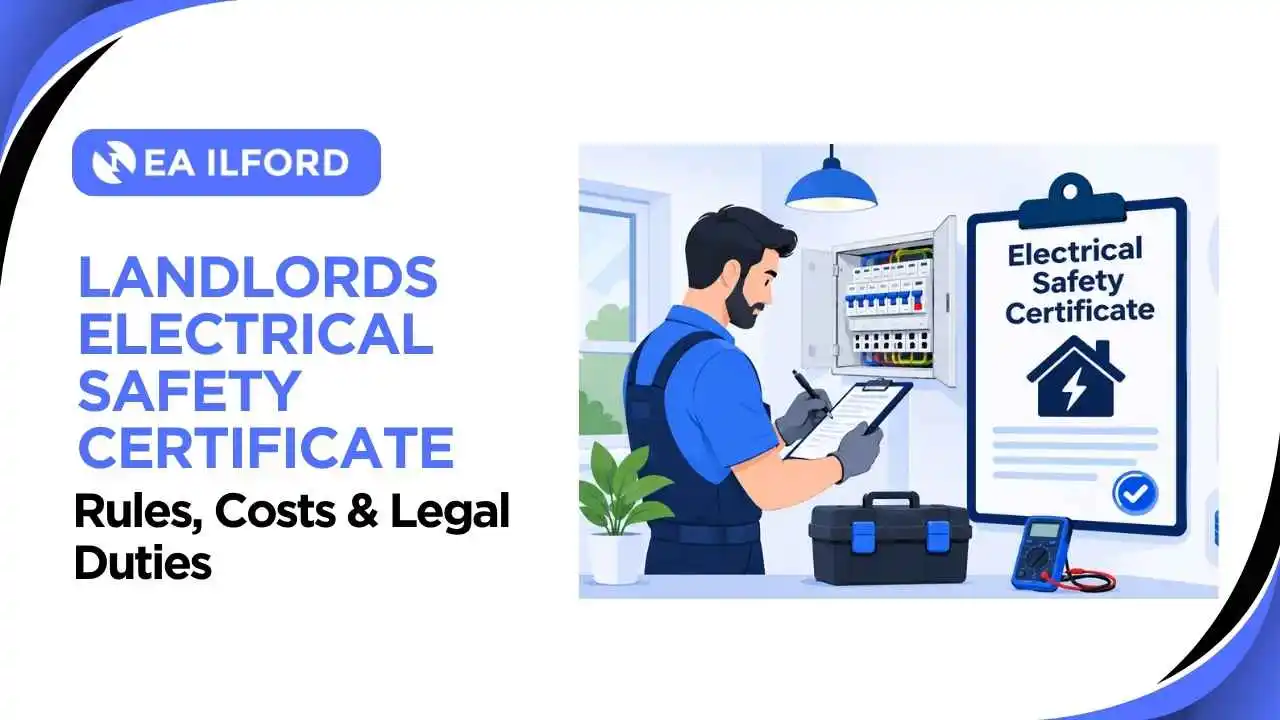
An electrical safety certificate for landlords records the condition of the property’s fixed electrics and identifies any work needed to make them safe. In England, you must arrange inspections for rented homes every five years or sooner if needed.
Estate Agents Ilford, when managing your property in East London, handle the compliance duties on your behalf and conduct regular inspections. Therefore, in this guide we’ll cover what it is, what the inspection covers, how much it costs, and what you must do if faults are found.
They apply to England; you should check the separate legal requirements for properties in Scotland, Wales or Northern Ireland.
What is a Landlord Electrical Safety Certificate?
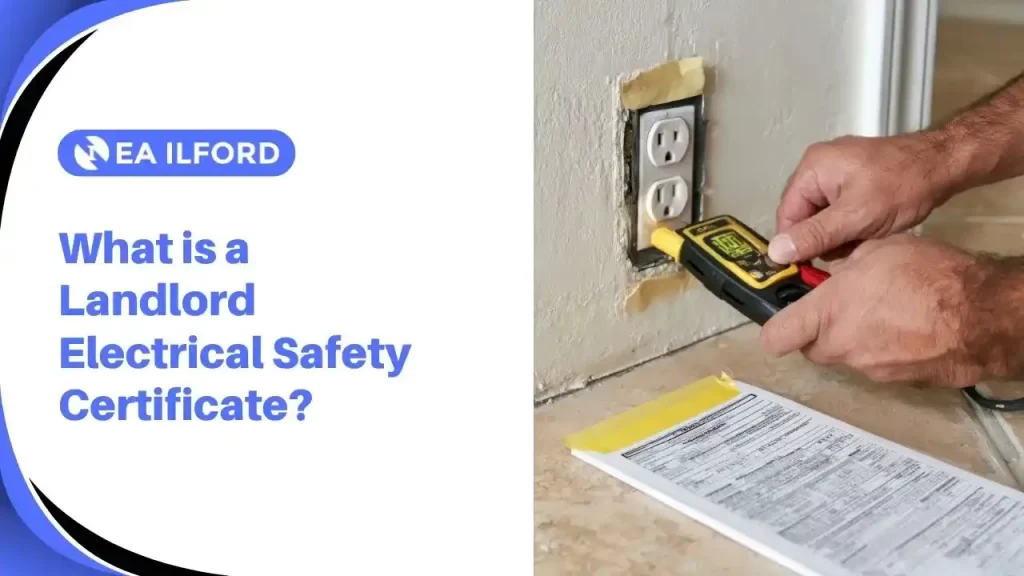
An electrical safety certificate for landlords is the common term used for an Electrical Installation Condition Report (EICR). The certificate is issued after a qualified electrician carries out an EICR test at a rental property. He records the condition of the fixed electrical installations in the rental property and highlights any faults that may need repair or attention.
An electrical safety check is carried out to identify any overloaded circuits, any risk of electrical shock or fires, defective electrical work and inadequate earthing of appliances or bonding. It helps landlords in England assess installation safety and meet their compliance requirements.
How Often Must Electrical Installations Be Inspected?
Landlords must arrange an EICR check at least every five years for most private rented property in England. However, an electrician may recommend an earlier electrical inspection and testing, which depends on the condition of installations. In this case, landlords don’t have to wait for five years; they must follow the shorter interval stated in the report.
An electrical safety certificate for landlord does not automatically need renewing when a new tenant moves in. An existing EICR can be used, provided its inspection date hasn’t passed, and no earlier inspections are pending.
What Does An Electrical Safety Check Involve?
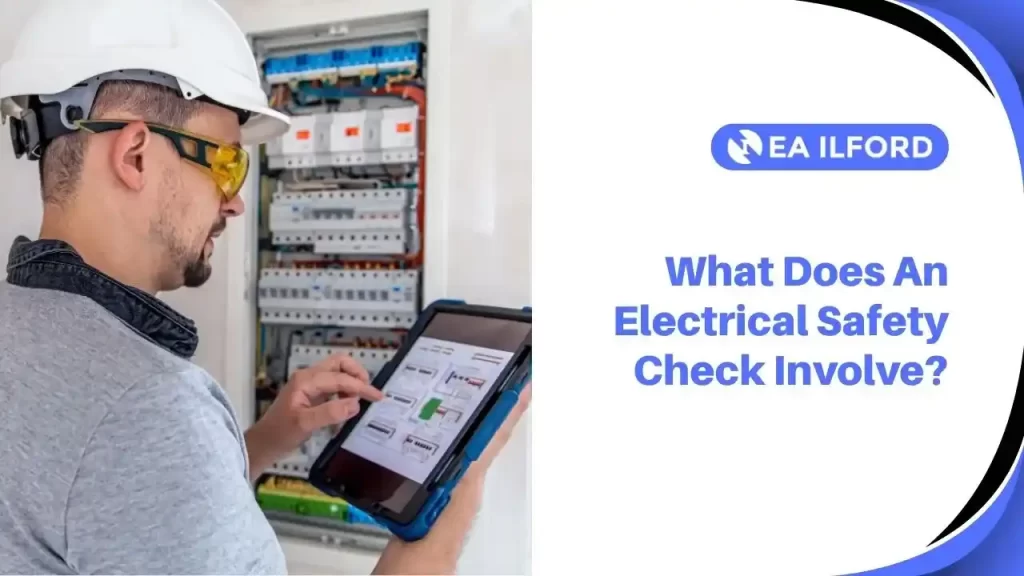
An EICR focuses on the property’s fixed electrics, from the consumer unit and wiring to sockets, switches and light fittings. The electrician also checks permanently connected equipment, including electric showers and extractor fans. The main checks include are as follows:
Consumer Unit or Fuse Box
The consumer unit distributes electricity around the property and contains protective devices for individual circuits of the building. During an EICR check, the electrician checks it’s in good condition, properly labelled and set up so a fault on one circuit trips the right device. An old unit with a cracked cover or exposed live parts is a common reason for a poor result in homes.
Fixed Wiring and Circuits
Fixed wiring is hidden behind walls, floors, and ceilings and supplies electricity to the different parts of the property. EICR testing shows up problems like damaged insulation, ageing cable or circuits carrying more load than they should that might not be visible during an ordinary examination.
Sockets, Switches and Lighting Points
The electrical engineer examines these fittings and tests the connection of switches and sockets as part of the electrical safety check. An electrical safety certificate for landlords helps identify loose connections, cracked sockets, and damaged switches, which can create electrical hazards.
Earthing and Bonding
Earthing and bonding play different roles, but both help protect people from electric shocks. Earthing provides a safe path for fault current, while bonding connects relevant metal services to maintain electrical safety of the residents. The electrician checks that these arrangements are present and adequate.
Protective Devices
Fuses, circuit breakers and residual current devices (RCDs) help to disconnect the supply when an electrical fault occurs. The inspection checks the relevant devices and tests their operation to identify problems with the installation’s protections as part of testing against the requirements of BS 7671, the Wiring Regulations.
Visible Damage and Deterioration
Finally, the electrician notes what can be seen: damaged fittings, poor DIY work, signs of heat or general deterioration that could lead to fire or shock. Anything found goes into the report of the electrical safety certificate for landlords with a code showing how urgent it is.
What an EICR Doesn’t Check?
An electrical certificate for landlords only covers fixed installations. There are some
- Portable appliances: kettles, lamps, and anything with a plug require separate PAT testing and are not included in the EICR.
- Gas and heating: Boilers, gas pipework and flues aren’t inspected, and landlords need a separate Gas Safety Certificate each year.
- Smoke and CO alarms are checked separately, though mains-wired alarms may be noted as part of the installation.
- Hidden cabling: The electrician won’t open up walls or lift floors, so some sections are judged by test results rather than seen directly.
- Repairs: The report lists and grades defects but fixes nothing. Remedial work is quoted and done separately.
Who Needs an EICR in England?
Most private landlords in England need an EICR. If you rent out a home, you must have a landlord electrical safety certificate at least every five years and give your tenants a copy. These cover most rented homes occupied as a tenant’s only or main residence, including many houses in multiple occupation (HMOs). Social landlords were brought under the same rules from late 2025.
Homeowners living in their own property don’t have to get one, but it’s worth doing if you’ve just bought an older house.
Landlord EICR Legal Duties: What Must Be Done and When
The landlord must arrange inspections and testing at intervals of no more than 5 years. If your electrician specifies a shorter interval, you must follow the instructions to check earlier. The following are the EICR deadlines the law expects you to meet, so use this table for your landlord compliance.
Landlord duty | Deadline |
Inspect and test the fixed installation | At least every five years, or sooner if your report requires it |
Give your existing tenant the report | Within 28 days of the inspection |
Give your new tenant the report | Before occupation |
Give a prospective tenant the report after a request | Within 28 days of the request |
Supply the report following a local authority request | Within seven days |
Complete required remedial or further investigative work | Within 28 days of the inspection, or the shorter period stated in your report |
Supply written completion confirmation and the original report to your tenant and local authority | Within 28 days of completing the work |
How is an Electrical Certificate Inspection Carried Out?
First for an electrical certificate for landlords, you must appoint a qualified and competent assessor with suitable inspection and testing experience. Your EICR inspector assesses the safety of the fixed electrical installation through inspection and testing. You should prepare for this assessment by:
- Providing your previous EICR and certificates for later electrical work.
- Arranging access to the consumer unit and electrical accessories.
- Telling your tenants about planned power interruptions.
- Identifying equipment that needs special arrangements during shutdown.
- Explaining any known faults or inaccessible areas.
How Much Does a Landlord’s EICR Cost?
Electrical Installation Condition Report costs between £ 100 and £ 350 for a one- to four-bed house for an EICR.
Property Type | UK range | London & South East |
Studio / 1-bed flat | £120 to £160 | £150 to £220 |
2-bed flat or house | £130 to £190 | £170 to £250 |
3-bed house | £150 to £230 | £200 to £300 |
4-bed house | £200 to £290 | £260 to £370 |
5-bed or large house | £250 to £350 | £320 to £450 |
HMO (per property) | £250 to £500 | £350 to £650 |
The remedial work can add more to the landlord electrical safety certificate cost.
Job | Typical cost |
Replace a faulty socket or switch | £25 to £60 each |
Add missing earth bonding | £80 to £180 |
Replace a faulty RCD | £90 to £180 |
New consumer unit | £450 to £900 |
Rewire a single circuit | £200 to £500 |
Full rewire, 3-bed house | £3,500 to £6,500 |
EICR Codes and Outcomes: C1, C2, C3 and FI
After a landlord electrical safety certificate assessment, you must act on C1, C2 and FI observations or EICR fault codes because they can make your electrical safety report unsatisfactory. You will find classification codes beside the observations in your report. Your EICR uses C1, C2, C3 and FI to distinguish danger, potential danger, recommended improvement and further investigation.
Code | What it means for you | Your next step |
C1 | Danger is present, and someone is at risk of injury | Arrange immediate action to make the danger safe |
C2 | A potentially dangerous condition exists | Arrange urgent remedial work |
C3 | An improvement is recommended | Consider the recommendation and plan suitable improvements |
FI | Further investigation is required without delay | Arrange investigation to establish the risk and necessary work |
Note: A C3 observation alone does not make your report unsatisfactory. Landlords should consider the recommendations when planning other electrical works.
What Should a Landlord Do If an EICR Is Unsatisfactory?
You should ask your electrician to explain each fault code on and identify which action or remedial work is needed. For example, a C1 danger requires immediate attention, and the ordinary remedial deadline is not permission to leave an immediate hazard working.
Follow these steps when you find your landlord electrical safety certificate unsatisfactory:
- Arrange immediate isolation of that electric installation or other safety measures where needed.
- Obtain a written scope and quote linked to the report’s observations.
- Book the required investigation or repairs within the applicable deadline.
- Obtain written confirmation that the work is complete and the required safety standards are met.
- Send the required documents to your tenant and local authority.
Who Pays for an EICR and Electrical Repairs?
As a landlord, you are responsible for arranging and paying for the statutory inspection and necessary repairs. If there is a separate claim concerning tenant damage, it must follow the tenancy agreement and law without delaying any safety works.
Keep your original EICR together with written confirmation of completed remedial or investigative work. You do not automatically need a completely new landlord electrical safety certificate after every repair. The report and suitable completion evidence show what remedial work was done and confirm that risk is solved and in a safe condition.
EICR vs EIC vs PAT Test
Many people confuse EICR, EIC and PAT. They may sound alike but cover different things, as the table shows:
Comparison | EICR/ Landlord Electrical Safety Certificate | EIC | PAT Test |
What it checks | Fixed wiring and electrical installations | Newly installed electrical work | Portable electrical appliances |
Examples | Sockets, circuits and consumer units | New circuits or complete rewiring | Kettles, fridges and washing machines |
Main purpose | Assesses the condition and safety of an existing installation | Confirms new electrical work meets safety standards | Checks portable appliances for electrical safety |
Can a Tenant Refuse Access for an EICR?
Legally, a tenant can say no to access, and you can’t force them to allow you to enter the property. According to the right to quiet enjoyment, the tenancy gives them the right to live undisturbed, so you need their agreement to enter, usually with at least 24 hours’ written notice. And according to the Renters Rights Act 2025, you can’t evict them forcefully just because they don’t allow access to the property for inspection.
In England, a landlord who has taken reasonable steps to arrange the inspection isn’t treated as breaking the rules. But first ask in writing, by email or letter, not by just a call. Then offer them several dates and times that are most convenient for your tenants. Say why the inspection is needed, and that it’s a legal safety check. If they keep refusing, it’s worth getting advice from your council or a landlord association before taking further action..

What Happens If a Landlord Has No Valid EICR?
The council can fine up to £40,000 per breach for not keeping the legal landlord electrical safety certificate. If you don’t have a report, don’t provide a tenant with a copy of the report, and don’t do repairs, all are counted as separate breaches, so the fines add up. If you ignore a remedial notice, the council can arrange the work itself and send you the bill. Tenants can also apply for a rent repayment order of up to 24 months’ rent once you’ve been penalised or convicted.
Let Estate Agents Ilford Handle Compliance
A landlord electrical safety certificate is a legal requirement for private and social rented properties in England. It helps to track the electrical health system of the property by assessing each wire and socket of the building with the help of experienced and qualified electricians. But electrical safety certificates for landlords don’t have to be a headache. That’s where our Property Management service in Ilford comes in. We carry out regular property inspections, spot issues early, and help keep your rental running smoothly and compliant.