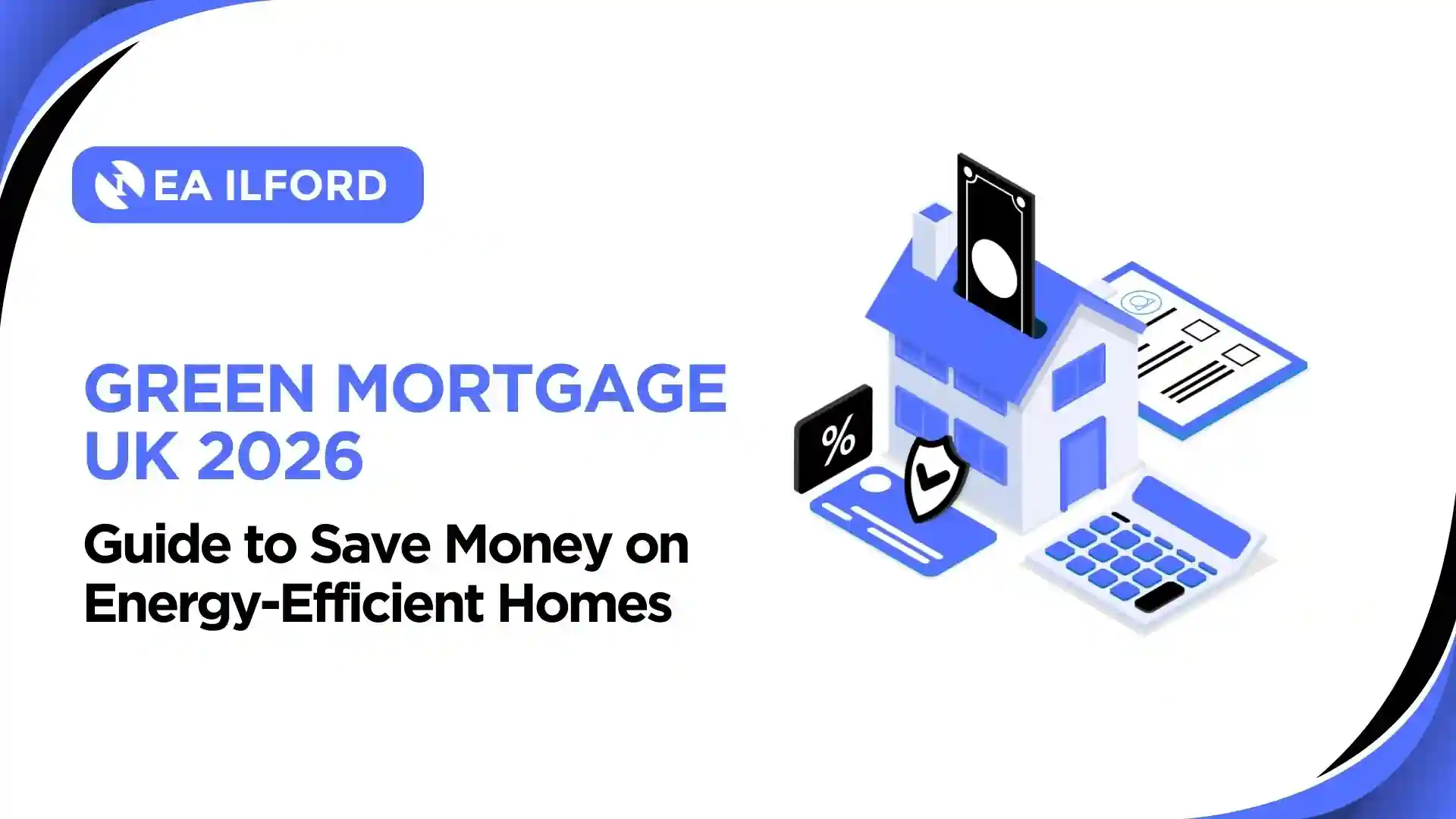
Green Mortgage UK 2026 Guide to Save Money on Energy-Efficient Homes
Want to buy a home but struggling with high energy bills while paying off your mortgage? It is a home loan that rewards you for buying or improving an energy-efficient property. You may get better interest rates or extra funds for making energy-saving upgrades. This guide will tell you what these loans offer in comparison with traditional loans, and what benefits you can expect. Many buyers trust Real Estate Agent Ilford for practical advice on the local property market.
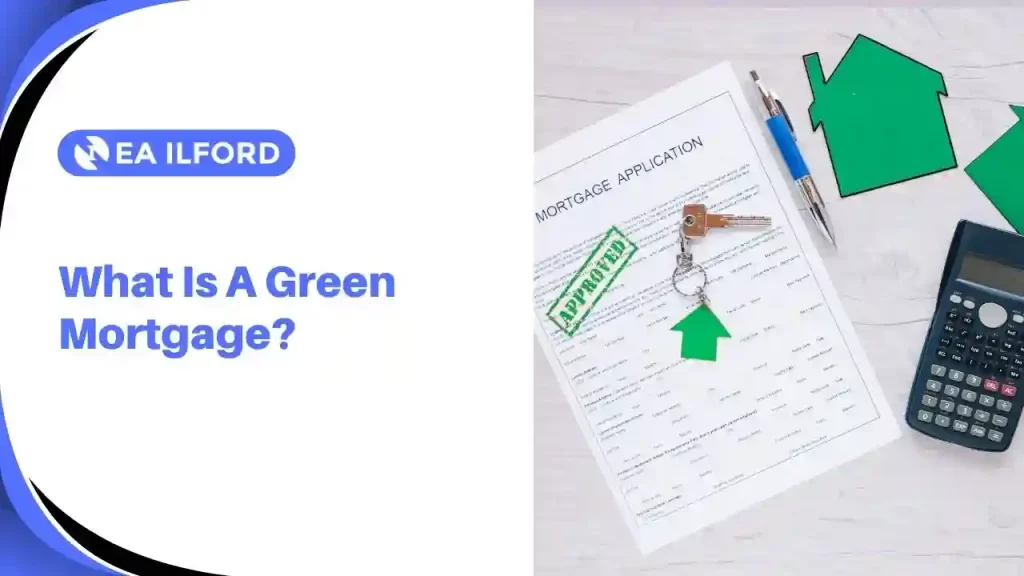
What Is A Green Mortgage?
Green mortgages refer to loans for home buyers who want to purchase a new home built to a higher energy efficiency. The goal is to create residential properties which use less energy and can be upgraded through affordable renovations.
Green mortgages require energy rating systems to enable lenders to assess how energy-efficient the building is. Your monthly expenses will decrease when your current home works at lower energy consumption. It also helps homebuyers and current homeowners lower their overall expenses. They can enjoy better comfort and increase their property value compared to a regular mortgage.
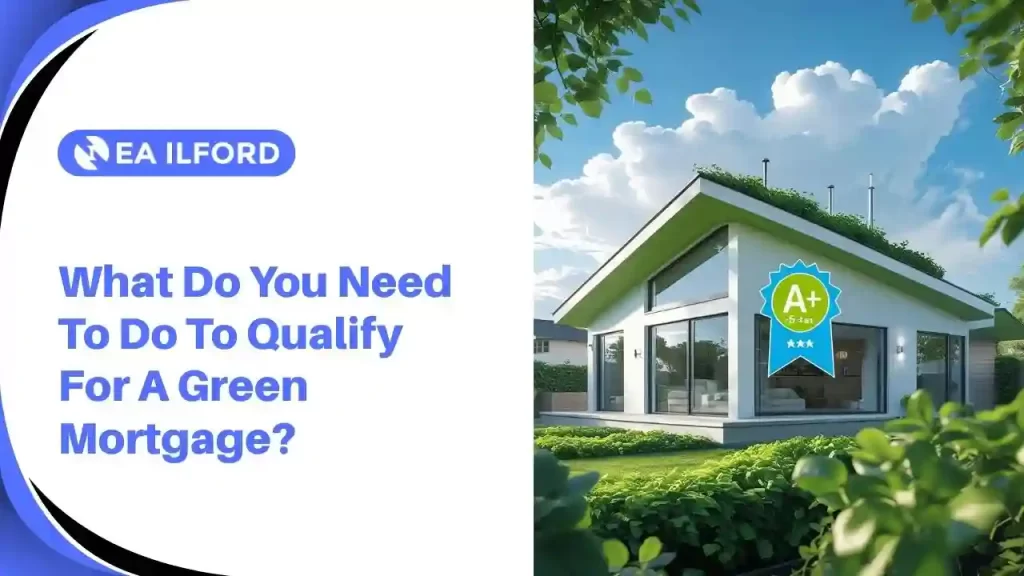
What Do You Need To Do To Qualify For A Green Mortgage?
Lenders check your financial situation and your home to give you a loan to improve your energy conservation. They assess your property to determine its compliance with energy efficiency requirements while evaluating your ability to repay the loan.
- Meet the Required Energy Rating
Your property does have to have an Energy Performance Certificate of at least the minimum grade the lender requires. Some lenders accept less costly homes if you commit to upgrading them within a certain amount of time.
- Provide a Valid Energy Performance Certificate
You must provide a current Energy Performance Certificate for your property. This document is very important for the lender because it demonstrates the property’s efficiency.
- Demonstrate Planned Energy Improvements
Home buyers who purchase homes with lower energy efficiency must provide documentation showing their insulation and low-energy heating system plans. Lenders typically request both budget estimates and work timetable information from their clients.
- Pass Standard Affordability Checks
Your income, credit history, and existing commitments are still assessed in the same way as a normal mortgage. Your case can gain support from a reduced energy bill, but these checks remain essential.
- Use Approved Contractors or Measures
Some lenders need upgrades to be done by their approved installers or to meet their particular installation requirements. The process establishes that all upgrades will succeed in enhancing the home’s efficiency.
- Complete Improvements Within the Agreed Timeframe
The project requires you to complete your work within a scheduled time when you receive additional funds for home improvements. The final terms of the agreement will only become valid after you provide proof that you have completed your work.
How To Apply For A Green Mortgage?
Here is a step-by-step guide to apply for a Green Mortgage :
- Check the Property Energy Rating: Check the current Energy Performance Certificate for the property and ensure it meets the lender’s minimum required standard.
- Lenders Requirements: Review the lender’s green mortgage to make sure you establish the lender’s maximum loan-to-value ratio to get the loan.
- Gather Financial Information: Get verifiable proof of income, expenses, and also verify your credit history to complete standard mortgage application requirements.
- Determine if Energy Improvement is Required: Assess whether or not your home requires any kind of energy improvement and receive quotes from certified contractors for those improvements.
- Apply Through a Lender or Broker: Fill in your mortgage application and provide details of the property’s energy rating or the planned upgrade.
- Complete the Property Valuation: The property valuer will evaluate the home and verify the energy rating details under the valuation process.
- Accept the Mortgage Offer: Carefully look at the final terms of the mortgage and agree to any and all terms for improvements if required.
- Complete Required Improvements: The lender requires all energy upgrades to be completed according to the agreed schedule, while providing proof of completion.
How Much Could You Save With A Green Mortgage?
A green mortgage provides cost savings through its lower interest rates and its ability to give rewards for energy-efficient home upgrades. These elements enable you to choose the best option while achieving maximum financial advantages.
- The decrease in interest rates results in reduced monthly mortgage expenses, which enables you to spend less money.
- Upgrades that increase energy efficiency through insulation and solar panel installation result in decreased home energy expenses.
- Certain lenders provide cashback and additional benefits to borrowers who select green mortgage options.
- The implementation of eco-friendly upgrades for your property results in increased market value, which generates financial advantages.
- The process of financing energy efficiency upgrades through a mortgage system simplifies budget management for such investments.
- Spreading energy efficiency costs through the mortgage can make a cost-effective investment.
- A lower carbon footprint can help you receive some other benefits offered by the government or local government.
What Are The Barriers To Green Mortgages?
Green mortgages provide advantages, but their adoption remains limited because there are multiple obstacles. The challenges must be solved, and those who need to work together to encourage more people to adopt green mortgages.
Affordability Models
Current mortgage calculations ignore energy efficiency, so lenders don’t count lower energy costs when assessing borrowers. The residential market for energy-efficient homes creates barriers which prevent buyers from obtaining superior mortgage options.
Lender Knowledge
Many banks and mortgage providers still lack experience with green buildings. The organisations require complete energy performance data before they will consider providing incentives.
Risk Evidence
The lenders require evidence which shows that green homes present reduced long-term risk to their investments. The lack of historical data about energy-efficient properties creates difficulties in proving this point.
Homeowner Reluctance
Even when energy improvements offer financial payback, many homeowners are unwilling to invest. The current situation results in reduced demand for green mortgage products.
Poor Marketing
Green mortgages are not marketed properly through their existing promotion methods. Many potential buyers remain unaware of available incentives or how these products work.
Low Appeal
People do not currently consider energy efficiency upgrades as typical home improvements. Building A, which requires property expansion, remains less appealing than constructing a new kitchen.
Are Green Mortgages Cheaper Than Standard Mortgage Options?
They are not always the cheapest option when compared to all standard mortgage deals. Green mortgages can be cheaper than standard mortgages, with slightly lower interest rates and cashback rewards. This system also allows higher loan limits for energy-efficient homes. These benefits can create long-term savings because they decrease energy bills and offer better rates.
Green vs Traditional Mortgages
Here is the difference between the green mortgage and the traditional mortgage.
| Feature | Green Mortgage | Traditional Mortgage |
| Rates | lower for energy-efficient homes | Normal rates |
| Eligibility | EPC rating A or B | No requirement needed |
| Incentives | Cashback/ upgrade support | No extra incentives |
| Repayment | Flexible options | Standard |
| Energy Focus | Supports eco-friendly homes | No energy focus |
| Cost Savings | lower utility bills | Regular bills |
Which Lenders Offering Green Mortgages in the UK?
Many major lenders now provide green mortgages to encourage energy-efficient homes. These mortgages often offer cashback, lower interest rates, or support for eco-friendly improvements. Borrowers can save money while upgrading their homes sustainably. Below are some key lenders and their green mortgage benefits:
Nationwide:
They offer cashback and interest-free loans for green home improvements. They decrease both energy and mortgage costs. The company offers a £500 cashback incentive to customers who purchase homes with an EPC A rating. Buyers can also borrow money interest-free for green home upgrades.
Barclays:
It gives priority to customers already in the homes and builds new houses that are energy efficient. Barclays gives lower interest rates for new-build homes with an EPC A or B. Existing borrowers can earn rewards up to £2,000 for green improvement.
Co-operative Bank:
Co-operative Bank provides superior mortgage rates for properties that have EPC ratings of A or B. The loan-to-value requirement for this applies when it falls within the range of 80% to 95%.
Halifax:
Halifax offers up to £250 in cashback to consumers who have A or B-rated homes. Borrowers can also receive up to £2,000 if taking loans for green home improvements.
HSBC:
HSBC provides a cashback of up to £1000 when customers purchase or remortgage and receive an A or B rating. This system promotes investments in properties that meet energy-efficient standards. This applies to buying or remortgaging.
NatWest:
NatWest provides A and B-rated homes with interest rates that are lower than their standard rates. The offer is available for properties with a loan-to-value of 85% or less. Both buyers and remortgagers can apply.
TSB:
TSB gives £250 cashback for the purchase of homes with an A or B EPC rating. This reward promotes eco-friendly distribution of houses. Their mortgage offers simple cashback benefits and helps to decrease initial costs.
Virgin Money:
Virgin Money offers new-build homes with A or B ratings. It also reduced interest rates to customers. Loan-to-value must be 85% or less. Existing borrowers can receive £250 cashback for making eco-friendly home improvements.
Leeds Building Society:
Leeds Building Society provides better mortgage rates to its existing customers. The program provides additional funding for home improvements that meet energy-efficient standards.
Green Mortgage Rates For 2 & 5 Year Fixed Deals
Green mortgages can be more expensive than the cheapest non-green deals. They offer eco-friendly benefits but may cost slightly more over 2 or 5 years. The table below compares green and non-green fixed mortgage deals for different loan-to-values.
| Loan-to-Value | Green / Non-Green | Interest Rate + Fees | Monthly Payment | Cost (Total) | Term |
| 60% | Non-green (First Direct) | 3.78% + £490 | £619 | £15,344 | 2 years |
| 60% | Green (Virgin Money) | 4.22% + £1,020 | £648 | £16,496 | 2 years |
| 75% | Non-green (Yorkshire BS) | 3.84% + £995 | £779 | £19,604 | 2 years |
| 75% | Green (NatWest) | 4.06% + £1,025 | £797 | £20,032 | 2 years |
| 90% | Non-green (Furness) | 4.25% + £1,024 | £975 | £24,398 | 2 years |
| 90% | Green (Barclays) | 4.87% + £35 | £1,039 | £25,030 | 2 years |
| 60% | Non-green (First Direct) | 3.90% + £490 | £940 | £56,900 | 5 years |
| 60% | Green (Virgin Money) | 4.27% + £1,020 | £977 | £59,615 | 5 years |
| 75% | Non-green (First Direct) | 3.99% + £490 | £1,186 | £71,675 | 5 years |
| 75% | Green (Barclays) | 4.04% + £934 | £1,193 | £72,520 | 5 years |
| 85% | Non-green (Furness) | 4.26% + £1,024 | £1,464 | £88,745 | 5 years |
| 85% | Green (NatWest) | 4.25% + £995 | £1,462 | £87,720 | 5 years |
Types of Green Mortgage
Green mortgages help buyers and homeowners make energy-efficient homes more affordable. They provide benefits such as lower rates, cashback, and extra borrowing for green improvements. There are three main types that are given below.
Rate Reductions
These mortgages target buyers or remortgagers of A or B-rated EPC homes. Lenders provide small reductions on standard mortgage rates or cashback incentives.
Additional Borrowing for Green Home Improvements
Homeowners who make energy-efficient upgrades through heat pumps and insulation work qualify for these benefits. Lenders supply reduced interest rates on additional borrowing and cashback rewards to their customers. The system enables environmentally friendly home upgrades while decreasing total expenses.
Enhanced Borrowing
Some lenders allow higher income-to-loan ratios for A or B-rated EPC properties. This enables buyers to borrow more while still benefiting from green incentives. The program encourages people to invest in energy-efficient homes that they can afford at lower costs.
Advantages And Disadvantages of Green Mortgages
Green mortgages offer financial incentives to energy-efficient homes, yet they bring specific limitations. The advantages and disadvantages of the process enable homeowners to make better decisions about their application.
| Feature | Advantages | Disadvantages |
| Interest Rates | Lower rates for energy-efficient homes reduce monthly payments and overall loan costs | Limited availability; not all lenders offer green mortgages |
| Incentives | Cashback rewards and extra borrowing for eco-friendly upgrades | Strict eligibility requirements for property energy standards |
| Energy Efficiency | Cuts utility bills and promotes sustainable living | Extra paperwork is needed, such as EPC and proof of improvements |
| Property Value | Energy-efficient homes may sell for more in the future | Higher upfront costs for energy-saving improvements |
| Adoption & Awareness | Encourages homeowners to invest in eco-friendly solutions | Low awareness among homeowners slows adoption |
Conclusion
Green mortgages provide a practical solution to build energy-efficient homes at reduced costs while receiving benefits for their energy-saving efforts. The program provides various benefits, which include reduced interest rates, cashback, and extra funding possibilities based on the lender and property assessment. Buyers who need trustworthy guidance about green mortgage options usually contact Real Estate Agent Ilford for assistance.