How Landlords Use the Right to Rent Share Code to Check Tenants Online
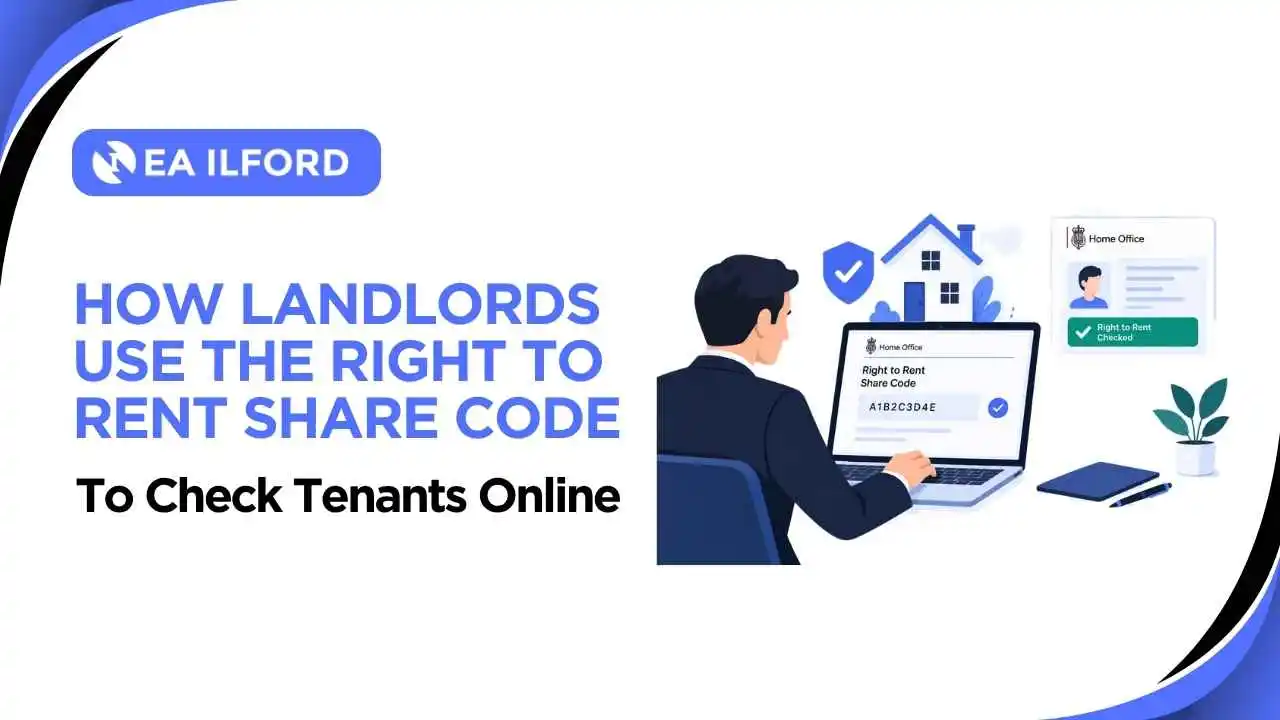
As a landlord in England, you must check that every tenant has the legal right to rent before the tenancy begins. These checks can be completed in two ways: manually using original documents or online using the Home Office online service, the Right to Rent share code.
Your tenants generate a unique nine-character code online, and you use it to access their Home Office immigration record in minutes. Landlords who fail to comply can face civil penalties of up to £20,000 per occupier for multiple breaches. In this guide, Estate Agents Ilford explains what a share code is, who needs one, and how to check it correctly, protecting yourself from penalties.
What Is a Right to Rent Share Code?
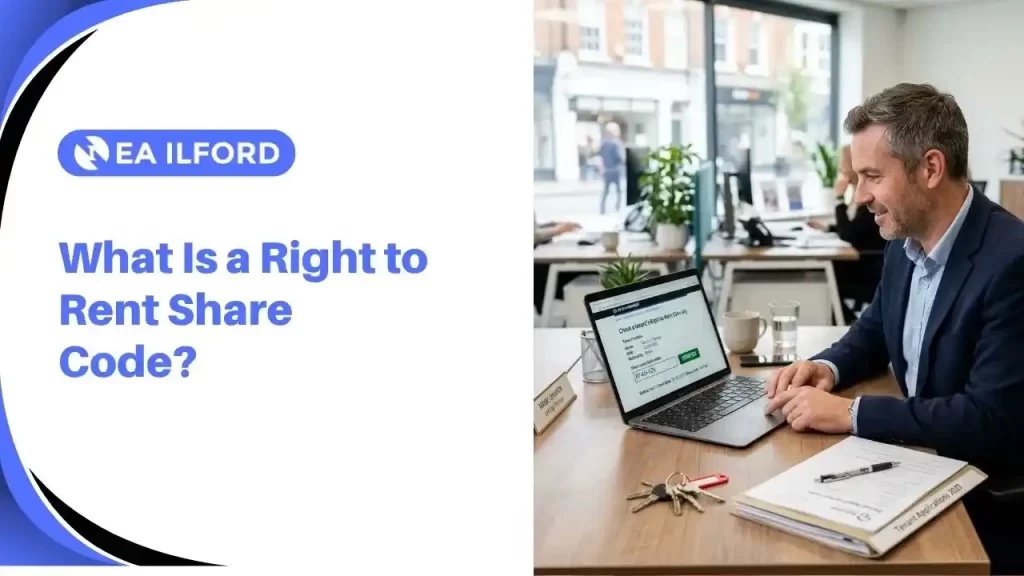
A Right to Rent Share Code is a unique nine-character alphanumeric code that tenants generate through the Home Office Online Service. It provides landlords with real-time access to a tenant’s immigration record. It also confirms whether the right to rent is unlimited or time-limited.
Right to Rent checks are a legal obligation under the Immigration Act 2014, requiring landlords to confirm that every prospective tenant has permission to rent residential property in England. While landlords can verify status manually using original documents, the Right to Rent share code is the faster and fully digital route to completing a compliant check.
Who Needs a Share Code and Who Doesn’t
Tenants whose immigration status is held digitally by the Home Office must prove their Right to Rent using a share code. Those with acceptable physical documents can prove their status another way. Your tenants can use a government service to generate a code if they are:
Tenant Type | Can They Provide a Share Code? |
EU/EEA/Swiss nationals with settled or pre-settled status | Yes |
Visa holders with a UKVI account and eVisa | Yes |
British citizens | No-use a passport or other accepted documents |
Irish citizens | No– use a passport or other accepted documents |
Tenants with physical evidence of Indefinite Leave to Remain | No-use accepted physical documents |
Tenants in Scotland, Wales or Northern Ireland | Not applicable. Right to Rent checks apply only in England |
From 31 October 2024, Biometric Residence Permits ceased to be valid as proof of immigration status. Landlords should therefore not accept a physical BRP card as evidence of the right to rent.
How Tenants Get a Share Code Online?
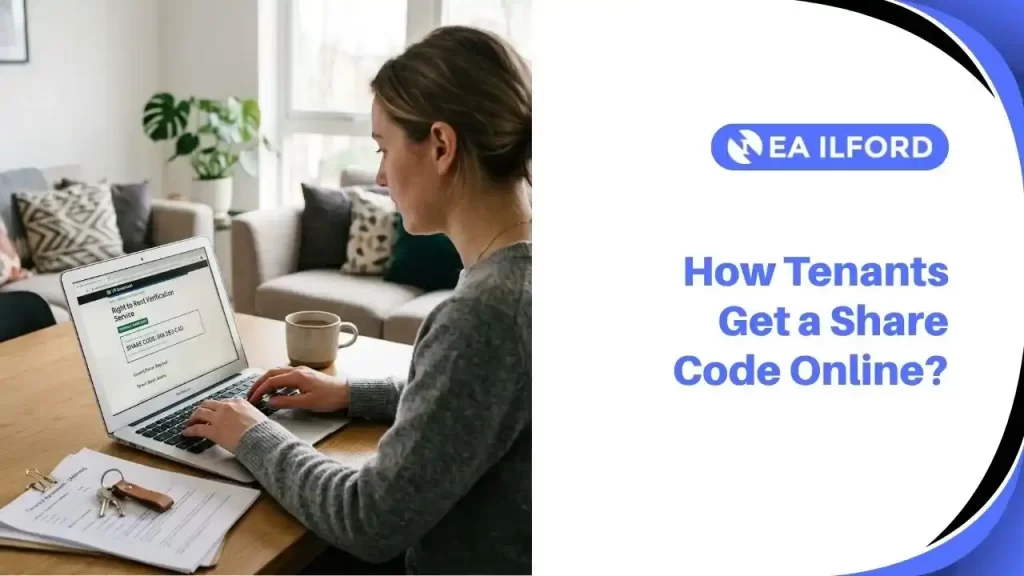
Tenants with a UKVI account, an eVisa, or an eligible biometric immigration document can generate a share code online to prove their right to rent in England. Tenants can get a share code through the official GOV.UK “Prove your right to rent in England” service. The Right to Rent share code starts with R. Some tenants confuse this with a right to work share code, which starts with a different letter and will not work on the Right to Rent checker.
Landlord tip: A tenant’s share code is not the check itself. Landlords and letting agents can verify a tenant’s right to rent through the official GOV.UK online service.
How Landlords Check Right to Rent Share Code?
Landlords and letting agents can check a tenant’s right to rent online using the official GOV.UK service.
- Ask the tenant for their share code and date of birth.
- Go to the Official Link to check a Right to Rent Share Code: gov.uk/view-right-to-rent.
- You need the tenant’s share code and date of birth to enter.
- Review the online right-to-rent record, including the tenant’s photograph and any restrictions or expiry date.
- Confirm the details match the tenant you are renting to.
- Save a copy of the online check and record the date the check was completed.
- Complete any follow-up check before the tenant’s time-limited right to rent expires.
Important: Landlords must use the Home Office online right-to-rent checking service. Viewing the tenant’s own immigration status page is not sufficient to establish the landlord’s statutory excuse.
Share Code Check vs Manual Document Check
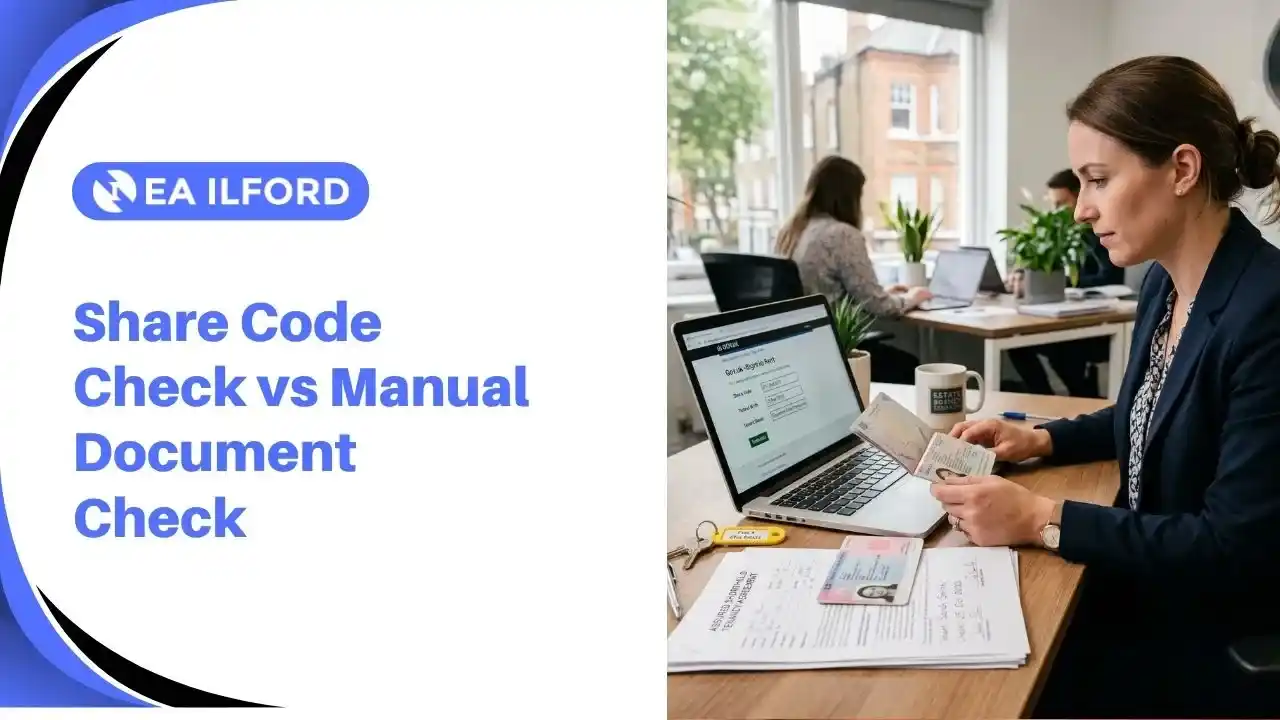
Depending on the immigration status, tenants use different checking methods. Some tenants can prove their status online using a share code, while others must provide acceptable physical documents for a manual check.
Share Code Check | Manual Document Check |
Online check through GOV.UK | Check of original acceptable documents |
Tenant provides a share code and date of birth | Tenant provides their original documents |
Used where the tenant has eligible digital immigration status | Used where the tenant can prove their right to rent with acceptable documents |
Landlord verifies the tenant’s details online | Landlord checks documents in the tenant’s presence |
Save the online profile and record the check date | Copy the documents and record the check date |
Understanding Right to Rent Share Code Check Results
Once you complete the share code check, the result will generally show one of the following four outcomes:
- Unlimited Right to Rent: It means that the tenant has an ongoing right to rent with no expiry date. You do not need to carry out a follow-up check.
- Time-Limited Right to Rent: The tenant has permission to rent for a specific period. You must complete a follow-up check before their right to rent expires.
- No Right to Rent: The check confirms that the tenant does not have the right to rent in England. You should not allow the tenancy to proceed unless the Home Office confirms otherwise.
- Status Cannot Be Confirmed: If you cannot establish the tenant’s status, do not assume they have no right to rent. Contact the Home Office Landlord Checking Service using the online form at gov.uk. The Landlord Checking Service will confirm whether or not the individual has permission to rent, and that confirmation will provide you with a statutory excuse.
The Statutory Excuse For Landlords
A statutory excuse shields landlords from civil penalties for unknowingly renting to someone without the right to rent, but only if the required checks were completed correctly and on time.
To maintain this protection, landlords must complete the Right to Rent check before the tenancy begins, following the proper procedure for either an online share code or manual document check. They must confirm that all details and photographs genuinely match the tenant, retain evidence of the check including the date it was carried out, and perform a follow-up check before any time-limited right to rent expires.
If a follow-up check reveals the tenant no longer has the right to rent, landlords must follow the Home Office procedure rather than acting independently.
Follow-Up Checks for Time-Limited Right to Rent
Where a tenant holds a time-limited right to rent, landlords are obliged to recheck either before the tenant’s permission expires or within 12 months of the previous check, whichever comes first. The date that comes sooner will be preferred for recheck, either the expiry date or the 12-month completion date.
For example: If you completed a check on 1 January 2026 and the tenant’s time-limited right to rent status shows it is valid until 1 October 2026, the follow-up must happen before 1 October 2026 as that is less than 12 months away.
When a Tenant Cannot Prove Their Right to Rent
When your tenants cannot prove their right to rent, you can simply refuse them. They may fall into two situations. Seeing them, you can make a decision; you can’t simply refuse a tenancy without any check.
Outstanding Applications and Appeals
Some tenants may be unable to provide a share code because their immigration application or appeal is still being considered by the Home Office. In this situation, you should use the Home Office Landlord Checking Service rather than refusing the tenancy outright.
Locked or Inaccessible UKVI Accounts
If a tenant cannot access their UKVI account. For example, if they no longer have access to the email address or phone number linked to their account, they should contact the UKVI Resolution Centre to regain access. Do not refuse the tenancy outright solely because of a technical access issue, as this can lead to unlawful discrimination under the Equality Act 2010.
How the Landlord Checking Service Works?
The Home Office Landlord Checking Service LCS is available to landlords who cannot verify a tenant’s right to rent through the standard online check or manual document route. You should use the LCS when:
- The tenant has an outstanding application or appeal with the Home Office.
- The Home Office is holding the tenant’s documents.
- The online check returns a result of “status cannot be confirmed.”
The LCS is accessed through the online form at gov.uk/landlords-request-a-check. Once you have submitted a request, the Home Office will respond by issuing either a Positive Right to Rent Notice, confirming the individual has permission to rent, or a Negative Right to Rent Notice confirming they do not.
Ground 7B and Right to Rent Under the Renters’ Rights Act
The Renters’ Rights Act came into force on 1 May 2026 and fundamentally changed how tenancies work in England. Ground 7B is a mandatory possession ground available to landlords under the new Act. Ground 7B applies where the Home Office has formally notified a landlord that a tenant or occupier no longer has the right to rent under immigration law.
The minimum notice period for a Ground 7B claim is two weeks. The court must order possession if the ground is proved and the landlord has followed the correct procedure. Completing Right to Rent checks correctly, and telling the Home Office quickly when a follow-up check shows a tenant’s status has expired, is not just a legal duty. It also puts you in the right position to use Ground 7B to regain your property if you need to.
When Right to Rent Checks Become Unlawful Discrimination
Under the Equality Act 2010, landlords and letting agents must not treat tenants unfairly because of who they are. In a housing context, this covers characteristics such as race, sex, disability, religion, pregnancy, and sexual orientation. You must carry out the same check in the same way for every adult who applies to rent your property, regardless of their nationality, where they are from, or how they sound.
The Home Office has published a code of practice for landlords covering how to avoid unlawful discrimination when conducting Right to Rent checks. The code has been updated and applies from 1 October 2026.
What Right to Rent Non-Compliance Costs Landlords?
The fines for getting Right to Rent wrong are serious. They increased sharply in February 2024 and remain at those levels in 2026. Fines are charged per person, not per property, so in a shared house the costs can add up quickly.
Breach | Per Lodger | Per Occupier |
First breach | Up to £5,000 | Up to £10,000 |
Repeat breach within 3 years | Up to £10,000 | Up to £20,000 |