HMO Requirements: How to Check What Rules Apply to Your Property
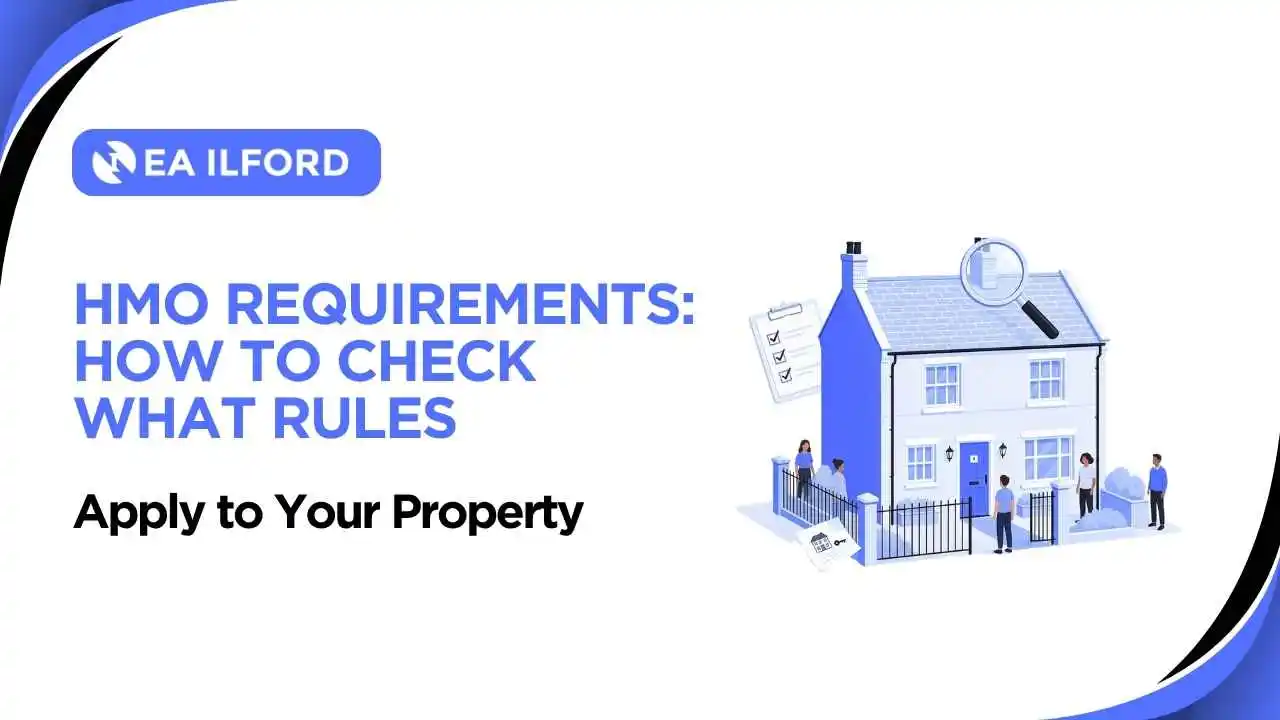
When does my property actually count as an HMO? It’s a question many landlords only start asking when they realise there are specific HMO requirements that could apply to their property. They may have three tenants on one tenancy agreement, living with two lodgers, or an extra person moving in without being added to the tenancy agreement.
Then there are properties with self-contained studios, different council licensing schemes and Article 4 areas, making the rules harder to work out. These situations can make it difficult to know if the property has become an HMO and what rules then apply.
Let Estate Agents Ilford resolve all your confusion with a guide covering how to check if your property is an HMO, what its requirements are, and real-life case scenarios to help you understand the rules.

Is Your Property an HMO?
What are HMO properties? Landlords always ask this question because HMO requirements differ from standard single-let or household let. A property is usually an HMO when:
- 3 or more people live there,
- as their only or main home,
- and they form 2 or more households,
- and they share facilities such as a kitchen, bathroom or toilet.
What counts as a household is where most landlords get caught out. A couple or a family including step and half relations is one household. Friends and other unrelated sharers are each their own household.
For Example, if you rent your three-bed house to three friends on one tenancy agreement and they share the kitchen and bathroom, it is an HMO. The single agreement makes no difference. But if a couple and their adult son live in the same house, it isn’t an HMO, as they are a household.
To check your property, count the people who live there as their main home. Group them into households, where a couple or a family counts as one. Then look at what they share: a kitchen, bathroom, or toilet. Three or more people, at least two households, and a shared facility make it an HMO.

What Are the HMO Requirements for a Property?
Not every shared house is an HMO. A property becomes an HMO when it meets the legal HMO definition, but the requirements that apply can depend on its type, occupancy, and local council. The same type of property can face different requirements depending on the council, so checking the national rules is only the starting point.
Minimum Bedroom Sizes
Each bedroom is measured by its usable floor area. In England, the minimums are 6.51 m² for one person over 10, 10.22 m² for two people over 10, and 4.64 m² for a child under 10. A room below 4.64 m² can’t be used as sleeping accommodation, and any part of the floor under a ceiling lower than 1.5 m is left out of the measurement.
A large lounge doesn’t make up for a small bedroom. Measure every room yourself before you take on a new tenant. Your HMO licence will state the permitted occupancy for each room, so check it before adding another occupant.
Fire Safety Requirements
The property needs suitable fire detection, safe escape routes and appropriate fire protection for its layout and occupancy. The smoke alarm regulations require at least one smoke alarm on every storey. The exact standard can vary with the number of storeys, type of HMO and local council’s conditions.
Before letting an HMO, check that fire escape routes are clear, fire doors and other required fire protection are in place, alarms are working, and any required emergency lighting or fire risk assessment has been dealt with. Redbridge Council, for example, asks HMO licence applicants for floor plans showing fire exits, hard-wired smoke alarms and heat detectors.
Gas and Electrical Safety
Gas and electrical safety are landlord compliance duties that also apply when you run an HMO. Gas appliances and flues provided by the landlord need an annual safety check by a Gas Safe registered engineer. At the same time, the electrical installation in a rented property must be inspected and tested at least every five years, with an EICR provided as evidence of the inspection.
Keep the certificates and make sure any remedial work is completed. Do not treat the paperwork as the whole job; appliances, sockets, wiring and other equipment still need to be kept in safe working order.
Kitchen and Bathroom
There are no national size rules for kitchens and bathrooms in HMO requirements in England. But, shared kitchens and bathrooms must be suitable for the number of people living in the property. Council sets specific requirements for kitchen equipment, worktop space, food storage and sinks based on occupancy.
So, before adding another tenant, check that your existing facilities are still suitable for the permitted occupancy rather than assuming one more person will not make a difference.
HMO Management Requirements
The Management of Houses in Multiple Occupation (England) Regulations 2006 set out these day-to-day duties for HMO managers. The manager is responsible for staying on top of the communal areas, rubbish, repairs and fire safety equipment throughout the tenancy.
Be clear about who is responsible for managing this, whether that’s you or an agent, and give tenants their contact details and a contact number. If you live abroad, put the split of duties in writing and ask your council what it accepts for the licence holder and manager.
EPC and Other Safety Requirements
A rented home currently needs an EPC rating of E or better, unless a valid exemption applies. The government has also confirmed that the EPC C rating will be the minimum standard from 1 October 2030. Check your property’s rating on the EPC Register and start planning improvements early if it is below C.
Also check that your buildings insurance and mortgage terms allow the property to be let as an HMO, as changing how the property is occupied can affect your cover or lender’s requirements.
You should also have the required smoke and carbon monoxide alarms in place and check any additional safety conditions set by your local council or HMO licence.
Renters Right Act Impact on HMOs
HMO landlords also need to consider changes introduced by the Renters’ Rights Act 2025. The Act changes how landlords manage residential tenancies and possession, including the abolition of Section 21. These changes do not replace HMO licensing or management requirements. However, since 1 May 2026, they can affect how landlords handle tenancies within an HMO, manage the rent increase notices, and the possession process.

Penalties for Failing to Meet HMO Requirements
Ignoring HMO requirements can become an expensive problem for landlords. If an HMO is not properly licensed or required safety standards are missed, the council can take enforcement action and issue substantial financial penalties.
The Government guidance sets a £17,000 starting level for an unlicensed mandatory or additional HMO. The final penalty depends on the offence, your track record and the state of the property, and each council has its own starting levels, so check your local policy.
In Redbridge, even smaller HMOs can require a licence. In one Ilford case, a property occupied by 12 people was found to have fire safety and overcrowding hazards, including a lack of fire doors. The landlord was fined £11,250, with the First-tier Tribunal later upholding the penalty. It is a useful reminder that meeting HMO requirements early can help landlords avoid costly enforcement action.

Does Your HMO Need a Licence?
If you find that the property is an HMO, it doesn’t mean it directly requires a mandatory HMO licence. In England, mandatory licensing generally applies when five or more people from two or more households live in the property and share facilities such as a kitchen or bathroom (gov.uk).
Mandatory HMO Licensing
If your HMO property meets the five-person threshold, you will normally need a mandatory licence. The licensed HMO also has some conditions covering matters such as permitted occupancy and room use.
Additional HMO Licensing
The five-person rule is not the full picture. Councils can introduce additional licensing schemes for smaller HMOs that do not fall under mandatory licensing. That can bring properties with three or four occupiers into licensing.
For example, in the case of Ilford landlords, Redbridge requires an HMO licence for properties occupied by three or four people from two or more households who share facilities under its additional licensing scheme.
What About Selective Licensing?
Selective licensing is separate from HMO licensing. A council can require a selective licence for privately rented homes in designated areas, including properties that are not HMOs. Redbridge, for example, has selective licensing schemes covering specific wards.
3 vs 4 vs 5 Occupants: What Changes for HMO Licensing?
The number of occupants can change the type of HMO licence you need, especially when local additional licensing schemes apply. HMO requirements for licensing vary depending on the number of occupants.
Number of occupants | Households | What to check |
1-2 | One or two households | Usually not a mandatory-licensing HMO, but selective licensing may apply |
3 | 2+ households | May be an HMO and may need an additional licence |
4 | 2+ households | May need an additional HMO licence, depending on the council |
5+ | 2+ households | Normally falls under mandatory HMO licensing |
How to Check Your Council’s HMO Requirements?
National law tells you what an HMO is, but your council decides a lot of what happens next. Every local council has different HMO requirements in their respective area. Two identical houses can need different permissions, so it’s worth checking your own address before you let.
Start with your postcode and work through these steps:
- Find your council: Enter your postcode into the gov.uk “find your local council” tool.
- Check licensing schemes: On the council’s site, search for HMO licensing and look for any additional or selective scheme. Then check whether your address falls inside its boundary.
- Browse the licensing register: See which HMOs near you are already licensed and what conditions they carry.
- Look for an Article 4 Direction: Search the planning pages and check the map for your address. An Article 4 Direction can remove the automatic right to change a normal family home into a small HMO without applying for planning permission. So, if you are planning to turn a family home into an HMO, check this before starting the change.
- Ask the council: Email housing and planning to confirm your address, the property’s current use, and the room size and fire standards they apply.
- Keep the answers in writing: Save each reply with the date and officer’s name, in case the council’s view changes later.
HMO Status vs HMO Licence vs Planning Permission?
These are three separate tests, and one house can get a different answer to each.
- HMO status asks whether the property is an HMO by definition. It depends on who lives there: three or more people, two or more households and shared facilities.
- A licence asks whether you need the council’s permission to let it. It depends on how many people live there and your council’s schemes. In England, mandatory licensing applies at five or more people, and some councils also run additional or selective schemes that catch smaller HMOs.
- Planning permission asks whether the property can be used as an HMO at all. It depends on the property’s use class and whether your area has an Article 4 Direction.
For example, three unrelated sharers is an HMO, but it needs a licence only if your council’s additional or selective scheme covers it. If the property is in an Article 4 area, it may also need planning permission.
Does an HMO Need Planning Permission?
An HMO may need planning permission, and having an HMO licence does not automatically give you planning permission. The two are separate, so check both before changing how your property is used.
A normal family home generally falls into C3, while a small HMO for up to six unrelated people is C4. HMOs for more than six people are generally sui generis. In England, changing a normal family home into a small HMO for 3 to 6 people can usually be covered by permitted development rights. However, an Article 4 Direction can remove those rights, meaning planning permission is needed

Common HMO Situations Landlords Ask About
Many landlords face situations in which they’re confused about if their property counts as an HMO or not. Here are the situations that tend to cause the most confusion around HMO requirements.
I Have Six Self-Contained Studios. Is That an HMO?
Six studios do not automatically mean the whole building is an HMO. If every studio has its own kitchen and bathroom, nobody shares anything, so the standard test isn’t met. However, a converted block of self-contained flats can be a Section 257 HMO if specific conditions are met. Councils sometimes look at older conversions differently, so ask for their view in writing.
I Let To Three Tenants, And A Fourth Person Moved In.
Three unrelated tenants already make it an HMO, so the fourth doesn’t change that. What it can change is licensing. In an area with an additional licensing scheme, four people may need a licence, and a fifth takes you into mandatory licensing everywhere. You can be held responsible for an unlicensed HMO even if you never agreed to the extra occupant. Before the council fines you for running an unlicensed HMO or not following HMO requirements, check your council rules.
Two Friends And I Own The House, And We Have A Lodger.
An owner-occupied property with up to two lodgers can fall within the owner-occupier exemption from HMO licensing. The exemption covers buildings occupied by people who hold the freehold or a lease of more than 21 years. The exemption depends on the ownership and occupancy arrangements. If the friends rent the house and take in a lodger themselves, the exemption doesn’t apply, because they don’t own it. (Legislation.gov.uk)
I Live Abroad. Does That Change Anything?
Living abroad does not change whether a property qualifies as an HMO. What matters is who occupies it, how many households are involved and how the property is used. For licensing, the council must be satisfied that the proposed licence holder and manager are fit and proper and that the property can be managed properly. If you are overseas, check your council’s requirements before applying.
Final Thoughts
HMO requirements can become difficult when several tenants share one property. A change in occupancy may affect the licence. Changing to an HMO property can also raise planning or safety issues. Sometimes it requires permission, and other times it depends on Article 4 Direction rules. But if you own an HMO, check that it meets all the standards to make it safe for tenants.
If landlords understand these details early can save them from costly enforcement problems later. Our property management services can help landlords stay on top of tenants and property compliance.