Can Landlords Accept Rent in Advance Under the Renters’ Rights Act?
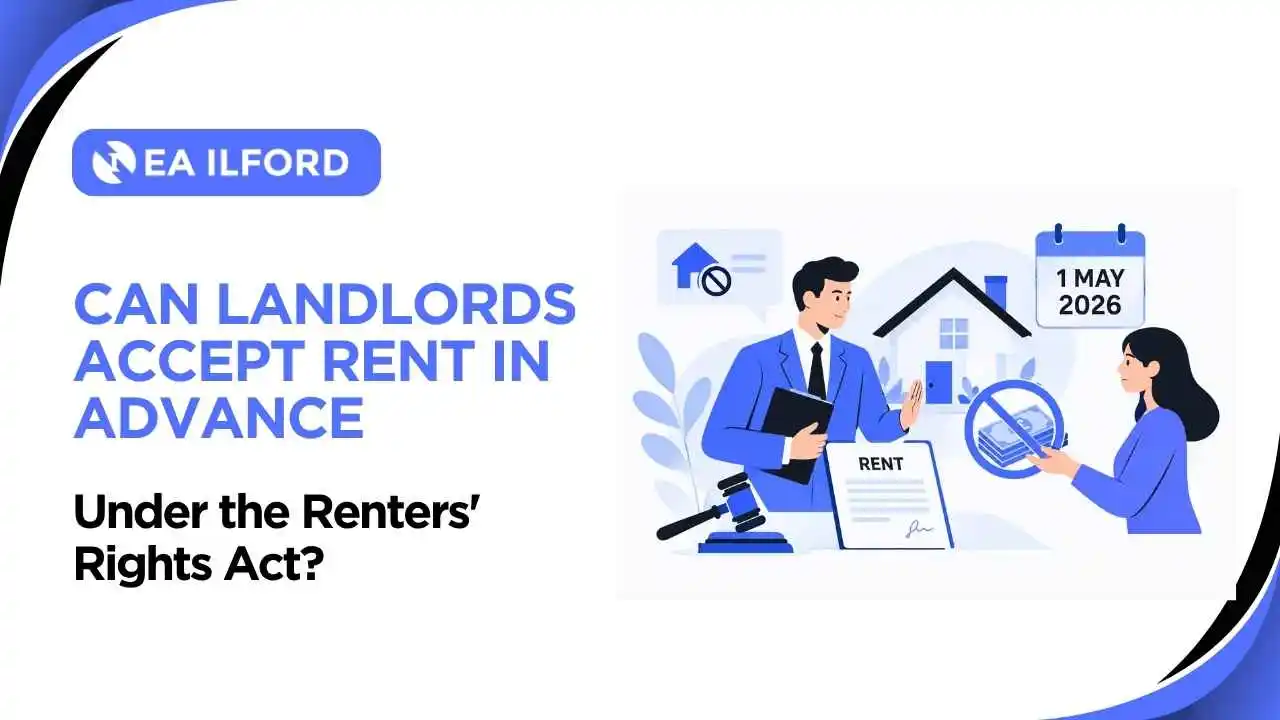
A tenant with no UK guarantor offers six months’ rent upfront, and you’re unsure if taking it could cost you a fine. Since the Renters’ Rights Act began on 1 May 2026, landlords in England can no longer demand rent in advance. The ban is not total, though, and it depends on timing when the money changes hands. Before the tenancy agreement is signed, you can’t request or take rent, even if the tenant offers it. A council can fine you up to £5,000 for a first breach.
As experienced letting agents in Ilford, we’ve had a steady stream of queries on this since 1 May 2026. Landlords want to know what they can still accept, and tenants want to know whether they can legally offer upfront rent payments. This guide answers the questions we hear most.

What Does “Rent In Advance” Mean?
Rent in advance means paying for a rental period before it begins instead of after you have lived in the property. For example, a tenant paying rent of three months in advance before he signs any tenancy agreement.
Landlords have traditionally asked tenants without a guarantor to pay several months’ rent upfront. However, in England, the Renters’ Rights Act 2025 restricts landlords from requiring rent before a tenancy agreement is signed.

What Are the New Rules for Rent in Advance Under the Renters’ Rights Act?
Rent in advance is still lawful in England, but the Renters’ Rights Act, in force since 1 May 2026, controls when a landlord can deal with it. What you can do depends on which of three stages the tenancy is at.
Stage 1: Before The Agreement Is Signed
At this stage, no rent changes hands. You can’t ask for rent in advance, hint at it, or take it, even if the tenant volunteers. The only upfront payments allowed under the law are a holding deposit and the tenancy deposit, which follow their own rules.
Stage 2: Contract Signed, But The Tenant Hasn’t Moved In
During this period, you can ask for the first rental period only as payable in advance. For a monthly tenancy, that means one month’s rent. If rent is paid more often than monthly, like on a weekly basis, the limit is 28 days.
Stage 3: The Tenancy Is Running
When the tenancy starts, rent is due on the date stated in the agreement, and you can’t require extra months ahead. A tenant can still choose to pay early, but the decision has to be theirs.
Most private lets in England now roll periodically with no end date. So the practical effect is that a landlord can no longer make months of prepayment a condition of renting.
Voluntary Early Payments by Tenants
Once the tenancy has started, a tenant can choose to pay early, and a landlord can accept it. It must be the tenant’s own idea and not a condition of the let. Keep a written record of the amount paid and period to avoid disputes and legal actions.
What Exactly is Banned Under Law
According to official rent in advance rules in the UK, landlords and letting agents are not allowed to do the following things under the law:
- Accept a pre-tenancy payment of rent from a relevant person, such as the tenant themselves or a person acting on behalf of the tenant.
- Encourage or invite tenants to pay pre-tenancy rent prohibited payment.
- Landlords or letting agents can’t use third parties to receive pre-tenancy payment of rent.
Landlords cannot demand rent before its agreed due date once the tenancy begins. This ban does not apply to holding deposits or tenancy deposits. A holding deposit can be put towards the first rent payment, subject to the applicable legal requirements.
Tenant is Paying 12 Months’ Rent in Advance: Is it Legal to Accept?
Yes, a landlord in England can generally accept 12 months’ rent upfront if a tenant voluntarily offers to pay it after the tenancy has started. Once both parties have signed the tenancy agreement, a landlord can generally request up to one month’s rent before a monthly tenancy begins. A tenant’s offer does not override the restrictions on accepting rent before the agreement is signed.
The key distinction is who initiates the payment and when it is made. A genuinely voluntary early payment during an existing tenancy is generally permitted, but a landlord can’t use advance rent as a condition of securing or keeping property.

Can A Landlord Take Rent In Advance Instead Of a Deposit?
No, payable in advance is not a direct substitute for a tenancy deposit. The two payments serve different purposes. Advance rent covers a future rental period, while a tenancy deposit provides security against certain losses, such as property damage or unpaid rent, subject to the applicable rules.
A landlord can take upfront payment within the legal limits, which generally allow up to one month’s rent before a monthly tenancy begins. However, this payment covers rent for the agreed period. It cannot be kept as security against property damage or other tenancy breaches.
A tenancy deposit must also comply with the legal deposit cap and protection requirements. For most private tenancies in England, the cap is five weeks’ rent if the annual rent is below £50,000, or six weeks if it is £50,000 or more.
Penalties for Landlords Breaching the Rent In Advance Rules
Landlords in England can face a civil penalty of up to £5,000 for breaching the Renters’ Rights Act rules on rent received in advance. A repeat breach within five years can lead to a penalty of up to £30,000 or prosecution. Breaches include requesting or accepting rent before both parties have signed the tenancy agreement.
Local authorities enforce these rules and can investigate suspected breaches. Penalties depend on the circumstances and applicable enforcement provisions. To avoid costly mistakes, landlords should check payment requests against current legislation and keep clear records of rent agreements.
Professional property management services help landlords manage rent collection and meet legal requirements, reducing the risk of costly mistakes.
Are There Any Exceptions to the Rent-in-Advance Rules?
The rent-in-advance restrictions mainly affect private landlords with assured periodic tenancies in England. Exceptions include:
- Social housing: Properties let by Private Registered Providers of Social Housing.
- Supported housing: Certain social and supported housing arrangements.
- Council-arranged tenancies: Specific tenancies for people who are legally homeless.
- Earlier payments: Rent payments made before 1 May 2026 are not subject to the new ban.
What Can Landlords Do Instead of Asking for Advance Rent?
Landlords can reduce rental risks through tenant referencing, guarantor agreements and suitable insurance instead of relying on large upfront rent payments.
- Guarantors and Professional Guarantor Services: A landlord can ask a tenant to provide a suitable guarantor who agrees to cover rent arrears or other liabilities specified in the guarantee agreement.
- Rent Guarantee Insurance: Rent guarantee insurance can help cover unpaid rent if a tenant falls into arrears, subject to the policy’s terms and exclusions.
- Referencing and Affordability Checks: Tenant referencing helps landlords assess an applicant’s rental history, credit information and ability to afford the rent.
Read our guide to tenant referencing checks for landlords to learn what to verify before letting your property.
Is Rent Received In Advance Taxable: When It’s Legal
Yes. Rent you receive in advance counts as taxable property income, even when it covers months that haven’t started. What changes is which tax year it falls into.
Under the cash basis, income is recognised when you receive it. Under accruals, it’s recognised for the period it relates to. For example, a tenant chooses to pay 12 months’ rent in February 2027, once the tenancy has started. On the cash basis, you count all of it as income in the tax year you receive it. That is the year from 6 April 2026 to 5 April 2027. On the accruals basis, only the rent up to 5 April 2027 counts, and the rest moves to next year.
Final Thoughts
The Renters’ Rights Act hasn’t made rent in advance illegal, but it has made timing important. Before the tenancy agreement is signed, don’t ask for, hint at, or accept rent, even if the tenant offers. A first breach can bring a penalty of up to £5,000. Once the tenancy has started, you can accept a payment the tenant chooses to make, as long as it was their idea and isn’t a condition of the let.
Disclaimer: The article is for information purposes only. We do not provide legal advice. Please consult a qualified professional for legal guidance.