EPC Rating C by 2030 Explained For UK Homeowners, Landlords, & Buyers
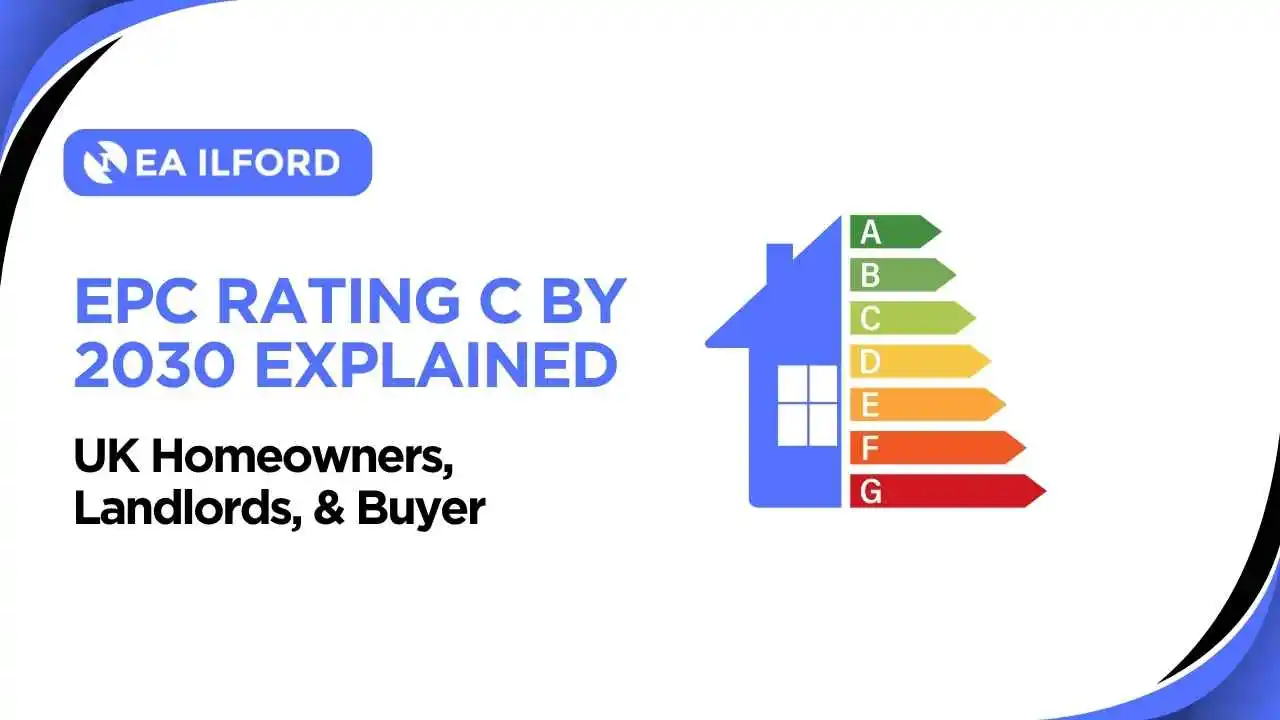
The UK Government has aimed to reach net zero carbon emissions by 2050. You have until 2030. That’s the deadline the Government has set for every rental property in England and Wales to reach an EPC Rating C. The fine for missing it is £30,000 per property (gov.uk). More than 60-65% of homes in England fall below the Energy Performance Certificate rating C threshold.
And if you are a landlord or homeowner sitting on D, E, or worse, the clock is ticking. Ilford Property Management helps landlords stay compliant with EPC requirements and helps you understand and map out a cost-effective route to C and beyond. Here is what and how the system works:
What is an EPC Rating?
An Energy Performance Certificate Rating assesses a property’s energy efficiency, assigning a score from A to G. It assigns every property a letter grade and a SAP ( Standard Assessment Procedure) numerical rating between 1 and 100 that measures the overall energy efficiency of a UK home.
An Energy Performance Certificate (EPC) is a legally required document that measures how energy efficient a property is.
You need a valid EPC when selling a property, renting it, or after completing the building. The certificates are valid for 10 years, and buyers or tenants must be provided with a copy of them when the agreement is made.
| Quick Fact The average EPC rating for homes in England and Wales is a D (SAP Score 55 to 68). Anything above 69 puts your property above the national average. |
What is an EPC Rating C, and Is It Good?
An EPC Rating C means your property scores between 69 and 80 points on the UK Government Standard Assessment Procedure (EPC Rating Scale). The properties in this band have lower energy usage and bills compared to poorly insulated homes.
And of course, an EPC rating C is a genuinely good rating. It places property above the UK national average and well above the legal minimum for rentals now. The minimum legal requirement now is Rating E, but till 2030 governement aimed to improve the energy efficiency rating to C of all properties in England and Wales.
| EPC Band | Energy Efficiency Score | Efficiency Level |
| A | 92+ | Most Efficient |
| B | 81–91 | Very Efficient |
| C | 69–80 | Efficient |
| D | 55–68 | Average Efficiency(Current Average) |
| E | 39–54 | Below Average Efficiency(Current Government Requirement) |
| F | 21–38 | Poor Efficiency |
| G | 1–20 | Least Efficient |
It typically indicates a home built using energy-efficient methods, or one that has undergone targeted improvements like insulation upgrades, double glazing, or a modern boiler.
| How is Energy Performance Rating Measured? A property rating is determined by two key measures: the amount of energy used per square meter and the number of tonnes of CO2 emitted per year. These figures show how energy-efficient a building is and how much it contributes to carbon emissions. |
How Much Does it Cost to Improve an EPC rating to C?
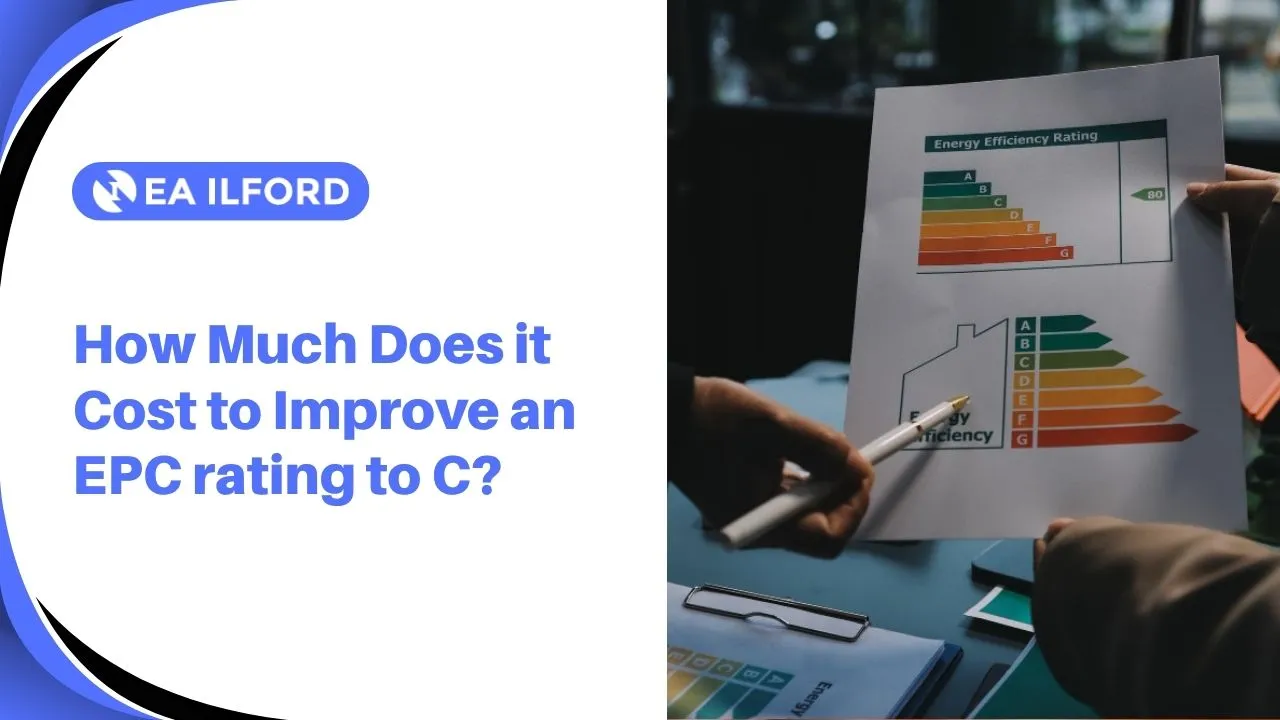
The costs depend on a property’s age and size, but average estimates for UK landlords are:
Typical Cost to Reach EPC C
- E → C Upgrade: ~£17,000
- G → C Upgrade: ~£27,000
The E to C upgrade costs approximately £17,000, and landlords who want to improve their EPC rating from G to C need to spend £27,000 (Property Solvers Auctions). These are one-off total costs is calculated according to the timeline needed to meet the Government requirements of EPC C for rented properties.
For many buy-to-let landlords, these costs may cause a significant financial burden and may make compliance difficult to achieve with new regulations.
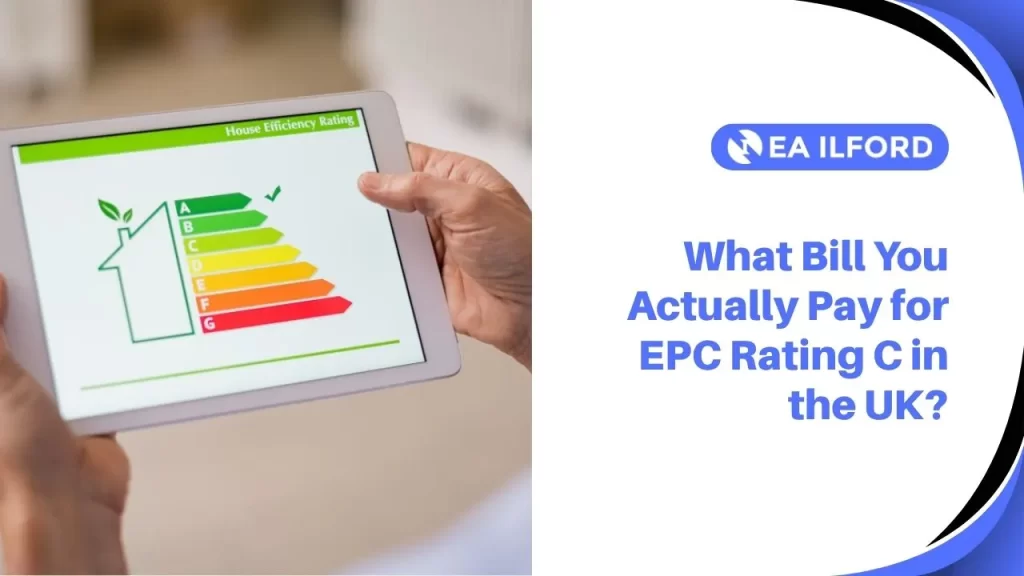
What Bill You Actually Pay for EPC Rating C in the UK?
Moving from EPC D to EPC C typically saves homeowners between £500 and £1,250 per year on energy bills, depending on the property’s size and type (Rightmove). Based on current UK averages, the typical saving is around £780 annually. For most households, it pays back common upgrade costs (loft insulation, smart thermostat) within 2 to 4 years. Here is the breakdown of the bill costs for all EPC ratings:
| Property Type | EPC A | EPC B | EPC C | EPC D | EPC E | EPC F | EPC G |
| 1-Bed Flat | £470 | £786 | £1,193 | £1,681 | £2,190 | £2,802 | £3,531 |
| 2-Bed Flat | £514 | £918 | £1,364 | £1,998 | £2,733 | £3,446 | £4,451 |
| 3-Bed Terraced House | £541 | £1,013 | £1,682 | £2,357 | £3,286 | £3,993 | £5,069 |
| 3-Bed Semi-Detached House | £524 | £992 | £1,715 | £2,358 | £3,269 | £4,114 | £4,895 |
| 3-Bed Detached House | £581 | £1,088 | £1,868 | £2,591 | £3,528 | £4,646 | £6,564 |
| 4-Bed Semi-Detached House | £732 | £1,213 | £2,151 | £3,061 | £4,246 | £5,504 | £7,919 |
| 4-Bed Detached House | £711 | £1,315 | £2,322 | £3,236 | £4,430 | £5,679 | £7,910 |
| 5-Bed Detached House | £860 | £1,822 | £3,053 | £4,315 | £5,772 | £7,620 | £10,920 |
Source: The estimates are based on average energy prices from What’s the average UK energy bill? | Rightmove Guides.
How EPC C Rating Affects Your Property Value?
Energy efficiency is directly related to buyers’ decisions and property prices, particularly when energy cost rises, and laws are tightened.
- Moving from EPC D to C adds approximately 4% to resale value based on the Rightmove Greener Homes Report 2025.
- 61% of landlords would not purchase a rental property with a rating below C. (Rightmove Press Centre)
- Homes with EPC A or B attract a 1.7% premium over similar D-rated properties.
- And properties rated F to G offer a 3.5% discount compared to similar D-rated equivalents. (Nationwide).
The effect of EPC Rating on the property values and buyers’ decisions is strongest. The gap between C and D is moderate. But C opens the door to green mortgages and reduces the financial stress of first-time buyers and young purchasers who prioritise running costs.
EPC Rating C and Mortgages
Your EPC rating can affect both your mortgage and what rate you’re offered.
Green mortgages
For all homes by 2035, the Government has set a goal of achieving an EPC rating of C. Green Mortgages are tied to a home’s energy efficiency rating. There are three types of green mortgages. The lower rates for high EPC-rated homes, capital release to fund improvements and extra borrowing when buying or remortgaging an inefficient property.
Around 19 million UK homes are currently below EPC C. Hence, green mortgages are designed to close that gap. The properties with rating A or B qualify for the lowest green mortgage rates and higher borrowing capacity due to lower energy costs.
Buy-to-Let Mortgage
For buy-to-let investors, lenders already factor EPC ratings into their decisions. Upgrading an inefficient property can be very expensive. Lenders usually decline applications for properties with a rating of F or G because they are high risk, given the incoming legislation.
Now, EPC rating is not an environmental label. It directly determines whether you get a mortgage, at what rate and for how long. Currently, EPC E rating is legal to let, but lenders are tightening term including conditions, to upgrade plans.
| Government Target and Lenders Actions Under current proposals, mortgage lenders may be required to hold a minimum EPC rating for renting of C across their entire lending book by 2030. And they also aimed to reduce carbon emissions to zero by 2050. It can lead to secure a mortgage on a low-rated property harder and more expensive. |
EPC C Rating for Landlord: Deadlines and Legal Requirements
These years are very crucial for landlords or homeowners who own properties with an EPC rating of less than E.
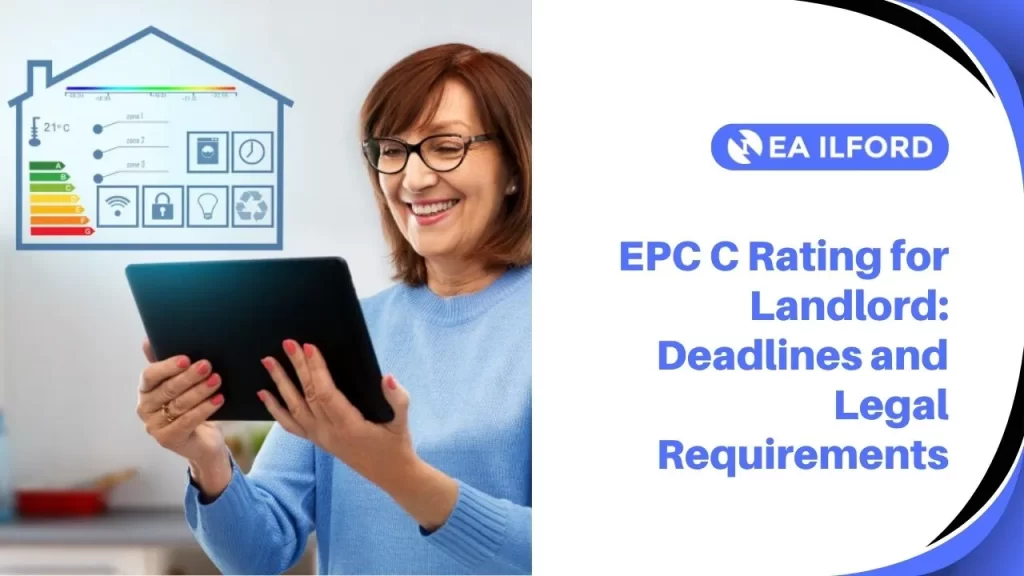
- Now in 2026, all properties must hold an EPC rating of E or above. F and G-rated properties cannot be let legally now. This has been in force since 2020 for new tenancies and 2023 for all tenancies.
- By 2028, landlords will need an EPC rating to grant any new tenancy. Lease or renewal and change of tenancy on a property rated below C would become unlawful.
- By 2030, the proposed minimum standard of EPC Rating C extends to all existing tenancies, not just new ones. Regardless of when tenancy started, all rental properties must hold an EPC C or above.
- The Government’s long-term plans extend the EPC C requirement beyond the rental sector. By 2035, all homes in England and Wales (also owner-occupied properties) may be required to meet an EPC C rating.
Here is a Quick Table:
| Year / Requirement | Who It Affects | Status |
| Now (2026): Minimum EPC E | All Private Landlords | ✅ Current law |
| 2028: Minimum EPC C for New Tenancies | Landlords Granting New Tenancies | Proposed |
| 2030: Minimum EPC C for All Rental Properties | All Private Landlords | Proposed |
| 2035: Minimum EPC C for All Homes | All Homeowners | Long-term Proposal |
Can I Still Rent Out A D-Rated Property In 2026?
Yes, a D-Rating is currently above the legal minimum of E. however under proposals which may take effect from 2028, a D-rated property would not meet the required standard for new tenancies.
What Assessors Actually Check When Getting an EPC?
A Domestic Energy Assessor (DEA) visits your property and carries out a visual inspection of the property. The cost of an assessment varies by the size of the property and the assessor.
An energy efficiency certificate costs between £60 and £120. The assessment typically takes around 45 minutes, but can extend to 90 minutes depending on the size of the property.
They do not carry out invasive tests; key items assessed include:
- Insulation: loft, cavity walls and flooring
- Heating System: boiler type, age, efficiency rating, controls
- Windows & Doors: single, double, or triple-glazed windows
- Lighting: percentage of LED bulbs
- Hot water: cylinder insulation, immersion heater and solar thermals
- Renewable Energy Source: Solar panels, heat pumps, etc.
- Ventilation: natural, mechanical or heat recovery systems.
How to get an EPC Certificate
The information is entered into Government-approved RdSAP software, which calculates the property’s SAP score and EPC rating. The homeowners or landlords will receive their digital copy of the EPC report (valid for 10 years) along with the Recommendations for Improvement section. They list changes needed to reach a higher rating that could reduce energy costs.
How to Improve your EPC to a C Rating?
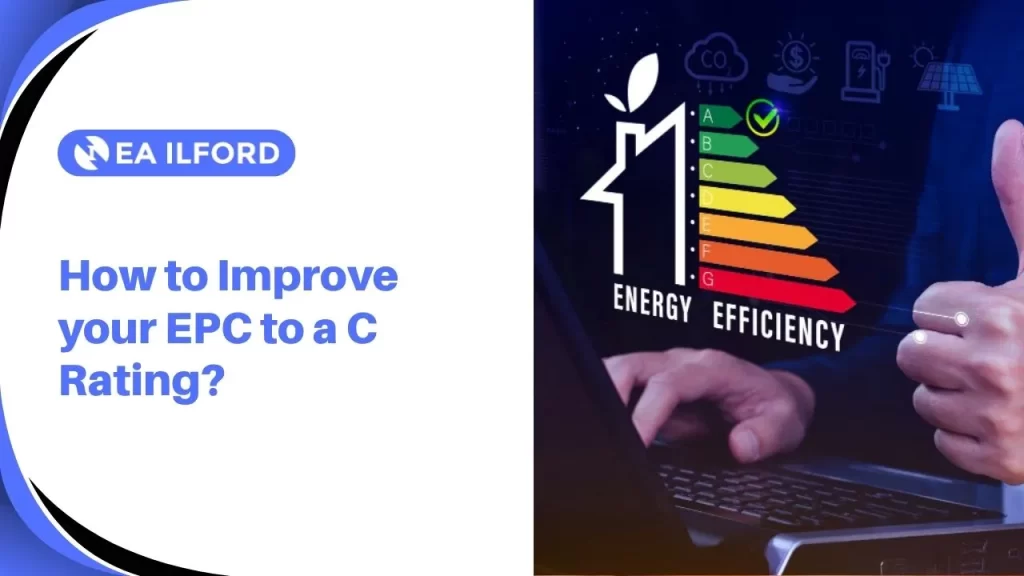
You can look up your property’s current rating on the GOV EPC register. The report includes a potential rating, which shows how recommended improvements can help you achieve your required rating. You can improve your rating by making the following improvements in your property:
- Insulation is the most important factor. Loft insulation may add 6 to 10 SAP points, cavity insulation adds 4 to 8 points, and solid wall insulation for pre 1920 properties delivers great heat-retention gain.
- An outdated boiler runs at low efficiency while a modern boiler hits 90% efficiency. It may add 5 to 12 SAP points for most gas-heated homes.
- Double or triple glazing outperforms single glazing in terms of cutting heat loss and noise. (SAP points +2 to 6)
- Draught proofing seals gaps around doors, windows, letterboxes and unused chimneys. It can be a low gain of 1-3 SAP points, but it makes every other improvement more effective.
- LED Lighting: Switch all halogens to LED. It can add 1 to 3 SAP points. It is one of the fastest, cheapest improvements an assessor records,
- Solar Panels and Heat Pumps add 5-10 SAP points per year on electricity bills. Air source heat pumps can add 10-25 SAP points and qualify for a £7,500 Government grant under the Boiler Upgrade Scheme.
Together, these can move a property from D to C or C to B within a single upgrade cycle.
Government Grants to Help You Reach EPC C
The UK Government offers home improvement grants to reduce energy bills and upgrade costs for eligible households:
- ECO4 Scheme run until March 2026, which is extended for low-income households or families in fuel poverty. It covers insulation and heating upgrades.
- The Great British Insulation Scheme (GIBS) is active for EPC D-G homes in Council Tax bands A-D (England) or A-E(Wales), covering free or cheap insulation.
- The Boiler Upgrade Scheme (BUS) is actively working in England and Wales. It offers grants of £7,500 for air/ground source heat pumps and £5,000 for biomass boilers
- Warm Homes (England and Wales) has been active since 2011 and has helped 60,000+ households. It covers heating systems, boiler repair or replacement, heat pumps, insulation, and solar panels. Low-income households with an EPC rating of E or below are eligible for this grant.
Are there any Exemptions to the EPC C Rating
All properties don’t need to meet EPC standards. EPC Exemptions include:
- Listed buildings
- Temporary building planned for use of less than 2 years.
- Holidays lets
- Cost-effectiveness exemption (where all the improvements would not be paid back in 7 years)
- Third-party consent exemption (where a freeholder or local authority refused permission for work)
Important Note:
Landlords must register exemptions on the PRS Exemptions Register. Exemptions last 5 years and must be renewed.